Don’t Sweat It: A Comprehensive AC Maintenance Checklist
Get your complete AC maintenance checklist! Learn DIY tips, professional services & seasonal care for year-round comfort.
Why Your AC Maintenance Checklist is Critical for Northwest Washington Homes
An AC maintenance checklist is your roadmap to keeping your cooling system running efficiently, especially during those unexpected Pacific Northwest heat waves. When temperatures soar, the last thing you want is a system failure.
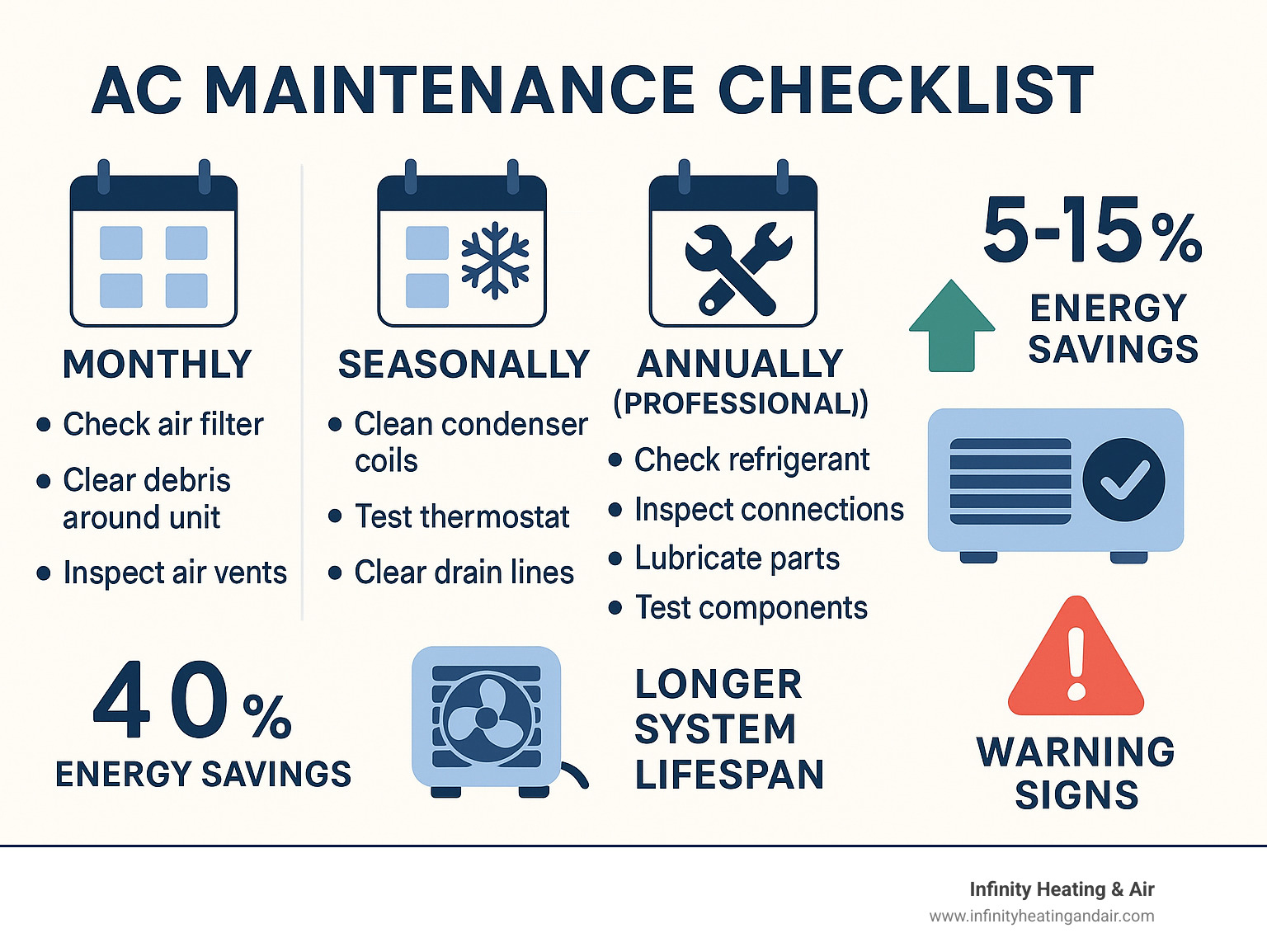
Regular maintenance isn’t just about comfort—it’s about your wallet, too. According to the U.S. Department of Energy, replacing a dirty, clogged filter can lower your air conditioner’s energy consumption by 5-15%. Even more striking, airflow problems can reduce your system’s efficiency by up to 15%.
For Northwest Washington homeowners dealing with sudden temperature swings, a well-maintained AC system means consistent indoor temperatures, better air quality, and peace of mind. The difference between a system that lasts 10 years versus 15+ years often comes down to one thing: consistent preventive care.
Why Regular AC Maintenance is Non-Negotiable
Putting off regular AC maintenance often leads to that dreaded moment: your AC fails on the hottest day. Like a car, your air conditioner needs consistent care to run reliably. Fortunately, routine maintenance can prevent most common AC repairs. When sudden heat waves and sticky humidity hit Washington, an unmaintained system can struggle.
Skipping your AC maintenance checklist can lead to:
- Increased Energy Bills: A struggling AC unit uses more electricity, raising your monthly costs.
- Unexpected Breakdowns: Small, ignored issues often grow into major problems at the worst possible times.
- Reduced System Lifespan: An unmaintained AC unit experiences more wear and tear, leading to a much shorter lifespan. Consistent professional maintenance can add up to five years to your air conditioner’s life.
- Poor Indoor Air Quality: A neglected system can circulate dust, allergens, and mold spores throughout your home.
- Safety Hazards: Faulty electrical connections can lead to unsafe operation, including electrical shorts and fire risks.
As the U.S. Department of Energy (DOE) confirms, good maintenance saves money and reduces energy usage, preventing costly, reactive headaches.
Signs Your Air Conditioner Needs Attention
Your AC will often give you warning signs before a major breakdown. Spotting these early can save you time and money. Watch for these common indicators:
- Unusual Noises: Grinding, rattling, hissing, or buzzing can indicate motor, fan, compressor, or electrical issues. Any new sound is worth investigating.
- Weak Airflow: Could mean a clogged filter, blocked ducts, or a blower fan issue.
- Warm Air from Vents: A clear sign of a problem, possibly low refrigerant or a faulty compressor.
- Frequent Cycling (Short Cycling): If your AC turns on and off too often, it puts stress on the system. This can be caused by an oversized unit, thermostat issues, or refrigerant problems.
- Unpleasant Odors: Musty smells suggest mold in the ducts or drain line. A burning smell could be an electrical problem.
- Water Leaks or Moisture: Puddles around your unit may indicate a clogged condensate drain line, frozen coil, or refrigerant leak.
- High Humidity Levels Indoors: If your home feels clammy, your AC may be struggling to dehumidify the air.
How Maintenance Boosts Energy Efficiency
AC maintenance doesn’t just prevent breakdowns; it’s crucial for energy efficiency. A well-maintained system uses less energy to keep you cool.
Here’s how following an AC maintenance checklist leads to energy savings:
- Reduced System Strain: Clean, lubricated parts reduce stress on the motor and compressor. Without proper lubrication, parts wear out faster from friction and overheating.
- Optimal Performance: Clean coils, clear filters, and correct refrigerant levels allow your AC to cool your home effectively without working as hard.
- Lower Energy Consumption: An efficient system uses less power. Airflow problems alone can reduce your system’s efficiency by up to 15%.
- Impact of Clean Components: Dirty coils act like an insulating blanket, forcing the system to run longer. Similarly, a dirty filter restricts airflow, forcing your unit to work overtime. Replacing a clogged filter can lower your AC’s energy consumption by up to 15 percent.
- Airflow Efficiency: Unobstructed airflow from filters to vents is crucial. Blockages make the blower motor work harder, wasting energy.
Keeping your AC in top shape ensures it runs as efficiently as possible, leading to lower energy bills.

Your Complete AC Maintenance Checklist: DIY vs. Professional Tasks
Maintaining your AC is like caring for a car: some tasks are simple DIY jobs, while others require a professional. Understanding the difference for your AC maintenance checklist helps you maximize efficiency, stay safe, and know when to call an expert.

Before you begin, a crucial safety note: Always turn off power to your AC unit at both the thermostat and the circuit breaker before attempting any maintenance. If you’re ever in doubt, call a professional. It’s better to be safe than sorry.
DIY AC Maintenance Checklist for Homeowners
Many essential maintenance tasks are well within your capabilities. Your basic toolkit should include work gloves, a screwdriver, a garden hose, a wet/dry shop vacuum, and replacement air filters.
- Change Air Filters: This is the most important DIY task. Check your filter monthly. A simple test is to hold it up to a light; if you can’t see light through it, it’s time for a new one. Replacing a dirty filter can lower your AC’s energy consumption by 5–15%.
- Clean the Outdoor Condenser Unit: After turning off the power, clear away debris like leaves and grass. Trim back vegetation to maintain at least two feet of clearance. Gently rinse the fins with a garden hose, avoiding high pressure.
- Maintain Proper Airflow: Check that furniture, curtains, or rugs aren’t blocking supply and return air vents. A quick vacuum removes dust from the grilles.
- Inspect the Condensate Drain Line: This line carries moisture away and can get clogged. If you see standing water in the drain pan, it needs clearing. You can often use a wet/dry shop vacuum on the outdoor end of the line to clear minor clogs.
- Test the Thermostat: Ensure it’s set to “cool” and the temperature is set below the current room temperature. Replace batteries if needed. A faulty thermostat can cause short cycling, which damages the system.
Professional AC Maintenance Checklist: When to Call the Experts
Some tasks on your AC maintenance checklist require specialized knowledge and tools. We recommend scheduling an annual professional tune-up, ideally in spring, to catch potential problems early.

- Check Refrigerant Levels: This requires EPA certification. Low levels indicate a leak that must be repaired, not just refilled.
- Deep Clean Coils: Professionals use special cleaning agents to thoroughly clean evaporator and condenser coils without causing damage, which improves cooling and extends equipment life.
- Inspect Electrical Systems: A technician will check all connections and measure voltage to ensure safety and prevent failures. This is not a DIY task.
- Lubricate Moving Parts: Proper lubrication requires knowing which parts need it and what type to use. As industry resources note, proper lubrication will reduce wear and extend the lifespan of these parts.
- Test Capacitors and Contactors: These components help start your AC’s motors. Testing them safely requires professional expertise to prevent system failure.
A professional tune-up also includes inspecting the blower motor, flushing the drain system, and running a full system test to ensure safe, efficient operation all season.
Seasonal vs. Annual AC Maintenance: Timing is Everything
In Northwest Washington, your AC must be ready for sudden heat waves. Timing your maintenance can prevent an emergency repair on the hottest day. ENERGY STAR recommends annual pre-season HVAC check-ups: spring for cooling and fall for heating. This proactive approach prevents most system failures.
A helpful trick is to schedule maintenance around daylight saving time changes. When you “spring forward,” prep your AC. When you “fall back,” winterize it. Seasonal tasks prepare your system for the coming weather, while an annual professional tune-up digs deeper into internal components.
Spring AC Start-Up Checklist
Spring weather in Northwest Washington can be unpredictable. Your spring AC preparation is crucial for finding any issues before a heat wave hits.
- Clean the Outdoor Unit: Clear away winter debris and give the coils a gentle rinse with a garden hose.
- Check Power Connections: Ensure the outdoor disconnect switch and the AC’s circuit breaker are both on.
- Test Thermostat Settings: Switch to “cool” and set the temperature below the current room temperature. The system should kick on within a few minutes.
- Run a Test Cycle: Let the system run for 15-20 minutes. The air from your vents should be cool and steady. Any unusual noises are red flags that warrant a professional call.
- Install a Fresh Air Filter: A clean filter is your first line of defense against spring allergens and ensures optimal airflow.
Pro tip: Test your AC a week before you think you’ll need it. This gives you time to schedule service before the first heat wave.
Fall AC Shutdown Checklist
Properly preparing your AC for the off-season is just as important for its longevity as summer maintenance. Think of it as putting your AC to bed for the winter.
- Give the Outdoor Unit a Final Cleaning: Remove fallen leaves and debris to prevent corrosion and pests.
- Protect the Unit: Consider using a breathable cover designed for AC condensers. Avoid airtight plastic tarps that trap moisture and cause rust.
- Switch Thermostat to Heat Mode: This prevents the AC from running accidentally when outdoor temperatures are too low, which can damage the compressor.
- Conduct a Visual Inspection: Look for any damage that occurred during the cooling season. Identifying issues in the fall gives you plenty of time to schedule repairs during the off-season.
Following these seasonal routines extends your AC’s life, improves its efficiency, and ensures your family’s comfort year-round.
Frequently Asked Questions about AC Maintenance
As Northwest Washington homeowners, we know you have questions about keeping your cooling system running smoothly. Here are answers to the most common questions about your AC maintenance checklist.
How often should I change my AC air filter?
We get this question a lot. The simple answer is: check your filter monthly, but replace it based on what you see. The standard 1-3 month recommendation varies based on your home’s unique situation:
- Pets: Homes with pets, especially shedding ones, often need monthly filter changes.
- Allergies or Asthma: If someone in your home has respiratory issues, consider changing the filter every 3-4 weeks.
- Dust Levels: If you live near a construction site or have a busy household, you’ll likely need to change filters more often.
The test is simple: hold the filter up to a light. If it looks blocked, it’s time for a new one. As the U.S. Department of Energy notes, this five-minute task can lower your AC’s energy consumption by up to 15 percent.
What does it mean if there is ice on my AC unit?
Ice on your AC unit, even on a hot day, is a red flag that something is wrong. The two main culprits are restricted airflow (from a clogged filter or dirty coil) and low refrigerant levels (from a leak).
Here’s what to do when you spot ice:
- Turn off the cooling mode on your thermostat immediately.
- Switch the fan to “on” (not “auto”) to circulate air and help melt the ice.
- While it thaws, check your air filter and vents for blockages.
- Let it thaw completely, which can take several hours.
If the ice returns after you’ve addressed airflow issues, or if you hear a hissing sound, it’s time to call for professional AC service. Refrigerant work requires special equipment and is not a DIY job.
What role does the thermostat play in AC efficiency?
Your thermostat is the brain of your cooling system and has a huge impact on both your comfort and your energy bills.
- Calibration: An inaccurate thermostat can cause your system to run longer than necessary, wasting energy.
- Programmable & Smart Thermostats: These are game-changers for efficiency. They let you raise the temperature when you’re away and cool the house just before you return, saving energy.
- Optimal Settings: Setting your thermostat to 78°F when you’re home during the summer can significantly reduce energy consumption.
- Faulty Thermostats: A malfunctioning thermostat can cause short cycling (frequent on/off cycles), which puts enormous stress on your system and can lead to premature wear and costly repairs.
Ensure Your Comfort All Year Long
Your AC maintenance checklist is an investment in your family’s comfort and your home’s efficiency. We’ve covered simple DIY tasks and essential professional services that keep your system running for years.
Proactive maintenance is far easier and less expensive than emergency repairs. Staying ahead of potential problems protects your investment and ensures your family stays comfortable when it matters most.
Regular AC maintenance delivers real benefits: lower energy bills, fewer unexpected breakdowns, better indoor air quality, and a longer system lifespan (15+ years vs. 10). A consistent maintenance routine saves money and prevents discomfort. Simple steps like changing filters and scheduling annual tune-ups prevent costly summer failures.
For comprehensive care that keeps your system running smoothly year after year, Infinity Heating & Air is here to help. We understand the unique challenges of Northwest Washington’s climate, from unexpected heat waves to high humidity levels. Our team specializes in crafting an environment for endless comfort, ensuring your AC system is ready for whatever weather comes your way.
Whether you need help with your annual professional tune-up or you’re dealing with an unexpected issue, we’re committed to keeping your home comfortable all year long. Ready to protect your comfort and investment? Contact us today to schedule your AC maintenance service and ensure your system delivers reliable, efficient cooling for many summers to come.
Written & reviewed by the Infinity Heating & Air team — licensed WA HVAC contractor (INFINHA841B8). Family-owned in Graham, answering 24/7 across the South Sound.
Choose Infinity & enjoy endless comfort.
Your perfect home environment awaits — call (253) 740-5135 or schedule service online and our team will take it from there.
Open 24/7 · 100% Satisfaction Guaranteed · Graham, WA