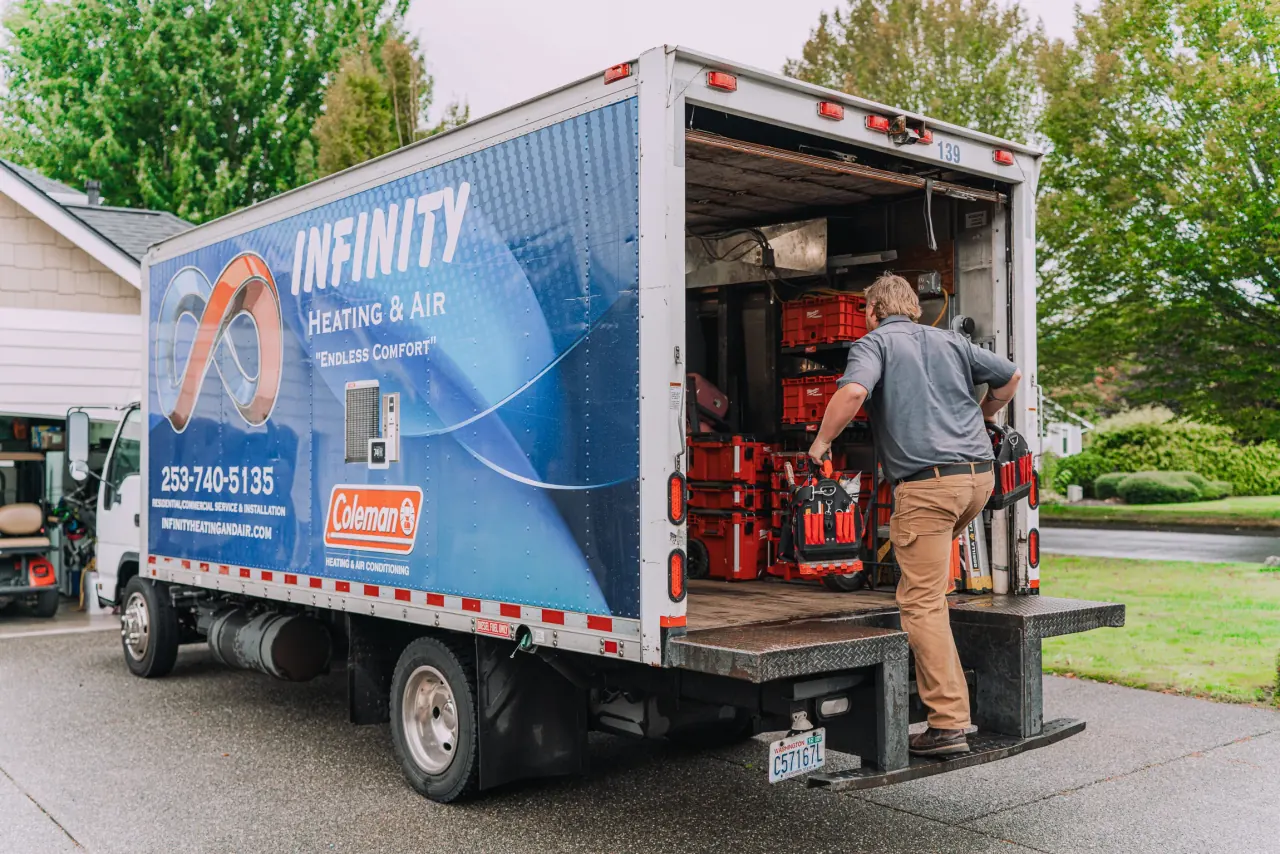
Beyond the Home: Commercial Heating Repair Solutions in Graham, WA
Experiencing issues? Secure prompt commercial heating repair in Graham, WA to ensure comfort, protect operations, and save money.
Why Commercial Heating Repair in Graham, WA Matters for Your Business
Commercial heating repair in Graham, WA is essential for maintaining business operations during the Pacific Northwest's damp, cold months. When your heating system fails, it doesn't just affect comfort—it directly impacts employee productivity, customer satisfaction, and your bottom line.
Quick Answer: Signs You Need Commercial Heating Repair:
- Inconsistent temperatures across different areas of your building
- Unusual noises like grinding, banging, or rattling
- Rising energy bills without increased usage
- Frequent cycling or system shutdowns
- Poor air quality or unpleasant odors
- Complete failure to start or maintain heat
Graham's climate creates unique challenges for commercial heating systems. Average winter temperatures between 35-45°F, combined with high humidity from October through May, put constant strain on equipment. The Pacific Northwest's moisture accelerates component corrosion and clogs filters faster than drier climates.
For businesses, a broken heating system means more than discomfort. Employees work less efficiently in cold environments. Customers leave uncomfortable retail spaces. And every hour of downtime translates to lost revenue. Research shows that routine HVAC maintenance can prevent up to 75% of common heating failures—making proactive care far more cost-effective than emergency repairs.
Whether you operate a retail store, office building, restaurant, or warehouse in Graham, understanding when and why to call for professional heating repair protects your investment and keeps your business running smoothly through winter's worst weather.
Recognizing the Red Flags: When Your Commercial Heater Needs Repair
Imagine walking into your business on a chilly Graham morning, expecting the warmth of a well-functioning heating system, only to be met with a cold blast or an eerie silence. It's not just an inconvenience; it's a call to action. Recognizing the early warning signs that your commercial heating system needs repair is crucial for preventing minor issues from escalating into costly breakdowns.
One of the most immediate indicators is inconsistent temperatures throughout your commercial space. If some areas are toasty while others remain frigid, it suggests a problem with heat distribution, potentially due to ductwork issues, a malfunctioning thermostat, or a struggling blower motor. This uneven heating can make employees uncomfortable and deter customers.
Next, pay attention to unusual noises. Your heating system should operate with a relatively consistent hum. Grinding, banging, rattling, squealing, or hissing sounds are all red flags. A banging noise might indicate loose or broken parts, while grinding could point to motor issues. Hissing might signal a refrigerant leak in a heat pump or ductwork issues. These sounds are your system crying out for help.
A sudden and unexplained spike in your energy bills is another tell-tale sign. If your heating system is working harder to achieve the desired temperature, it's consuming more energy, indicating a loss of efficiency. This could be due to clogged filters, a faulty thermostat, or an aging component that's no longer performing optimally.
Frequent or short cycling—where your system turns on and off too frequently—is not only inefficient but also puts undue stress on components, shortening the lifespan of your unit. This can be caused by an oversized system, restricted airflow, or a malfunctioning thermostat.
A decline in Indoor Air Quality Services Solutions Graham WA should also raise concerns. If your business experiences increased dust, stale air, or a general feeling of stuffiness, your heating system's filtration or ventilation might be compromised. Furthermore, unpleasant odors, such as a burning smell, musty scent, or the distinct odor of gas, demand immediate attention as they can indicate serious safety hazards.
Finally, the most obvious sign is a complete system failure to start or maintain heat. If your heater simply won't turn on, or it kicks on briefly before shutting down, it's time to call in the professionals. Ignoring these signs can lead to discomfort, lost productivity, and potentially severe damage to your commercial property.
Common Causes of Failure in Graham's Climate
Graham, WA's unique climate plays a significant role in the wear and tear of commercial heating systems. We know the Pacific Northwest is famous for its lush greenery, but that beauty comes with a price for your HVAC equipment: high humidity. The rainy season, typically running from October through May, saturates the air with moisture. This constant dampness contributes to accelerated component corrosion, particularly on metal parts and electrical connections. Just like rust can eat away at a car, corrosion can silently degrade your heating system's vital components, leading to premature failure.
Beyond corrosion, the damp air also leads to clogged filters at a faster rate than in drier climates. Moisture in the air can cause dust and debris to stick more readily to filter media, reducing airflow and forcing your system to work harder. A clogged filter restricts the flow of warm air, diminishes efficiency, and can even cause your system to overheat.
The fluctuating temperatures, especially during the shoulder seasons, also put a considerable strain on heating systems. The constant cycling between heating and cooling (for heat pumps) or frequent on-off cycles for furnaces, as the weather shifts from chilly mornings to milder afternoons, can stress motors, compressors, and electrical components. This continuous adjustment accelerates general wear and tear, making proper maintenance even more critical.
Finally, the sheer length of the heating season in Graham means your commercial heating system is often running for extended periods. This prolonged operation, combined with the other climatic factors, inevitably leads to wear and tear on all moving parts, from blower motors to heat exchangers. Recognizing how our local climate impacts your system helps us understand the importance of timely repair and proactive maintenance.
Common Commercial Heating Systems and Their Repair Needs
Commercial heating systems are a diverse bunch, each with its own unique design, operational nuances, and, consequently, its own set of common repair needs. In Graham, WA, we primarily encounter four main types: Rooftop Units (RTUs), Commercial Furnaces, Boilers, and Heat Pumps. Understanding these systems is the first step toward effective commercial heating repair in Graham, WA.
Many businesses, especially those with larger footprints, rely on Commercial HVAC systems to manage their indoor climate. These complex units are designed to handle the demanding heating and cooling requirements of commercial spaces, often integrating with sophisticated building management systems.
Rooftop Packaged Units (RTUs)
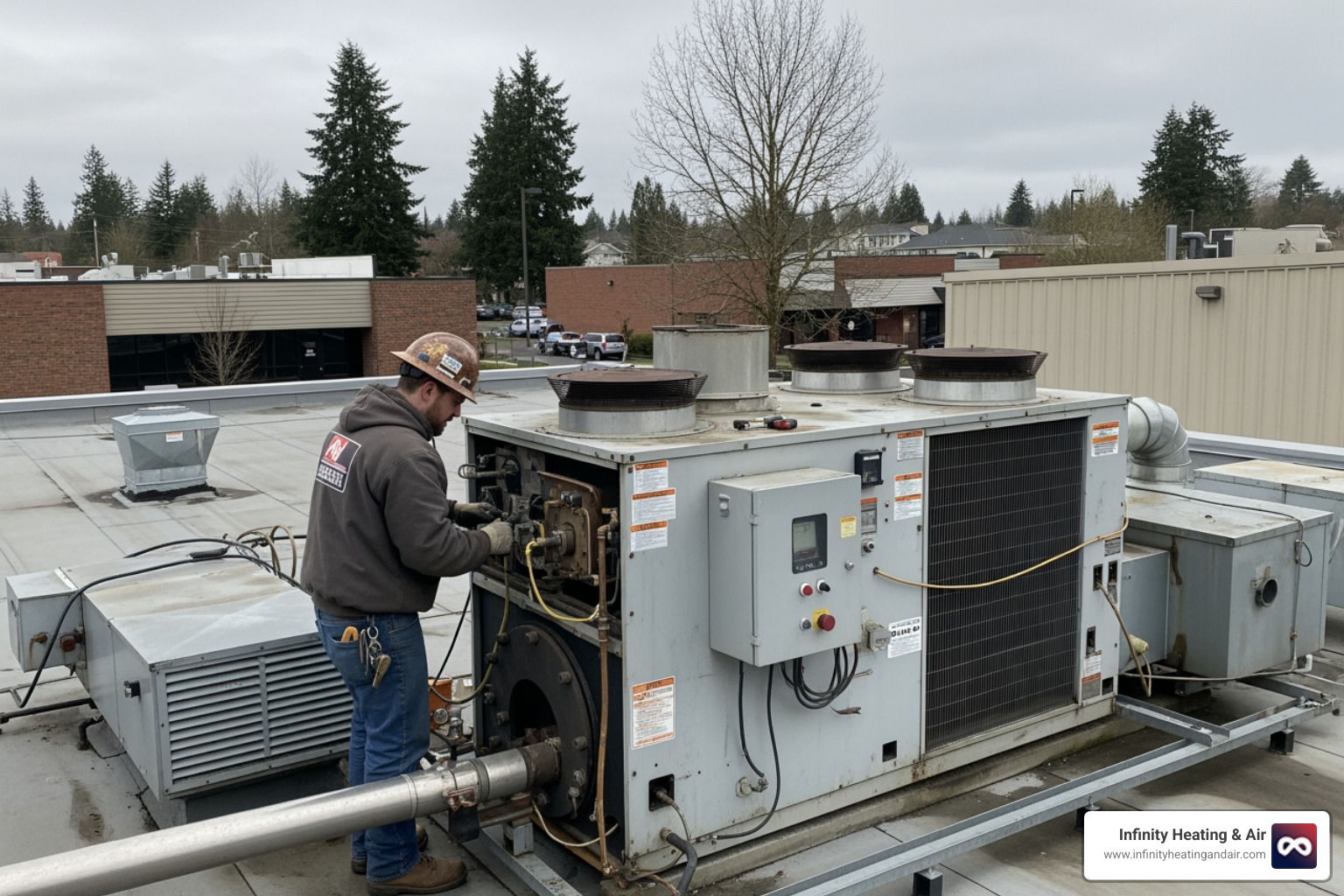
Rooftop Units (RTUs) are perhaps the most ubiquitous commercial HVAC system, especially in retail, office, and light industrial settings. As their name suggests, they're typically found on the roof, housing all heating, cooling, and ventilation components in a single, self-contained unit. Their robust design makes them efficient space-savers, keeping noisy equipment out of sight and minimizing indoor disruption.
However, being exposed to the elements 24/7 means RTUs face unique challenges. Common repair needs include:
- Ignition system failure: This can prevent the unit from producing heat.
- Blower motor problems: Issues with the motor can lead to insufficient airflow or complete heating loss.
- Heat exchanger cracks: A serious safety concern, as cracks can allow combustion gases to mix with breathable air.
- Faulty thermostats: Inaccurate temperature readings or communication issues can lead to improper heating cycles.
- Refrigerant leaks in heat pump models: If your RTU is a heat pump, low refrigerant means diminished heating capacity.
Regular maintenance for RTUs, including preseason startups and quarterly checks, is crucial for catching these issues before they become major headaches.
Commercial Furnaces and Ductless Systems
Commercial furnaces are workhorses, primarily using natural gas, propane, or electricity to generate heat, which is then distributed via ductwork. They are common in a variety of commercial buildings, from small offices to larger facilities, especially where consistent, powerful heating is required.
Ductless systems, also known as mini-splits, offer a flexible heating (and cooling) solution, particularly for businesses without traditional ductwork or those needing to heat specific zones. These systems consist of an outdoor unit and one or more indoor units, providing targeted comfort.
Common repair needs for these systems often overlap:
- Worn-out blower motors: Responsible for circulating air, a failing motor can cause inadequate heat distribution or unusual noises.
- Malfunctioning thermostats: Just like with RTUs, an inaccurate thermostat means your system isn't heating effectively.
- Ignition control issues: Problems with the pilot light or electronic igniter can prevent the furnace from firing up.
- Ductwork leaks and blockages: For ducted systems, leaks can lead to significant heat loss, while blockages can restrict airflow.
- Electrical control board failures: The "brain" of the system, a faulty control board can cause a myriad of operational problems.
When your commercial furnace or ductless system acts up, prompt Heating Repair Graham WA is key to restoring comfort and efficiency.
Boilers and Hydronic Heating
Boilers are a classic choice for commercial heating, especially in older buildings or those requiring radiant heat. These systems heat water, which then circulates through pipes to radiators, baseboard heaters, or radiant floor systems, providing a consistent, comfortable warmth. Hydronic heating is known for its even heat distribution and quiet operation.
However, boilers have their own specific set of repair challenges:
- Circulator pump failure: This pump moves heated water through the system; if it fails, heat won't be distributed.
- Leaks in pipes or tanks: Water leaks can lead to pressure loss, water damage, and system inefficiency.
- Pressure loss: Often a sign of a leak, but can also be caused by a faulty pressure relief valve.
- Kettling noises: A rumbling sound indicating mineral buildup inside the boiler, which reduces efficiency and can damage the unit.
- Zone valve malfunctions: In zoned systems, faulty valves can prevent heat from reaching specific areas.
Regular inspections are essential to maintain the integrity and efficiency of boiler systems, addressing potential issues like these before they cause significant downtime.
Commercial Heat Pumps
Commercial heat pumps are incredibly versatile, providing both heating and cooling from a single unit. They work by transferring heat, extracting it from the air (or ground) in winter to warm your business, and reversing the process in summer to cool it. This dual functionality makes them an energy-efficient choice for Graham's moderate climate.
Despite their efficiency, heat pumps can experience specific issues:
- Defrost cycle problems: In cold weather, ice can build up on the outdoor coil; if the defrost cycle fails, heating capacity is severely reduced.
- Reversing valve failure: This component switches the unit between heating and cooling modes; a failure means it's stuck in one mode or neither.
- Compressor issues: The heart of the heat pump, a failing compressor can lead to a complete loss of heating or cooling.
- Low refrigerant levels: A common issue, often indicating a leak, which results in poor heating performance.
- Auxiliary heat malfunction: When temperatures drop significantly, heat pumps rely on auxiliary heating elements; if these fail, the system struggles to keep up.
For prompt diagnosis and repair of these complex systems, our team offers 24 hour heat pump repair graham guide to help you understand common issues and when to call for help.
The High Cost of Delay: Why Prompt Commercial Heating Repair in Graham, WA is Crucial
When your commercial heating system signals distress, whether through strange noises, inconsistent temperatures, or a complete shutdown, the impulse might be to delay service. Perhaps you're hoping the problem will resolve itself, or you're trying to avoid the immediate cost of a repair. However, in commercial operations, delaying commercial heating repair in Graham, WA is a gamble with potentially severe consequences for your business.
First and foremost, prompt repair is vital for protecting business operations. Imagine a retail store where customers shiver while browsing, or an office where employees can't focus because their hands are numb. Such conditions directly impact productivity and sales. A comfortable environment is not a luxury; it's a fundamental requirement for a thriving business. When the heat goes out, your business essentially grinds to a halt, leading to lost revenue and operational disruptions.
Secondly, ensuring employee and customer comfort is paramount. Employees who are too cold are less efficient, more prone to illness, and generally unhappier. Customers, on the other hand, are quick to leave uncomfortable spaces, taking their business elsewhere. A warm, inviting atmosphere signals professionalism and care, enhancing your brand image and customer loyalty.
Delaying repairs can also lead to preventing catastrophic system failure. A minor issue, like a small leak or a faulty component, can put undue stress on other parts of the system. What starts as an inexpensive fix can quickly snowball into a major, costly repair or even require a full system replacement if ignored. For example, a clogged filter, if left unaddressed, can cause a furnace to overheat, potentially damaging the heat exchanger—a very expensive component to replace.
Maintaining a safe environment is another critical reason for immediate action. Issues like gas leaks, carbon monoxide concerns, or electrical hazards are not just inconvenient; they pose serious threats to life and property. Unpleasant odors, especially those resembling burning or gas, should trigger an immediate call for professional help. Our Emergency HVAC Service is available to address these urgent situations, ensuring the safety of everyone in your commercial space.
Finally, a malfunctioning heating system is an inefficient one, leading to avoiding higher energy consumption. As your system struggles to produce heat, it works harder and consumes more fuel or electricity, directly translating to inflated utility bills. Repairing the issue promptly restores efficiency, bringing your energy costs back down and protecting your bottom line.
Ignoring heating issues is a false economy. The inconvenience, lost business, potential safety risks, and escalating repair costs far outweigh the expense of timely, professional intervention.
The Smart Investment: Preventative Maintenance vs. Emergency Repairs
We've all heard the adage, "an ounce of prevention is worth a pound of cure," and nowhere is this more true than with your commercial heating system. The choice between proactive preventative maintenance and reactive emergency repairs is not just about convenience; it's a strategic business decision that significantly impacts your operational costs, system longevity, and overall peace of mind.
Consider this: routine HVAC maintenance can prevent up to 75% of common heating failures. That's a staggering number, highlighting how many emergency breakdowns are, in fact, avoidable. While the average cost of commercial heating repair for minor issues in Graham, WA can range from $150 to $400, major component replacements can quickly soar upwards of $1,000. These emergency repairs often come with the added cost of business disruption, lost productivity, and potential damage to your reputation.
| Feature | Preventative Maintenance Plan | Emergency Repair |
|---|---|---|
| Cost | Predictable, lower annual investment | Unpredictable, high cost per incident |
| System Reliability | Significantly increased, ensuring uptime | Decreased, prone to recurring issues |
| Energy Efficiency | Maximized, leading to lower utility bills | Reduced, causing higher energy consumption |
| Equipment Lifespan | Extended through proactive care | Shortened due to stress and neglect |
| Business Disruption | Minimal, scheduled during off-hours | Major, occurs at the worst possible times |
| Safety | Proactive safety checks included | Reactive, addresses immediate dangers only |
A scheduled maintenance plan is designed to extend your equipment's lifespan, maximize energy efficiency, and lower your utility bills. By ensuring system reliability, you protect your business from the unexpected downtime and costs associated with emergency calls.
Written & reviewed by the Infinity Heating & Air team — licensed WA HVAC contractor (INFINHA841B8). Family-owned in Graham, answering 24/7 across the South Sound.
Choose Infinity & enjoy endless comfort.
Your perfect home environment awaits — call (253) 740-5135 or schedule service online and our team will take it from there.
Open 24/7 · 100% Satisfaction Guaranteed · Graham, WA