How Often to Service Your HVAC System in the South Puget Sound Area
Learn how often should you service your HVAC in South Puget Sound: biannual tips, climate factors & pro maintenance for peak efficiency.
Is Your HVAC System Getting the Service It Actually Needs?
How often should you service your HVAC system is one of the most common questions homeowners ask — and the short answer is: at least once a year, but ideally twice.
Here's the quick breakdown:
| System Type | Recommended Service Frequency |
|---|---|
| Central AC (cooling only) | Once a year — spring |
| Gas furnace (heating only) | Once a year — fall |
| Heat pump (heating + cooling) | Twice a year — spring and fall |
| Systems 15+ years old | Consider quarterly check-ups |
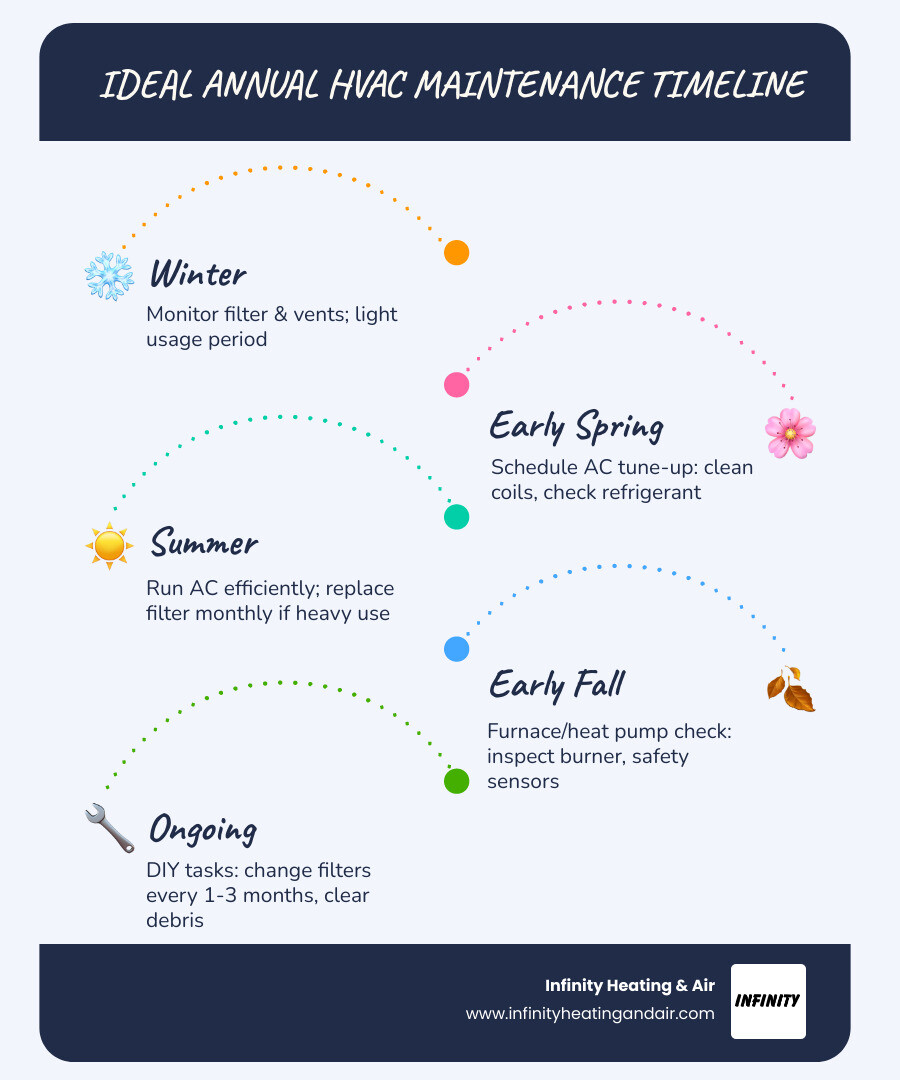
Most HVAC experts agree that scheduling a spring tune-up before cooling season and a fall tune-up before heating season gives your system the best chance of running efficiently and reliably all year.
Why does it matter so much? A neglected HVAC system can use 10–30% more energy than a well-maintained one. Annual maintenance also prevents an estimated 70–80% of HVAC breakdowns — breakdowns that almost always seem to happen on the hottest or coldest day of the year.
For homeowners in the South Puget Sound area, the local climate adds another layer of importance. Damp winters, summer heat events, and variable seasonal transitions put extra strain on HVAC equipment — making consistent servicing even more critical than in milder regions.
Determining How Often Should You Service Your HVAC for Peak Performance
In the South Puget Sound area, we experience a full range of seasons, from the crisp, wet winters of Olympia to the increasingly warm summers in Tacoma and Puyallup. This variety means your system is likely working hard for most of the year. While the "once-a-year" rule is a minimum, a biannual schedule is the gold standard for homeowners who want to maximize their comfort and minimize their utility bills.
By splitting your maintenance into two visits, you address the specific needs of each component before they are put to the test. A spring visit focuses on the air conditioning side, ensuring your coils are clean and your refrigerant levels are optimal before the first July heatwave hits. Conversely, a fall visit ensures your furnace or heating elements are safe and functional before the November frost arrives.
If you use a heat pump, which provides both heating and cooling, the workload is doubled. Because these systems run nearly year-round in our Northwest Washington climate, they require professional attention twice a year without fail to prevent premature wear. You can learn more about preparing your system for these shifts in our guide on Seasonal HVAC Preparation: Live in Comfort Year-Round.
The Difference Between Annual and Bi-Annual Schedules
The frequency of your service often depends on the specific hardware in your home. If you have a dedicated central AC unit that only runs for three months out of the year, an annual spring check-up is usually sufficient. Similarly, a dedicated gas furnace might only need one thorough inspection in the fall.
However, the reality for many residents in Federal Way, Auburn, and Lakewood is that our "shoulder seasons" are becoming less predictable. We might need the heater one week and the AC the next. This high usage intensity is why we recommend bi-annual service. When a system is serviced twice a year, it retains up to 95% of its original efficiency over its lifespan. In contrast, skipping even one year can lead to a 5% permanent loss in efficiency. For a deep dive into local cooling prep, see our article on Spring AC and HVAC Maintenance for the South Puget Sound Area.
Key Factors Influencing Your Maintenance Schedule
While the calendar is a great guide, it isn't the only factor. Every home in the South Puget Sound is different. A home in Gig Harbor might face salt air challenges, while a home in Graham or Roy might deal with more dust and pollen from surrounding fields.
The following factors can necessitate more frequent visits:
- System Age: Older units are more prone to component fatigue.
- Air Quality: Homes with pets, smokers, or residents with allergies should consider more frequent filter changes and potentially more frequent professional cleanings.
- Usage Patterns: If you work from home and run your system 24/7, it will naturally require more maintenance than a vacation property.
- Home Renovations: Construction dust can clog a system in a matter of weeks, requiring a post-project deep clean.
How often should you service your HVAC if the system is aging?
As systems move past the 10-to-15-year mark, the question of how often should you service your hvac becomes even more critical. Older systems typically have a higher "failure rate" for small components like capacitors, contactors, and fan belts.
For systems over 15 years old, we often suggest moving toward quarterly inspections. This proactive approach helps catch minor issues—like a small refrigerant leak or a fraying belt—before they cause a total system failure. This is especially important because older systems are often less efficient; keeping them perfectly tuned is the only way to prevent your energy bills from skyrocketing. If you’re wondering if your older unit is still worth the investment, check out our insights on When to Replace Your HVAC System.
Climate Impacts in Northwest Washington
Our local climate is unique. We don't just deal with cold; we deal with damp cold. Moisture can lead to corrosion on electrical components and provide a breeding ground for biological growth inside dark, damp HVAC cabinets.
In coastal areas like Steilacoom or University Place, salt air can accelerate the corrosion of outdoor condenser fins. This can reduce cooling efficiency by up to 40% if the coils aren't cleaned regularly. Meanwhile, inland areas may experience higher dust levels during the dry summer months, which can clog filters and reduce airflow by over 50%, putting immense strain on the blower motor.
What a Professional Maintenance Visit Includes
A professional tune-up is much more than a simple "look-over." It is a comprehensive technical inspection designed to restore your system to factory-spec performance. When we visit a home in Puyallup or Bonney Lake, we follow a rigorous HVAC Service Maintenance protocol.
A typical professional visit includes:
- Electrical Inspection: Tightening connections and measuring voltage/amps to prevent electrical fires or motor burnouts.
- Refrigerant Check: Ensuring levels are correct (low refrigerant can reduce efficiency by 10–20% and damage the compressor).
- Cleaning: Scrubbing the condenser and evaporator coils. Dirty coils can increase energy consumption by 20–30%.
- Calibration: Testing the thermostat to ensure it’s communicating correctly with the unit.
- Lubrication: Greasing moving parts to reduce friction and noise.
- Safety Testing: Inspecting the heat exchanger for cracks (crucial for preventing carbon monoxide leaks) and testing limit switches.
For a full breakdown of what to expect during a seasonal visit, you can review our Spring HVAC Checklist: Preparing for Summer.
DIY Maintenance Tasks Between Professional Visits
While a professional is needed for the technical "heavy lifting," there are several things you can do to support your system's health:
- Change Your Filters: This is the most important task. Clogged filters raise energy bills by 5–15% and are the #1 cause of service calls. Check them monthly and replace them every 1–3 months.
- Clear the Outdoor Unit: Keep at least two feet of clearance around your outdoor condenser. Remove leaves, grass clippings, and snow.
- Check Your Vents: Ensure that furniture, rugs, or curtains aren't blocking your supply or return vents.
- Visual Inspection: Look for signs of "ice" on the copper lines or water pooling around the indoor unit, which could indicate a drainage clog.
Signs Your System Needs Immediate Attention
Sometimes, your system won't wait for its scheduled appointment. If you notice any of the following "red flags," you should schedule service immediately, regardless of when your last tune-up was:
- Unusual Noises: Banging, screeching, or rattling often points to a loose belt or a failing motor.
- Strange Odors: A "burning" smell can indicate electrical issues, while a "musty" smell suggests mold in the ducts.
- Short Cycling: If the system turns on and off rapidly, it’s likely overheating or has a failing sensor.
- Uneven Temperatures: If the living room is freezing while the bedroom is sweltering, you may have ductwork leaks or a failing blower.
- Spiking Bills: An unexplained 20% jump in your utility bill is a classic sign of a system struggling to maintain temperature.
The Benefits of Regular System Servicing
The data is clear: maintenance pays for itself. When you consider the ROI of a tune-up, you aren't just paying for a technician's time; you are investing in the longevity of your home's most expensive appliance.
| Performance Metric | Maintained System | Neglected System |
|---|---|---|
| Energy Efficiency | Retains 95% of original rating | Loses ~5% efficiency per year |
| Breakdown Risk | 70-80% lower | High risk during peak weather |
| Average Lifespan | 15–20 years | 10–12 years |
| Air Quality | High (clean filters/coils) | Low (dust/mold accumulation) |
| Safety | Verified (CO testing) | Unverified (risk of leaks) |
Beyond the numbers, there is the peace of mind that comes with knowing your family is safe. Annual furnace maintenance is the only way to reliably detect micro-cracks in a heat exchanger, which can leak deadly carbon monoxide into your home. To understand the full financial impact, read about The True Cost of Neglecting HVAC Maintenance.
How often should you service your HVAC to maintain a manufacturer warranty?
Many homeowners are surprised to learn that their 10-year parts warranty has a "fine print" requirement: regular professional maintenance. Most major manufacturers require documented proof of annual service to honor warranty claims.
If a major component like a compressor or heat exchanger fails, the manufacturer may ask for service records. If you haven't had the system serviced, they may deny the claim, leaving you to pay for the part out of pocket. By joining a Maintenance Plan or an HVAC Service Plan, you ensure that your documentation is always up to date and your warranty remains valid.
Impact on Long-Term Lifespan and ROI
An HVAC system is a significant investment. With proper care, a high-quality system can last 20 years or more. Without it, you might find yourself shopping for a replacement in just 10 years. Regular servicing can extend the life of your equipment by 5 to 7 years on average.
Furthermore, if you ever decide to sell your home in a competitive market like Tacoma or Olympia, having a documented history of professional HVAC maintenance can increase your home's resale value. It shows potential buyers that the home has been meticulously cared for, giving them confidence in the home's infrastructure.
Conclusion
At Infinity Heating & Air, we believe that "endless comfort" isn't just a slogan—it's a result of consistent, expert care. We are proud to serve our neighbors across the South Puget Sound, from the busy streets of Tacoma and Federal Way to the quiet communities of Eatonville and Yelm.
Whether you have a brand-new heat pump or an aging furnace that needs a little extra attention, our NATE-certified technicians are here to help. We offer 24/7 emergency service for those times when things go wrong, but our goal is to help you avoid those emergencies altogether through proactive care.
Don't wait for the next extreme weather event to find out if your system is up to the task. How often should you service your hvac isn't just a technical question—it's a question of how much you value your home's comfort and safety. Schedule your professional HVAC Service Maintenance today and let us help you craft a home environment that stays perfect all year long.
Written & reviewed by the Infinity Heating & Air team — licensed WA HVAC contractor (INFINHA841B8). Family-owned in Graham, answering 24/7 across the South Sound.
Choose Infinity & enjoy endless comfort.
Your perfect home environment awaits — call (253) 740-5135 or schedule service online and our team will take it from there.
Open 24/7 · 100% Satisfaction Guaranteed · Graham, WA