The Ultimate Guide to Keeping Your Ducts Clean and Mold-Free
Discover how proper HVAC maintenance prevents mold growth. Expert tips for clean ducts, humidity control & IAQ in NW Washington.
Why Understanding How Proper HVAC Maintenance Prevents Mold Growth Could Save Your Home
How proper HVAC maintenance prevents mold growth comes down to one core idea: eliminate moisture, and you eliminate mold's best opportunity to take hold in your home.
Here's the short answer if you need it fast:
- Change air filters every 1–3 months to maintain airflow and remove dust (mold's food source)
- Clean condensate drain lines and drip pans regularly to prevent standing water
- Keep indoor humidity between 30% and 50% using your HVAC system and a dehumidifier if needed
- Seal and insulate ductwork to stop humid outside air from sneaking in
- Schedule professional HVAC inspections twice a year — spring and fall
- Install UV-C germicidal lights near the evaporator coil for ongoing spore control
Mold spores are always in the air around you. You can't eliminate them entirely. But they only become a problem when they land on a damp surface with a food source nearby. Your HVAC system — with its condensation, dark ductwork, and accumulated dust — can quietly become exactly that kind of environment if it isn't properly maintained.
This is especially relevant in Northwest Washington, where the damp, cool climate creates year-round moisture pressure on your home and heating and cooling equipment. Roughly 20% of buildings across the US, Canada, and Europe show signs of dampness, and much of that moisture traces back to HVAC-related issues that routine maintenance could have prevented.
The good news? Most mold problems inside HVAC systems are preventable. You don't need to overhaul your home — you just need a consistent maintenance routine and an understanding of where problems start.
How Proper HVAC Maintenance Prevents Mold Growth

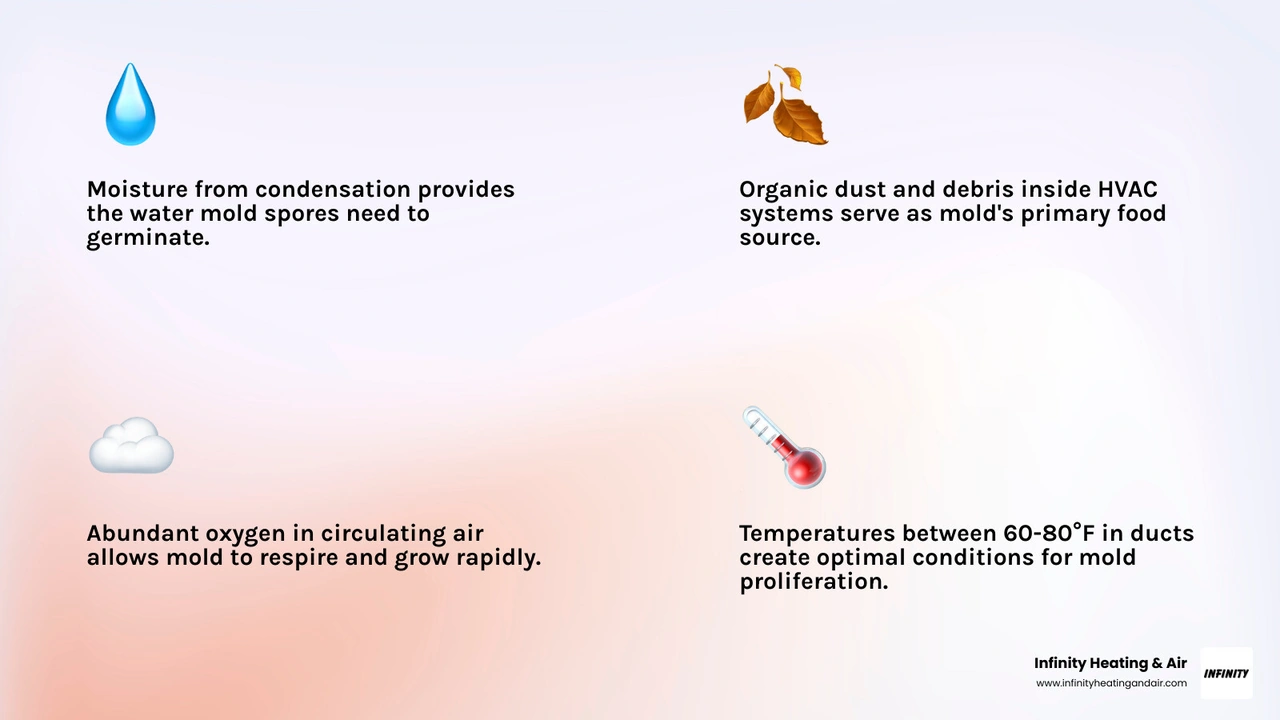
Mold needs four things to thrive:
- Moisture
- A food source such as dust, dander, or debris
- Oxygen
- A suitable temperature
HVAC systems naturally provide at least three of those ingredients unless they are maintained carefully. During cooling season, the evaporator coil removes moisture from indoor air. That is normal and necessary. But when drainage is poor, airflow is restricted, or humidity stays too high, that normal condensation turns into a mold problem.
Proper maintenance interrupts mold's life cycle in several ways at once:
- It removes dust and organic buildup that mold feeds on
- It keeps air moving so damp areas dry faster
- It clears water away through the condensate system
- It helps your equipment control indoor humidity correctly
- It catches small leaks or insulation failures before they become hidden mold sources
In our service areas across Northwest Washington, this matters year-round. Cool, damp conditions outside can combine with indoor moisture from cooking, showers, laundry, and tightly sealed homes. For a deeper look at why regular service matters in our climate, see Benefits of Regular HVAC Maintenance in Pacific Northwest Mild Wet.
Primary HVAC mold hotspots include:
- Evaporator coils
- Condensate drain lines
- Drip pans
- Supply and return ducts
- Vent covers and registers
- Blower compartments
- Wet internal insulation or duct liner
- Areas where ducts pass through attics, crawlspaces, or other unconditioned spaces
Why Early Detection and How Proper HVAC Maintenance Prevents Mold Growth Go Hand-in-Hand
Mold usually does not begin as a dramatic, movie-scene disaster. It starts small: a little standing water in a drain pan, a bit of sweating on ductwork, a dirty filter slowing airflow, or a musty smell when the AC first kicks on.
That is why early detection is so important. If mold growth is limited to one damp section of the system, it may still be possible to correct the moisture issue before spores spread through the duct network and into living spaces.
Signs often begin with:
- Localized odors near one vent or one section of the system
- Small speckled spots on a register or around the air handler
- Increased condensation around equipment
- Allergy symptoms that seem worse when the system runs
Ignoring those early warnings allows spores to circulate and settle elsewhere. Once that happens, what started as a small moisture issue can affect indoor air quality throughout the house. We cover more warning signs and prevention basics in Combating Mold and Mildew in Your HVAC Unit.
Managing Humidity: How Proper HVAC Maintenance Prevents Mold Growth in Northwest Washington
Humidity control is one of the biggest pieces of the puzzle. The EPA guidance cited in the research is clear: the ideal indoor humidity range for comfort and mold prevention is 30% to 50%. Mold risk rises when relative humidity stays above 60%.
In Northwest Washington, homeowners often assume mold is only a summer issue. Not quite. Our region's damp conditions can keep homes feeling clammy even when temperatures are mild. Basements, crawlspaces, bathrooms, and poorly ventilated rooms can all add moisture that your HVAC system must manage.
To keep humidity in check:
- Use a hygrometer to monitor indoor humidity
- Run bathroom and kitchen exhaust fans
- Keep vents open and unobstructed
- Replace filters on schedule so airflow stays strong
- Make sure your HVAC system is correctly sized and not short cycling
- Add a whole-home dehumidifier if humidity remains high
Short cycling deserves a special mention. An oversized system can cool the house too quickly and shut off before it removes enough moisture. The home feels cool, but still damp. That's comfortable for almost nobody and delightful for mold.
If you want to improve overall home moisture control and healthier air, visit our Indoor Air Quality page.
Identifying the Warning Signs of Mold in Your HVAC System
The most common sign of HVAC mold is a musty smell when the system starts running. Some homeowners describe it as an earthy odor, while others call it a "dirty sock" smell. None of those are compliments.
Other common warning signs include:
- Black, green, white, or brown speckled spots near vents
- Visible growth on vent covers, insulation, or around the air handler
- Excess condensation on ducts or around indoor components
- A drip pan that stays wet or overflows
- Frequent allergy-like symptoms indoors
- Symptoms that improve when you leave home
- Reduced airflow from dirty or clogged components
Physical symptoms of mold exposure may include:
- Sneezing
- Coughing
- Itchy eyes
- Headaches
- Nasal congestion
- Scratchy throat
- Wheezing
- Fatigue
Children, older adults, and people with asthma or other respiratory conditions may react more quickly than others. If your family seems fine outside the house but uncomfortable when the HVAC runs, that pattern is worth paying attention to.
Not every musty odor is mold, and not every allergy flare-up comes from your ductwork. But if you suspect an indoor air quality issue, testing can help clarify what is in your air and where it may be coming from. Learn more about that process in Air Quality Testing.
Critical Maintenance Tasks to Stop Spore Germination
If you want to stop mold before it starts, these are the maintenance tasks that matter most.
Change or Clean Air Filters Every 1-3 Months
Dirty filters do more than reduce efficiency. They trap dust, pet hair, and other organic particles that mold can feed on. They also restrict airflow, which can make coils too cold, increase condensation, and in some cases contribute to freezing and thawing problems.
A good rule of thumb is to replace or clean filters every 1 to 3 months. Households with pets, heavy HVAC use, allergies, or renovation dust may need more frequent changes.
For many homes, filters in the MERV 8 to MERV 13 range offer a good balance of spore capture and system compatibility.
Keep Condensate Drain Lines and Drip Pans Clear
Clogged condensate systems are one of the most common mold triggers in HVAC equipment. When the drain line backs up, water collects in the pan or overflows into surrounding materials. Standing water plus dust equals mold heaven.
To reduce risk:
- Inspect the drain pan for standing water
- Make sure the pan drains properly
- Keep the condensate line clear
- Address slow drainage right away
- Dry wet components within 24 to 48 hours when possible
Some homeowners perform a light vinegar flush on accessible condensate lines as a preventive step, but anything beyond simple upkeep should be handled carefully to avoid damaging components.
Clean Coils and Internal Components
Evaporator coils are prime mold territory because they stay damp during operation. If dust coats the coil, mold has both moisture and food. Professional cleaning removes buildup without damaging delicate fins or creating a bigger mess inside the cabinet.
Keep Airflow Balanced
Blocked supply vents, closed interior doors, furniture over returns, and neglected blower components all contribute to stagnant air. Stagnant air lets moisture linger longer. Mold loves that.
Keep all registers open, clear returns of obstructions, and avoid closing off rooms in ways that disrupt airflow balance.
Seal and Insulate Ductwork
Leaky ducts can pull humid air from crawlspaces, attics, garages, or wall cavities into the system. When that warm, damp air meets cooler duct surfaces, condensation can form. Insulation helps prevent ducts from "sweating," especially in unconditioned spaces.
That makes duct sealing and insulation a mold-prevention step, not just an energy-efficiency upgrade.
For a broader look at why routine service pays off, read Annual HVAC Maintenance - Is It Worth It?.
DIY vs. Professional HVAC Mold Prevention
| Task | DIY Homeowner Task | Professional Service Recommended |
|---|---|---|
| Replace air filter | Yes | No |
| Check for musty odors at vents | Yes | No |
| Keep vents unblocked | Yes | No |
| Monitor humidity with hygrometer | Yes | No |
| Light visual check of accessible drain pan | Yes | No |
| Flush accessible condensate line cautiously | Sometimes | Yes if clogging is recurring |
| Coil cleaning | No | Yes |
| Duct leak testing and sealing | No | Yes |
| Internal mold inspection | No | Yes |
| Electrical, refrigerant, and airflow diagnostics | No | Yes |
Advanced Solutions for a Mold-Free Home Environment
Basic maintenance handles a lot, but some homes in damp areas benefit from added protection.
UV-C Germicidal Lights
UV-C lights are commonly installed near the evaporator coil, where moisture tends to collect. Their job is to damage the DNA of microorganisms so they cannot reproduce effectively. In simple terms, they help turn a favorite mold hangout into a much less welcoming place.
These lights are especially useful when:
- The coil is prone to microbial buildup
- Humidity is hard to control
- Family members are sensitive to indoor air contaminants
- The system runs for long periods during humid weather
Whole-Home Dehumidifiers
If indoor humidity regularly climbs above 50%, your HVAC system may need backup. A whole-home dehumidifier works with your duct system to remove excess moisture more consistently than a portable unit.
This can be especially helpful in Northwest Washington homes with:
- Crawlspace moisture issues
- Poor bathroom ventilation
- Persistent window condensation
- Damp lower levels
- Tight building envelopes that trap humidity indoors
Duct Sealing and Insulation Upgrades
If ductwork leaks or lacks insulation, advanced air quality equipment can only do so much. Sealing joints and insulating ducts in vulnerable spaces helps prevent condensation and keeps unconditioned air out of the system.
Duct Sanitization and IAQ Add-Ons
In some situations, additional cleaning or indoor air quality improvements are appropriate after moisture problems are corrected. If you're exploring options, see our Indoor Air Quality Services & Solutions and Air Duct Sanitization Ultimate Guide.
Frequently Asked Questions About HVAC Mold Prevention
What is the ideal indoor humidity level to prevent mold?
The target range is 30% to 50% relative humidity. According to EPA guidance referenced in the research, that range supports comfort while reducing mold risk. Once humidity stays above 60%, mold becomes much more likely to grow.
In our part of Washington, that means humidity should be monitored year-round, not just in summer. If your home feels sticky, windows fog up, or you notice musty smells, check humidity first.
How often should I change my air filters to avoid mold?
Most homeowners should change filters every 1 to 3 months. Some filters are rated for longer periods, but actual replacement timing depends on pets, allergies, dust load, and system use.
Changing filters matters because dust trapped in the filter can become a food source for mold, and a clogged filter restricts airflow. Restricted airflow can increase moisture problems inside the system.
Why are clogged condensate drain lines and drip pans such a big deal?
Because they create standing water. Your air conditioner removes moisture from the air every time it cools. That water needs to leave the system quickly and completely. If the drain line clogs or the pan does not drain properly, moisture lingers where mold can colonize.
A professional maintenance visit should include checking drains and pans so they do not quietly turn into a swampy science project.
What role does sealing and insulating ductwork play in mold prevention?
A major one. Leaky ducts can draw in humid air from unconditioned spaces, and uninsulated ducts can form condensation when warm moist air contacts cool metal surfaces. Sealing and insulating ducts reduces that moisture exposure and helps keep hidden mold from forming in attics, crawlspaces, or wall cavities.
How frequently should professional HVAC maintenance be scheduled?
For mold prevention, twice a year is the best routine for most homes: once in spring before cooling season and once in fall before heating season. That schedule helps catch drainage issues, airflow problems, humidity concerns, and contamination before they get worse.
If you have recurring moisture issues, allergies, or a history of mold, more targeted indoor air quality evaluations may also make sense.
What are the health risks associated with mold from HVAC systems?
Mold exposure can contribute to:
- Sneezing and nasal irritation
- Coughing or wheezing
- Itchy eyes and throat irritation
- Headaches
- Asthma flare-ups
- General respiratory discomfort
HVAC-related mold is especially concerning because the system can circulate spores throughout the home rather than keeping them isolated in one area.
When should homeowners call a professional for mold inspection or remediation?
Call for professional help if:
- You smell persistent musty odors whenever the system runs
- You see visible growth inside HVAC components or multiple vents
- Family members have recurring symptoms tied to system operation
- Drainage issues keep coming back
- Duct insulation or porous materials appear contaminated
- The affected mold area is larger than 10 square feet
That last point matches EPA guidance referenced in the research. Large areas, internal duct contamination, and recurring moisture problems should not be treated as casual DIY projects.
For ongoing prevention and system care, visit our HVAC Service & Maintenance page.
Can DIY maintenance tasks effectively reduce mold risk in HVAC systems?
Yes, to a point. Homeowners can absolutely lower mold risk by replacing filters, monitoring humidity, keeping vents clear, watching for odors, and checking for obvious standing water in accessible areas.
But DIY care has limits. Internal mold inspection, coil cleaning, duct sealing, electrical troubleshooting, and remediation of contaminated materials are jobs for trained professionals. The goal is not just to wipe away visible spots. It is to fix the moisture source so mold does not come right back.
Conclusion
Keeping your HVAC system mold-free is really about controlling moisture before mold gets comfortable. When we maintain airflow, drainage, filtration, duct integrity, and humidity levels, we take away the conditions mold needs to grow.
For homeowners in Northwest Washington, that prevention-first approach matters. Our climate puts steady moisture pressure on homes in places like Auburn, Puyallup, Tacoma, Olympia, Lakewood, Gig Harbor, and surrounding communities. A little musty smell today can become a whole-house air quality problem tomorrow if it is ignored.
At Infinity Heating & Air, we help homeowners protect comfort and cleaner indoor air with expert maintenance, indoor air quality solutions, and 24/7 emergency service when urgent issues show up at the worst possible time. If you want help reducing mold risk and improving the air in your home, explore our Indoor Air Quality solutions.
Written & reviewed by the Infinity Heating & Air team — licensed WA HVAC contractor (INFINHA841B8). Family-owned in Graham, answering 24/7 across the South Sound.
Choose Infinity & enjoy endless comfort.
Your perfect home environment awaits — call (253) 740-5135 or schedule service online and our team will take it from there.
Open 24/7 · 100% Satisfaction Guaranteed · Graham, WA