The Definitive Guide to Repair vs Replace Your HVAC System
Discover when to repair vs replace your HVAC system. Expert guide on age, efficiency, costs & incentives for Tacoma homes. Save money now!
My HVAC system is acting up. Who in Tacoma can help me decide if I should repair or replace it?
Knowing when to repair vs replace your HVAC system is one of the most important decisions a homeowner can face, especially when your heat goes out on a cold Pacific Northwest morning or your AC quits during a summer heat event.
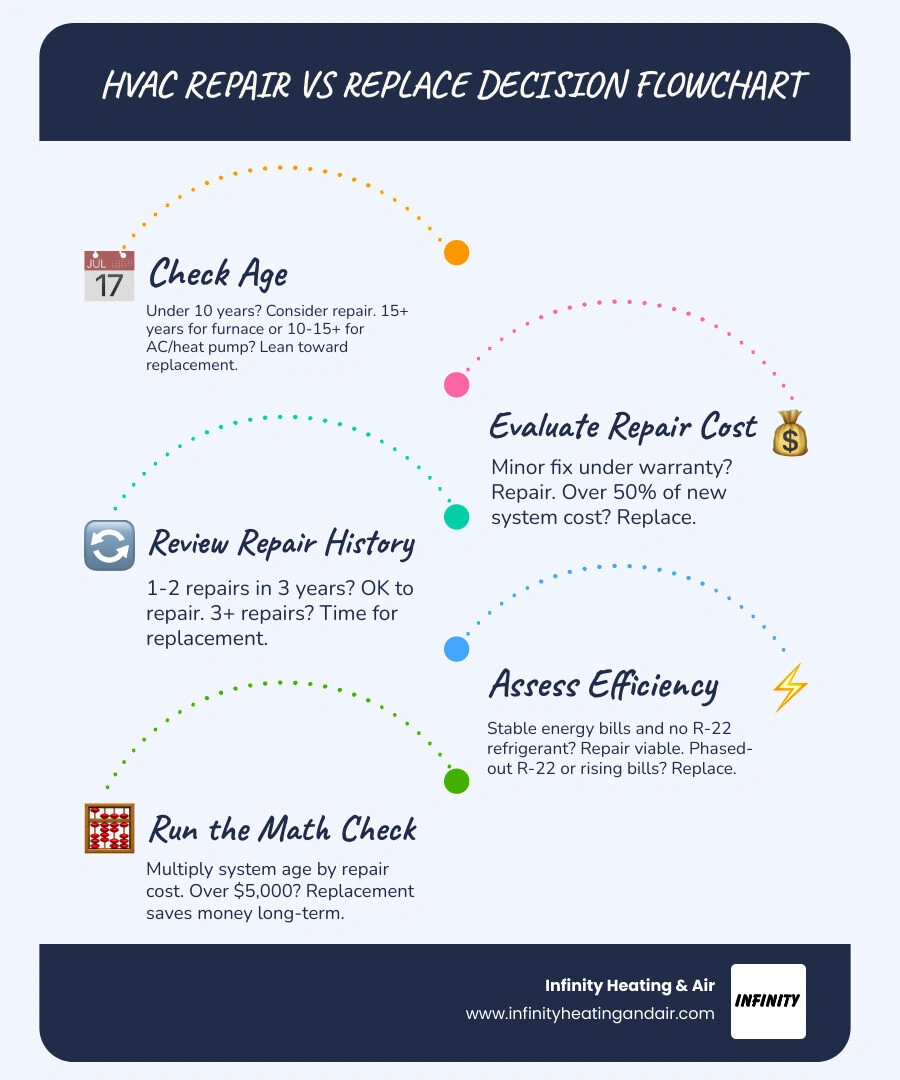
Here's a quick framework to help you decide:
Repair your HVAC system if:
- The system is under 10 years old
- The repair is minor and isolated (capacitor, thermostat, flame sensor)
- You've had 1–2 repairs in the past 3 years
- Energy usage has stayed stable
- The system is still under manufacturer's warranty
Replace your HVAC system if:
- The system is 15+ years old (furnace) or 10–15+ years old (AC or heat pump)
- The repair involves a major component that is no longer under warranty
- You've had 3 or more repairs in the past 3 years
- The system uses R-22 refrigerant (phased out since 2020)
- A major component like the compressor or heat exchanger has failed
Most homeowners face this decision at the worst possible time — when the system has already failed. But with the right framework, you can make a confident, informed choice before an emergency occurs.
This guide walks you through every factor that matters: age, repair history, efficiency ratings, refrigerant type, local climate, and financial incentives available in Washington State.
Recognizing the Signs: When to Repair vs Replace Your HVAC System
Sometimes your HVAC system doesn't just stop working; it starts "talking" to you through subtle (or not-so-subtle) red flags. Recognizing these Signs That Your Furnace Needs to Be Repaired Before Winter can save you from an emergency breakdown in the middle of January.
We often see systems that technically run but fail to provide true comfort. If you notice uneven temperatures—where your kitchen feels like a sauna while your bedroom is an icebox—it could be a sign of failing components or an improperly sized unit. Frequent cycling (the system turning on and off every few minutes) is another major indicator that your unit is struggling to keep up with the demand.
Beyond temperature, pay attention to your indoor air quality. Excessive dust, strange odors, or unusual grinding and banging noises are signals that something is wrong. While a simple blower motor repair might fix a noise issue, persistent air quality problems often stem from aging systems that can no longer manage humidity or filtration effectively. Understanding the different HVAC Unit Types and Which One Works for You is the first step in deciding if your current setup is still the right fit for your home’s layout.
Age and Frequency: When the "Retirement Zone" Signals Replacement
In home maintenance, age is more than just a number—it’s a risk profile. Most air conditioners and heat pumps have a functional lifespan of 10 to 15 years, while well-maintained furnaces can last between 15 and 20 years. If your equipment is approaching these milestones, even a small repair can be a sign of future issues.
Knowing When to Replace Your HVAC System involves looking at how much "life" is realistically left in the core components. For example, if you are asking When Should You Replace Your Furnace, consider that a 17-year-old unit is likely operating at significantly lower efficiency than a modern model, even if it still turns on.
Why frequent breakdowns signal it's time to replace your hvac system
We like to call it "systemic fatigue." If you’ve had three or more repairs in the last three years, you aren't just dealing with bad luck—you're dealing with a system that is fundamentally wearing out. Much like an old car that needs constant attention, an HVAC system in a "repair spiral" will continue to be a source of frustration.
The History of HVAC Systems How Have They Evolved shows that older units weren't designed for the high-performance demands of today's smart homes. When major parts like the compressor or the evaporator coil fail on an aging unit, replacing them is often like putting a brand-new engine in a car with high mileage. It doesn't reset the clock on the rest of the aging parts.
Applying the Major Component Rule and the age-to-performance ratio
To take the guesswork out of the equation, we recommend two logical "gut checks":
- The Major Component Rule: If a major internal component fails on a system that is out of warranty, the resources are almost always better spent on an upgrade. A new system comes with a fresh warranty and 15+ years of expected life, whereas a repair only addresses one specific part.
- The Reliability Ratio: Consider the age of the unit alongside the frequency of service calls. If you have a 12-year-old AC that requires annual intervention, you are essentially investing in a system that no longer provides reliable service.
Following a structured HVAC Installation Guide Tacoma WA ensures that when you do decide to replace, the new system is integrated perfectly with your existing ductwork for maximum longevity.
Efficiency Standards, Incentives, and the Washington Climate
Our local climate in Northwest Washington presents unique challenges. From the damp winters in Olympia to the humid summer afternoons in Puyallup, your HVAC system works hard year-round. This constant usage means that efficiency gains from a new system provide benefits much faster here than in milder climates.
When considering HVAC in Washington, we must account for our high humidity and the need for reliable heating. The Best HVAC Systems for Cold Climates often involve high-efficiency heat pumps or dual-fuel systems that can handle our specific temperature swings without excessive energy usage.
How modern efficiency helps you decide when to repair vs replace your hvac system
Efficiency isn't just about being eco-friendly; it's about consistent home comfort. Since 2023, federal standards have raised the bar for SEER2 (cooling efficiency) and AFUE (heating efficiency). Modern ENERGY STAR standards for AC units, heat pumps, and furnaces represent a significant leap in performance compared to systems installed just a decade ago.
If you are still running a system that uses R-22 refrigerant (often called Freon), you are facing a reliability risk. Production of R-22 ceased in 2020, meaning sourcing reclaimed gas is increasingly difficult and resource-intensive. A single refrigerant leak in an R-22 system is often the definitive sign that it's time to switch. You might even consider the Central AC vs Ductless Mini Split Comparison to see if a more zoned approach would better serve your home's efficiency needs.
Financial incentives and home resale value
The good news is that it has never been more accessible to choose replacement over repair. The Inflation Reduction Act provides significant federal tax credits for high-efficiency heat pumps. Additionally, many local utility providers in the Tacoma and Graham areas offer rebates that can further support the transition to a new system.
Upgrading your system also provides a return on investment through home resale value. In a competitive market like Federal Way or Gig Harbor, a brand-new, energy-efficient HVAC system with a transferable warranty is a massive selling point. It gives potential buyers peace of mind that they won't face a major system update immediately after moving in. For a deeper dive into local considerations, check out our HVAC Puyallup Ultimate Guide.
Frequently Asked Questions about HVAC Replacement
Is it worth repairing a system that uses R-22 refrigerant?
In almost all cases, no. Because R-22 is no longer manufactured, dealing with limited availability makes maintenance difficult. If your older AC has a leak, you aren't just paying for the repair; you're dealing with a phased-out technology. That contribution is better used toward a modern system that is more reliable to maintain and much better for the environment.
Should I replace my furnace and air conditioner at the same time?
If both units are over 12 years old, we highly recommend it. Replacing them as a matched set streamlines the installation process because the technicians are already on-site and working on the air handler. More importantly, HVAC systems are designed to work together. A new, high-efficiency AC paired with an old furnace blower won't reach its full performance potential.
How does a new system impact my home's resale value?
A new HVAC system is one of the top upgrades that add value. While a kitchen remodel is flashy, a functional, efficient HVAC system is a "must-have" for home inspectors and savvy buyers. It can often be the deciding factor that prevents concessions during the closing process.
Conclusion
Deciding when to repair vs replace your hvac system doesn't have to be a guessing game. By evaluating your system's age, checking your recent repair history, and looking at modern performance standards, you can move from a place of reaction to strategic planning.
At Infinity Heating & Air, we specialize in helping homeowners across Northwest Washington—from Tacoma and Puyallup to Olympia and Auburn—find the perfect balance between reliability and comfort. Whether you need a tune-up to get through the season or you're ready to explore the latest in heat pump technology, our team is here to provide honest, expert guidance.
Don't wait for your system to fail completely. If you're noticing the warning signs we've discussed, let's look at the details together. Our Heating Replacement Tacoma Guide offers even more localized tips for keeping your home cozy.
Ready for a customized comfort solution? More info about HVAC installation and replacement services is just a click away. Let us help you craft endless comfort for your home today.
Written & reviewed by the Infinity Heating & Air team — licensed WA HVAC contractor (INFINHA841B8). Family-owned in Graham, answering 24/7 across the South Sound.
Choose Infinity & enjoy endless comfort.
Your perfect home environment awaits — call (253) 740-5135 or schedule service online and our team will take it from there.
Open 24/7 · 100% Satisfaction Guaranteed · Graham, WA