The Hidden Chain of Accountability: Independent HVAC Installers vs. Big Box Retail Chains
Big box retailers often hand off heating installs to third-party subcontractors. Compare your options before hiring local hvac contractors this winter.
The Myth of the Big Box Bargain for Pre-Winter Heating Upgrades
Buying a new furnace through a massive national hardware chain does not guarantee a smoother installation—it often just adds a layer of corporate bureaucracy right when you need heat the most. If you are hiring local hvac contractors to replace a failing system, you might assume a familiar retail logo means guaranteed accountability. The short answer is that national chains are essentially acting as equipment brokers. They sell you the physical unit, but they do not employ the people who actually show up at your house to install it.
This distinction becomes critical during November pre-winter heating readiness. When the temperature drops and your old system starts making strange noises, you need a reliable solution fast. You need to know exactly who is responsible for the performance of your new equipment. Whether you are upgrading a heat pump for the winter or planning ahead for local air conditioning services next season, the company actually turning the wrenches determines your long-term comfort.
Most homeowners do not realize that the perceived convenience of a big box store masks a fragmented labor model. You pay the store, the store pays a regional dispatcher, and the dispatcher pays a third-party subcontractor. This hidden chain of accountability creates significant blind spots in quality control, communication, and warranty support. By understanding how this system works, you can make a more secure investment for your home.
The Reality of the Retail Transaction
When you sign a contract at a retail register, you are purchasing a product package, not a dedicated service relationship. The retail giant takes their margin off the top and pushes the actual labor down to the lowest bidder in their regional network. This means the person designing your ductwork modifications and calibrating your refrigerant charge is often working under intense time constraints to make the job profitable.
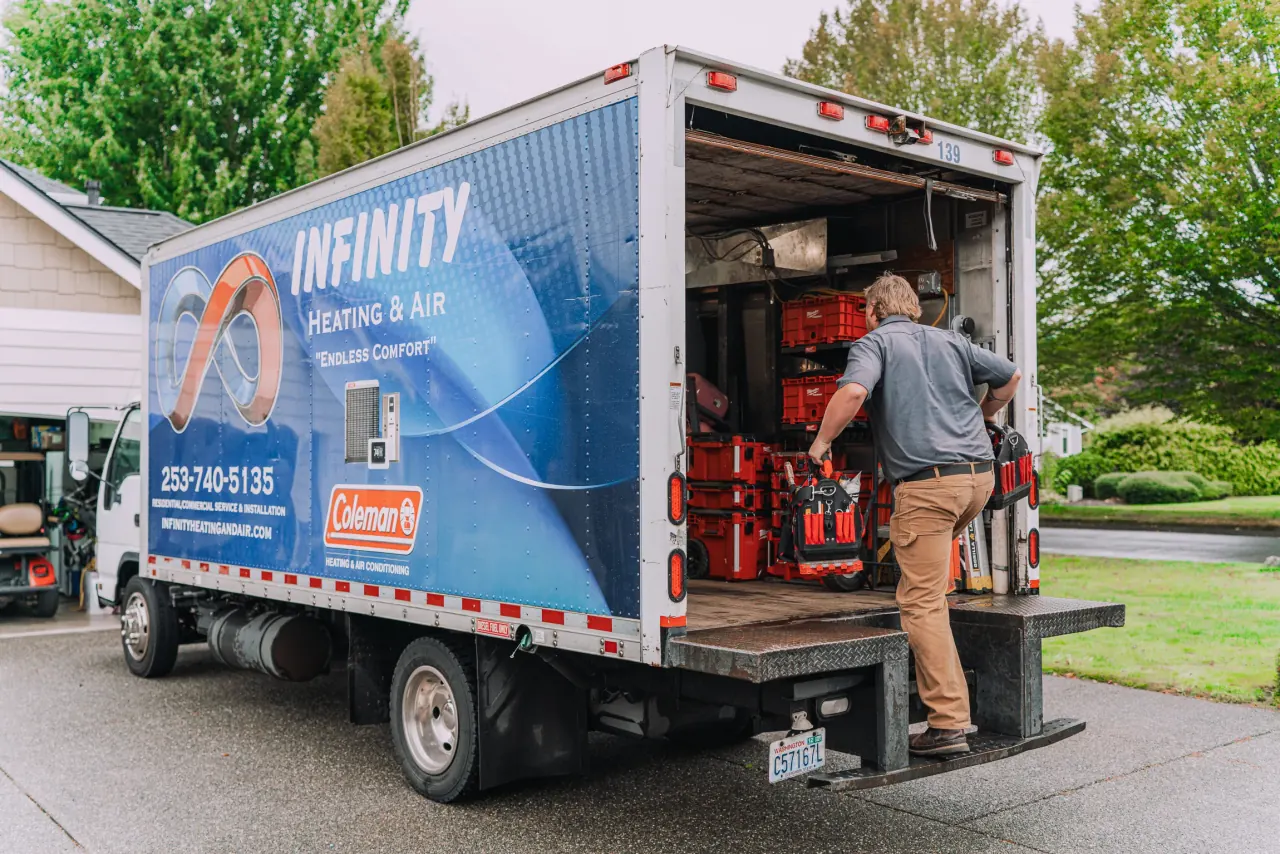
Independent installers operate on a completely different model. Their name is on the side of the truck, and their reputation in the community depends entirely on the success of your specific installation. There is no corporate umbrella to hide behind if the system fails to heat your home properly on a freezing night.
The Subcontractor Shuffle: Who Actually Installs Retail Systems?
National retail chains are primarily logistics and distribution companies. They excel at moving boxes from warehouses to store shelves. However, HVAC installation is a highly technical trade that requires precise engineering, not just basic assembly. Because big box stores do not maintain dedicated, in-house HVAC service departments, they rely heavily on a rotating pool of third-party subcontractors to fulfill their installation contracts.
This handoff introduces several risks for the homeowner. You have no control over which subcontractor is assigned to your home. You cannot research their specific local reviews, verify their individual track record, or confirm their specialized training before they arrive. Understanding why hiring certified HVAC technicians matters is critical, yet the retail model completely removes your ability to vet the actual technicians doing the work.
Comparing the Installation Models
| Feature | Big Box Retail Chains | Independent Local Contractors |
|---|---|---|
| Labor Source | Third-party subcontractors assigned by a regional dispatcher. | Dedicated, in-house technicians employed directly by the company. |
| Vetting Control | Zero homeowner control; you get whoever is available that day. | Full transparency; you can research the specific company's local reputation. |
| Communication | Filtered through store management and corporate call centers. | Direct communication with the business owner and lead installer. |
| Quality Incentive | Volume-driven; subcontractors must work fast to maintain margins. | Reputation-driven; local businesses rely on five-star community reviews. |
The turnover problem: Subcontractor networks often experience high turnover. The crew that installs your system in the fall might no longer be contracting with that retail store by the spring. If an issue arises later, the store will simply dispatch a completely different subcontractor who has no familiarity with your home, your ductwork, or the original installation decisions.
Local independent contractors maintain their own dedicated teams. The lead technician who performs your initial load calculation is often the same person overseeing the final system startup. This continuity ensures that every detail discussed during the estimate is actually executed on the day of installation.
Retail Chain vs. Independent HVAC Installation Workflow
- Retail Chain Workflow: Store Sales → Corporate Dispatch → 3rd Party Subcontractor → Fragmented Warranty Support
- Independent Local Workflow: Direct Consultation → In-House Expert Installation → Direct Ongoing Maintenance → Single-Point Warranty
- The Efficiency Risk: Up to 30% efficiency loss from improper installation (Source: U.S. Department of Energy)
Direct Accountability When Freezing Temperatures Hit
The true test of an HVAC company is not how they handle the initial sale, but how they respond when things go wrong. Equipment failures rarely happen on a mild, sunny afternoon. They happen when the system is working its hardest during extreme weather. The difference between corporate red tape and local priority service becomes painfully obvious during a winter breakdown.
Consider a typical pattern we see in the region: a local homeowner's furnace burned out during freezing winter temperatures this past February. Because they worked directly with a local team, they received a priority emergency visit and a fair, straightforward quote to replace their furnace and heat pump. The technicians worked through the severe cold and got the new system up and running flawlessly. That level of urgency is standard for local independents, but nearly impossible to achieve through a retail chain's support network.
The 1-800 Number Reality
If a newly installed retail system fails during a severe cold snap, the warranty process is incredibly frustrating. You cannot simply call the technician who installed it. Instead, you must call a national 1-800 number, wait on hold for a corporate dispatcher, and wait for them to contact an available subcontractor in your area. That subcontractor has no personal loyalty to you—they are just answering a work order from a corporate vendor.
Working with a dedicated local business like Infinity Heating & Air means you get direct accountability. As a local contractor, we stand directly behind every installation without corporate middle-men. If a system we installed has an issue, we prioritize that call because our reputation in the community depends entirely on ensuring our neighbors stay warm and safe. There is no blame game and no waiting for corporate approval to order a replacement part.
Why Pacific Northwest Winters Require Specialized System Design
HVAC installation is not a plug-and-play process. You cannot simply pull a generic equipment package off a warehouse shelf and expect it to perform perfectly in every environment. Regional climate factors demand highly nuanced system sizing, configuration, and ductwork design. The Graham WA and surrounding Pacific Northwest climate presents very specific challenges that volume-driven retail installers frequently overlook.
The Defrost Cycle Challenge
The Problem: Graham, WA experiences long stretches of wet, near-freezing November weather. This specific combination of high humidity and temperatures hovering just above freezing (around 32°F to 38°F) is actually much harder on a heat pump than a dry, sub-zero climate. Moisture in the air rapidly freezes onto the outdoor coil, choking off airflow and severely reducing the system's ability to pull heat into your home.
The Cause: To combat this ice buildup, heat pumps must regularly enter a "defrost cycle," temporarily reversing operation to melt the ice. Generic retail packages are often installed with factory-default settings that do not account for heavy Pacific Northwest moisture. As a result, the system either fails to defrost adequately—turning into a block of ice—or defrosts too frequently, wasting massive amounts of energy and blowing cold air into your living room.
The Solution: Local experts design custom solutions specifically for this climate. They elevate the outdoor unit above the expected snow line to ensure proper drainage during defrost. They calibrate the defrost control board specifically for high-humidity environments. They also design specialized ductwork modifications and integrate auxiliary heating strips to ensure your home stays perfectly comfortable even when the heat pump is actively melting off heavy frost.
Avoiding the 30% Efficiency Loss Through Expert Installation
The quality of the equipment you buy is only half the equation; the quality of the hands installing it makes up the other half. According to data from the U.S. Department of Energy, improper installation can reduce your HVAC system's efficiency by up to 30%. You could purchase the highest-rated, most expensive furnace on the retail floor, but if the subcontractor rushes the installation, you will pay for it in wasted energy every single month.
Volume-driven subcontractor models inherently prioritize speed over precision. When a crew is paid a flat rate by a big box store to complete an installation, their financial incentive is to finish the job as quickly as possible and move to the next house. This rush drastically increases the risk of efficiency-draining errors.
Precision Steps That Cannot Be Rushed
- Refrigerant charge calibration: Heat pumps require an exact balance of refrigerant to operate efficiently. Rushed installers often rely on factory charges without measuring the specific line set length, leading to compressor strain and high utility bills.
- Airflow and static pressure: A new, powerful blower motor pushing air through undersized or leaky older ductwork will cause the system to choke. Local experts measure static pressure and adjust ducting to match the new equipment.
- Proper sealing and insulation: Tiny gaps in the plenum or connection points allow conditioned air to escape into your attic or crawlspace before it ever reaches your living room.
Furthermore, qualifying tax credits or generic utility energy rebates often require strict proof of high-efficiency performance. If an improper installation prevents the system from hitting its rated efficiency, you may lose out on those incentives entirely. This is why securing professional HVAC installation and replacement through a dedicated local team is the only way to guarantee you get the performance you paid for.
Comparing Warranties: Corporate Claims vs. Local Execution
Warranties are often the primary reason homeowners lean toward big box stores. The assumption is that a massive corporation will always be there to honor a guarantee. However, understanding the mechanics of HVAC warranties reveals how local execution consistently outshines corporate promises.
Every new heating system comes with two distinct warranties: the manufacturer's equipment warranty (covering physical parts) and the installer's labor warranty (covering the time and expertise required to diagnose and replace those parts). While retail chains offer labor warranties, the execution of that warranty relies entirely on whichever subcontractor they can convince to take the service call.
The Subcontractor Blame Game
| Warranty Phase | Big Box Retail Experience | Independent Local Experience |
|---|---|---|
| Initiating a Claim | Call a national center, navigate a phone tree, wait for a callback. | Call the local office directly, speak to a dispatcher who knows your home. |
| Diagnostic Process | New subcontractor arrives, often charges a diagnostic fee because they didn't do the original work. | Original installation company arrives, already familiar with the system design. |
| Dispute Resolution | High risk of the manufacturer, store, and subcontractor blaming each other for the failure. | Single point of contact. The local company handles the manufacturer directly on your behalf. |
If a part fails, a third-party subcontractor has very little incentive to perform free warranty labor on a system they didn't originally install. Homeowners often find themselves caught in a frustrating loop where the subcontractor blames the manufacturer for a faulty part, the manufacturer blames the subcontractor for a poor installation, and the retail store simply points to the fine print. When you need professional AC repair or winter furnace service, you want a single local entity that takes complete ownership of the problem.
Post-Installation Support: Building a Long-Term Maintenance Relationship
A successful installation day is only the beginning of a heating system's 15-to-20-year lifespan. To reach that maximum lifespan while maintaining peak efficiency, the equipment requires consistent, professional upkeep. This is where the retail subcontractor model completely falls apart.
Retail subcontractors are strictly focused on new installations. They rarely, if ever, return to your home for seasonal tune-ups, filter changes, or ongoing preventative care. Once the retail contract is fulfilled, you are entirely on your own to find a reputable service company to maintain the equipment.
The Value of Institutional Memory
There is immense value in having the exact same local team that installed your system return to maintain it year after year. They know exactly how the ductwork was routed, they know the specific load calculations for your home, and they have a documented history of your system's performance metrics from day one. This institutional memory allows them to spot minor deviations in performance long before they turn into major breakdowns.
Building a long-term relationship with a local contractor ensures that your routine HVAC maintenance is performed by technicians who are deeply invested in the longevity of your equipment. It transforms a one-time retail transaction into an ongoing partnership dedicated to your family's consistent comfort, no matter how harsh the Pacific Northwest winter gets.
Frequently Asked Questions
Who actually installs HVAC systems bought at retail chains?
Retail chains do not use their own employees for HVAC installations; they act as equipment brokers and outsource the labor to a rotating network of third-party subcontractors. This means you have no control over the specific company or technician arriving at your home, making it impossible to vet their local reputation or verify their specific training before the job begins.
Why is local climate expertise important for heating installation?
Heating systems must be precisely calibrated to handle specific regional weather patterns, rather than relying on generic factory settings. In the Pacific Northwest, the combination of high humidity and near-freezing temperatures requires specialized heat pump defrost cycle configurations and drainage solutions to prevent the outdoor unit from freezing solid during the winter.
How do HVAC warranties work with subcontractors?
While you receive a parts warranty from the manufacturer, the labor warranty is often fulfilled by whichever subcontractor the retail store dispatches. This frequently leads to diagnostic disputes and delays, as the new subcontractor may try to charge diagnostic fees or blame the original installer, leaving the homeowner caught in the middle of a corporate blame game.
What questions should I ask before hiring an HVAC company?
You should always ask if the company uses their own dedicated, in-house employees or if they sub-contract their labor to third parties. Additionally, ask how they calculate proper system sizing for your specific home, what their emergency response time is during winter breakdowns, and how they handle the warranty claims process with the manufacturer.
Do retail stores use their own in-house HVAC installers?
No, national retail stores almost exclusively use third-party subcontractors to fulfill their HVAC installation contracts. The retail store handles the sale and takes a percentage of the profit, but the actual sizing, ductwork modification, and physical installation are handed off to an entirely separate local business.
How does a local independent contractor handle emergency winter breakdowns differently?
A local independent contractor prioritizes their own recent installations and customers, offering direct dispatch without corporate phone trees. If a system they installed fails during a freeze, they take immediate personal responsibility to restore your heat, whereas a retail chain requires you to navigate a national call center before eventually assigning an available subcontractor.
Written & reviewed by the Infinity Heating & Air team — licensed WA HVAC contractor (INFINHA841B8). Family-owned in Graham, answering 24/7 across the South Sound.
Choose Infinity & enjoy endless comfort.
Your perfect home environment awaits — call (253) 740-5135 or schedule service online and our team will take it from there.
Open 24/7 · 100% Satisfaction Guaranteed · Graham, WA