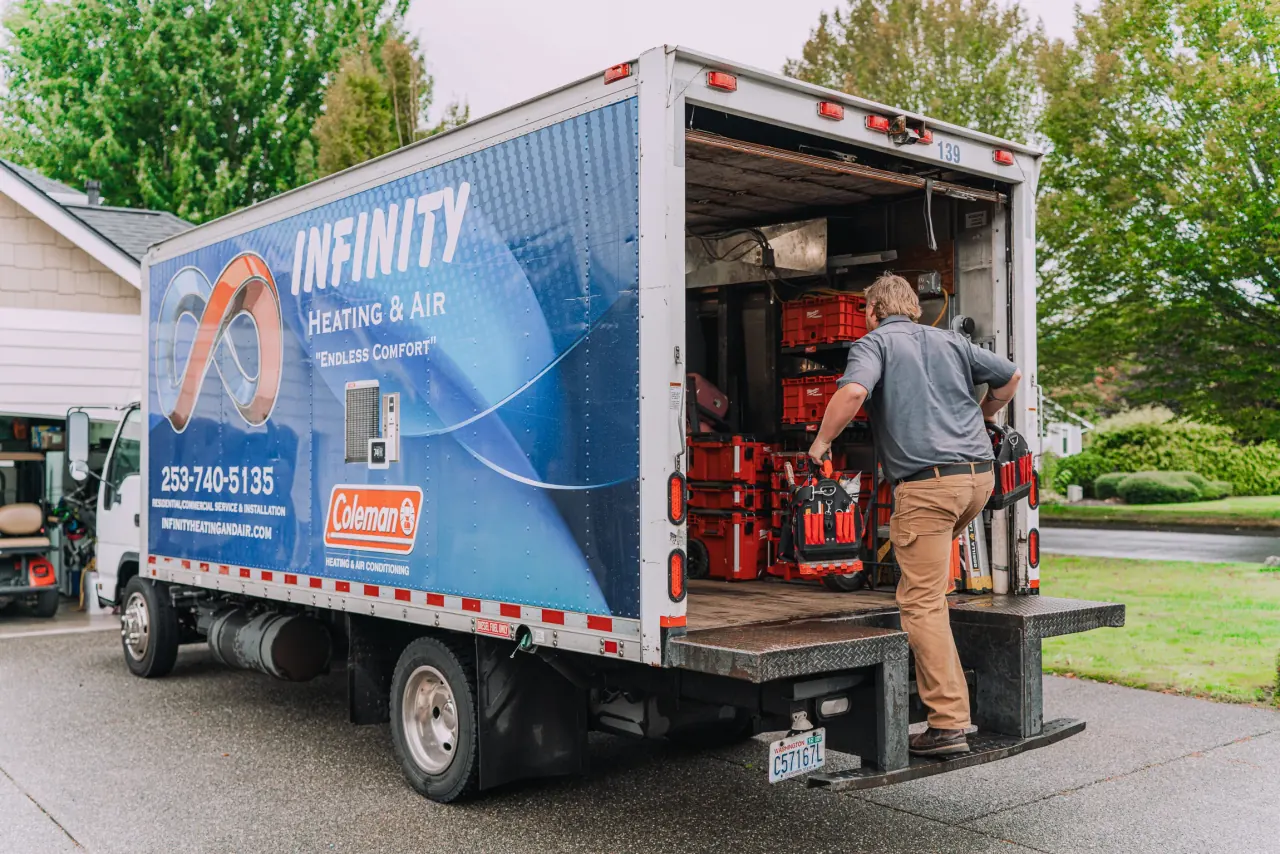
Upgrading Heating Systems in Tacoma's Historic Craftsman Homes
Why we recommend ductless when upgrading heating systems in Tacoma's historic Craftsman homes. Preserve your lath and plaster walls. See your options today.
Navigating Winter Comfort in Tacoma's Century-Old Homes
Upgrading Heating Systems in Tacoma's Historic Craftsman Homes often feels like choosing between your family's comfort and your property's architectural soul. You know that strange, rattling noise from your aging furnace is a warning sign, and the cold drafts creeping through the baseboards are only going to get worse as winter approaches. At Infinity Heating & Air, we talk to many homeowners who dread the idea of bringing in contractors, fearing that achieving modern warmth means tearing up original, century-old walls and dealing with endless dust. However, you do not have to sacrifice your home's historic charm just to stay warm.
The pivotal decision point for owners of these classic properties comes down to how you distribute that heat. In our experience, forcing traditional, bulky ductwork into a house that was never designed for it is a recipe for structural damage and skyrocketing renovation costs. Instead, we recommend taking a minimally invasive approach with high-efficiency ductless technology, which allows you to preserve the integrity of your home while maximizing your winter comfort.
To learn more about modern, low-impact climate solutions, explore our comprehensive Air Conditioning & Heat Pump Systems.
The Structural Reality of Lath and Plaster Architecture
If you own a property in one of the Tacoma historic districts, you are likely living surrounded by authentic lath and plaster walls. Unlike modern drywall, which is screwed into studs in large, uniform sheets, lath and plaster is a complex, hand-applied system. Builders in the 1920s nailed thousands of thin, horizontal wooden strips (the lath) across the framing. They then pressed wet plaster over the lath, forcing it through the gaps to create "keys" that lock the entire wall together as it dries.
This construction method creates incredibly solid, sound-dampening walls, but as our technicians have seen firsthand across Graham and Tacoma, it is remarkably fragile when subjected to modern renovation techniques. The heavy vibrations from power saws and the large cutouts required to retrofit traditional central air ductwork can easily break the plaster keys behind the wall. Once those keys snap, the plaster begins to bulge, crack, and eventually pull away from the lath entirely.
Why Standard Retrofits Fail in Craftsman Homes
The physical impact of forcing modern ductwork into century-old wall cavities goes far beyond a little drywall dust. Authentic 1920s Craftsman framing lacks the standardized wall cavity space found in modern construction. Plumbers and electricians from a century ago routed pipes and knob-and-tube wiring in ways that make dropping large metal ducts nearly impossible without major demolition.
When invasive installations go wrong, the hidden costs escalate rapidly. Historic preservation standards often require specialized plaster artisans to repair the damage, which is significantly more complex than taping and mudding a piece of sheetrock.
| Wall Material | Retrofit Impact | Repair Complexity |
|---|---|---|
| Original Lath & Plaster | High risk of cracking; vibrations break structural plaster "keys." | Requires specialized plastering artisans to match texture and depth. |
| Modern Drywall | Minimal structural risk; cuts are clean and localized. | Standard patching, taping, and painting. |
| Solid Wood Paneling | Risk of splintering and ruining matched grain patterns. | Difficult to source matching vintage wood for patches. |
Combating the Damp Pacific Northwest Winter
Older Craftsman homes are notoriously draft-prone. Because they were built long before modern insulation standards and vapor barriers existed, they naturally breathe. While this was great for preventing rot a hundred years ago, it makes them struggle to retain heat today. With summer temperatures fading rapidly, our focus shifts to helping these structures handle the colder months ahead.
Tacoma's damp, chilly Pacific Northwest winters uniquely penetrate draft-prone Craftsman homes, making consistent, dehumidifying heat critical. The challenge in our region is rarely sub-zero blizzards; instead, it is the relentless, bone-chilling moisture. When temperatures hover just above freezing and the air is saturated with rain, that dampness seeps through uninsulated walls and single-pane windows, making the indoor air feel much colder than the thermostat reads.
The dual challenge of historic heating:
- Temperature recovery: Drafty homes lose heat quickly, meaning standard furnaces have to work overtime, blasting hot air only for the room to cool down minutes later.
- Moisture control: High indoor humidity makes the air feel clammy and can lead to condensation on vintage wood window frames, potentially causing rot.
- Wood preservation: Wild temperature swings from outdated radiators or oversized furnaces can cause historic wood floors and trim to expand and contract aggressively, leading to warping.
To protect both the occupants and the historic wood interiors, we advise installing a system that offers continuous, even heat distribution alongside active dehumidification. Modern technological solutions address these specific environmental factors without requiring the home to be hermetically sealed.
Why Ductless Mini-Splits Are the Premier Historic Retrofit
Ductless heat pumps operate on a brilliantly simple premise: instead of generating heat in a central basement furnace and blowing it through massive metal tubes, they move heat directly where it is needed. An outdoor compressor extracts ambient heat from the outside air (even in near-freezing temperatures) and transfers it via refrigerant lines to sleek, wall-mounted or floor-mounted indoor units.
Because they bypass the need for extensive ductwork entirely, our team considers them the safest option for vintage architecture. According to Department of Energy (DOE) guidelines, ductless conduits require only a small, roughly 3-inch hole through the exterior wall to connect the indoor and outdoor components.
This minimally invasive approach ensures the structural integrity of your plaster is maintained. There are no heavy vibrations tearing apart the lath, no dropped ceilings to hide bulky metal trunks, and no compromised load-bearing studs. You get the benefits of modern climate control while keeping the 1920s aesthetic intact. If you are weighing your options, understanding the high-efficiency HVAC comparison is a great next step.
Minimal Intrusion, Maximum Output
The exact dimensions of the required wall penetrations are roughly the size of a baseball. This single access point carries the power cable, refrigerant tubing, and a condensate drain line.
The targeted zoning advantage:
- Eliminating cold spots: Drafty historic floor plans often feature isolated rooms, like enclosed sunporches or converted attics, that central heating never quite reaches. Ductless units put the heat exactly where you need it.
- Customized comfort: You can set different temperatures for the living room and the master bedroom, ensuring you aren't paying to heat unused guest rooms.
- Inverter technology: Unlike old furnaces that blast on at 100% capacity and then shut off, modern ductless systems modulate their output, running continuously at a low speed to maintain a perfectly even temperature.

Strategic Routing: Preserving Your Home's Aesthetic
One of the biggest hesitations homeowners have about ductless systems is the visual impact of the equipment on their classic exterior. This is where meticulous planning and custom comfort system design make all the difference. When the Infinity Heating & Air team works on historic lath and plaster homes, we ensure the installation is tailored to the unique lines of your property.
The planning process for routing linesets discreetly involves tracing the architectural features of your home. Rather than running conduits directly across the middle of a beautiful cedar-shingled wall, linesets can be tucked behind existing downspouts, routed under eaves, or hidden within custom-fabricated architectural chases that mimic the home's original trim.
Inside, indoor units are placed for optimal airflow without ruining the 1920s aesthetic. Often, floor-mounted units can be positioned where old cast-iron radiators once sat, or low-profile ceiling cassettes can be utilized if attic space allows. When specific architectural hurdles arise, custom-fabricated solutions ensure the equipment blends into the background. The final result always looks intentional, clean, and respectful of the craftsman who built the home a century ago.
The reliability of this modern equipment is also a game-changer when winter weather hits hard. One local homeowner we worked with experienced this firsthand when their aging furnace died during the first freeze of the year, right before family was scheduled to arrive. Our technician responded quickly, assessed the failing system, and had the house heating again within an hour, demonstrating exactly why having a dependable, appropriately routed system matters when temperatures plummet.
September Pre-Heating Season Prep for Craftsman Owners
Waiting until the first frost to evaluate your heating situation is a risky gamble, especially in an older home. Our service professionals consistently remind customers that September pre-heating season prep is the ideal time to address system upgrades or maintenance. Specialized retrofits require careful planning, load calculations, and precise equipment ordering. If you wait until your old furnace completely fails in November, you may be forced into a rushed decision or face long wait times for specialized historic home installations.
Before the cold sets in, take time to evaluate your aging furnace or boiler. Look for signs of uneven heating, listen for unusual grinding or banging noises, and check your utility bills for unexplained spikes. For those not yet ready for a full replacement, early system maintenance and tune-ups are essential to safely get through another winter.
Essential fall preparation steps:
- Clear the perimeter: Ensure no overgrown summer foliage is blocking exhaust vents or outdoor units.
- Test the thermostat: Switch your system to "heat" on a mild September morning to verify it actually ignites and distributes warm air.
- Check the insulation: Inspect weatherstripping around vintage windows and doors to minimize the drafts your heating system has to fight against.
- Schedule a professional tune-up: Have a technician inspect electrical connections, blower motors, and safety sensors before the system is under heavy load.
Prompt, early-season service calls prevent emergency breakdowns in sub-freezing weather. Another homeowner in our service area reached out to our dispatch at 7:00 am one brisk fall morning when their furnace started malfunctioning. Our technician arrived the same morning, fixed the problem quickly, and took the time to explain how the unit works and provide maintenance tips. Being proactive guarantees your home stays warm when you need it most. To get your system ready, schedule your Tacoma System Maintenance today.
Efficiency Meets Preservation: Energy and Cost Benefits
Upgrading to a high-efficiency heat pump is not just about protecting your plaster walls; it is a significant step toward long-term utility savings. Older heating systems, particularly oil furnaces or early-generation electric baseboards, consume massive amounts of energy to produce heat. Ductless heat pumps, by contrast, use a fraction of the electricity because they simply move existing ambient heat rather than burning fuel to create it.
This leap in technology translates directly into lower monthly energy consumption. Furthermore, we always like to remind our customers that there are often generally applicable energy rebates and federal tax credits that may apply to qualifying heat pump installations. While these programs frequently change, they are designed to incentivize homeowners to move away from fossil fuels. Always verify current incentive programs with your local utility providers or a tax professional to see what your specific upgrade qualifies for.
| Heating System Type | Energy Source | Efficiency Profile |
|---|---|---|
| Outdated Oil/Gas Furnace | Fossil Fuels | High energy waste; heat lost through exhaust and leaky ductwork. |
| Electric Baseboards | Electricity | Extremely high operational cost; poor heat distribution. |
| Ductless Heat Pump | Electricity (Heat Transfer) | Ultra-high efficiency; delivers targeted heat with minimal energy loss. |
Beyond the immediate utility savings, improved energy efficiency also dramatically reduces the carbon footprint of older, historically inefficient homes. You are effectively bringing a 1920s structure into the 21st century regarding environmental impact, ensuring the house remains sustainable and comfortable for the next hundred years.
Frequently Asked Questions
Can you install ductless heating on plaster walls?
Yes, in our experience, ductless heating is actually the preferred method for plaster walls. The installation requires only a small, three-inch hole for the conduit, which minimizes structural disruption. This prevents the heavy vibrations and cracking associated with installing traditional metal ductwork in historic homes.
What is the best way to heat a historic home?
The best approach balances modern efficiency with architectural preservation. High-efficiency ductless mini-splits are widely considered the ideal solution because they provide targeted, consistent heat without requiring destructive renovations. They also offer crucial dehumidification to protect vintage wood interiors.
Can you put central air in a house with plaster walls?
It is technically possible, but we find it to be highly invasive and risky. Retrofitting traditional central air requires cutting large sections of plaster and lath to run ductwork, which often leads to severe cracking and structural compromise. A ductless system provides the same whole-home comfort without the destructive side effects.
Are ductless mini-splits good for old houses?
They are exceptionally well-suited for old houses. Because older homes are often drafty and lack modern insulation, the continuous, modulating heat of a mini-split keeps temperatures stable. Additionally, the ability to zone different areas helps overcome the uneven heating common in historic floor plans.
How do you hide HVAC linesets on the exterior of a historic home?
Linesets can be discreetly routed to maintain your home's aesthetic. Installers can tuck them behind existing downspouts, run them under architectural eaves, or use custom-fabricated covers painted to match your siding. Careful planning ensures the exterior equipment blends naturally with the 1920s design.
Secure Your Home's Comfort Before the Cold Sets In
Protecting the charm of your historic Craftsman home shouldn't mean shivering through another damp winter. By choosing a minimally invasive, high-efficiency ductless system, you can enjoy perfectly balanced warmth while preserving your original lath and plaster walls. Don't wait for the first freeze to realize your old system can't keep up. Reach out to Infinity Heating & Air for expert Tacoma HVAC Installation today and secure your family's comfort for the season ahead.
Written & reviewed by the Infinity Heating & Air team — licensed WA HVAC contractor (INFINHA841B8). Family-owned in Graham, answering 24/7 across the South Sound.
Choose Infinity & enjoy endless comfort.
Your perfect home environment awaits — call (253) 740-5135 or schedule service online and our team will take it from there.
Open 24/7 · 100% Satisfaction Guaranteed · Graham, WA