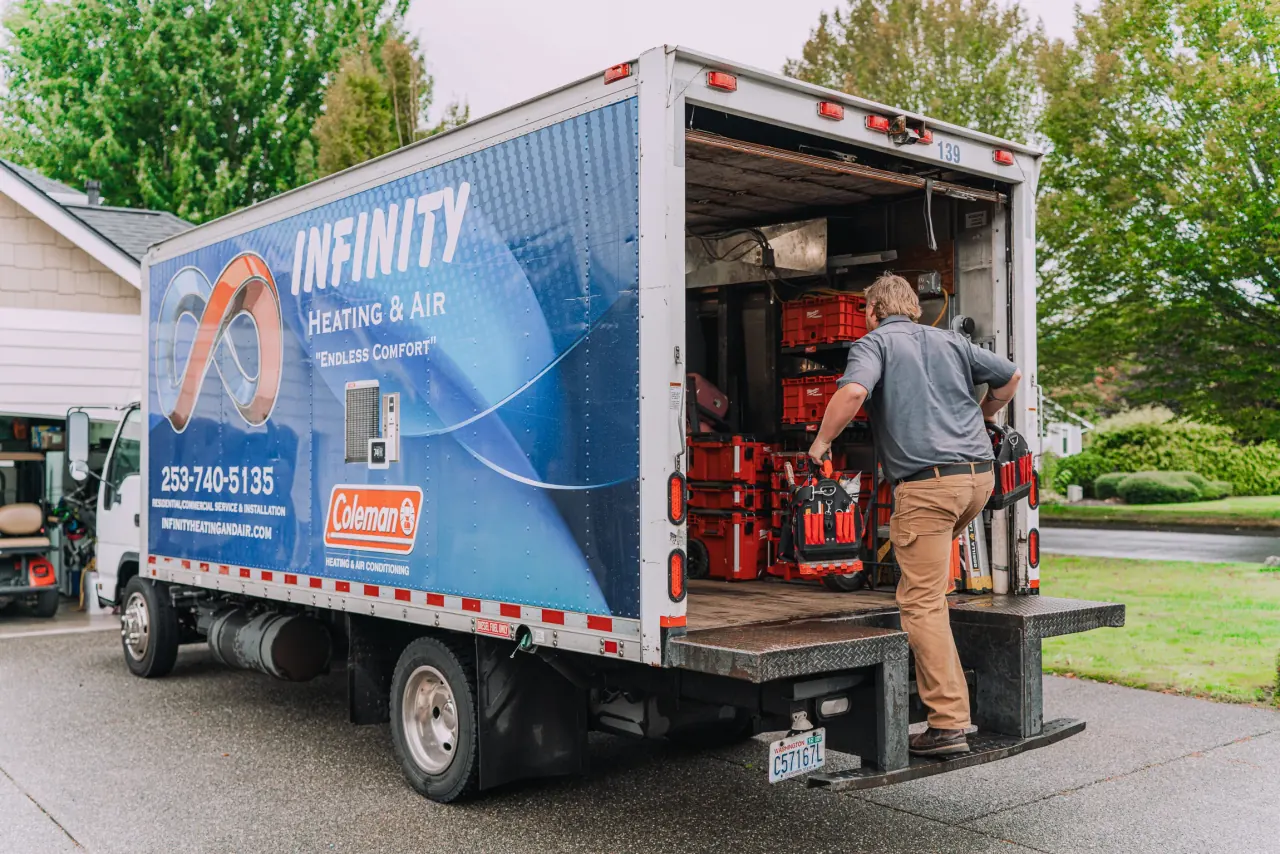
Infinity Heating and Air Conditioning Reviews: Navigating Fall Troubleshooting Safely
Furnace short-cycling during fall startup? Apply our home maintenance tips and troubleshooting. See why we prioritize basic airflow checks on cold nights.
The Anxiety of the First Autumn Temperature Drop
When you are searching for home maintenance tips and troubleshooting because your furnace is sputtering or short-cycling instead of delivering steady warmth, you are not alone in your frustration. You turn on your thermostat to fight off the chill of the season's first major cold snap, expecting immediate comfort. Instead, you hear the system kick on, rumble for a few minutes, and abruptly shut down before the house even begins to warm up. That sudden silence instantly triggers a wave of homeowner anxiety. You are left wondering if you just need a simple fix or if you are facing a massive repair bill right at the start of the cold season.
For comprehensive help, explore our Air Conditioning Services and secure your Graham AC and Heating Maintenance.
During the typical October fall heating startup, our team at Infinity Heating & Air sees this exact scenario play out in homes across the region. Your heating system has been sitting completely dormant for months. Dust has settled, electrical connections have experienced temperature fluctuations, and moving parts have remained stagnant. When you demand high performance from the system on a cold evening, any minor restriction in airflow or small mechanical hiccup becomes glaringly obvious.
The most critical decision you face in this moment is determining whether the issue is a basic airflow problem you can safely handle yourself, or a complex mechanical failure that requires a licensed professional. Making the wrong choice can lead to safety hazards, voided warranties, or severe system damage. By understanding the normal behaviors of a dormant heating system waking up for the winter, you can navigate these stressful moments with confidence and keep your home safe.
Why Dormant Systems Struggle Initially
Heating equipment is designed for regular operation. When a furnace sits idle from May through September, the internal environment changes. Lubricants can settle, and the natural humidity in the air can cause minor oxidation on sensitive electrical contacts. In our experience, this is exactly why the October fall heating startup is notoriously the most common time for system lockouts.
You do not need to panic at the first sign of trouble. Many early-season faults are built-in safety mechanisms protecting the furnace from overheating. The key is knowing how to read these symptoms correctly so you can take the appropriate, safe action for your Graham WA home.
Decoding Common Fall Heating Odors and Smells
One of the most alarming experiences during the October fall heating startup is a sudden, strong odor spreading through your living room vents. For many homeowners, the immediate instinct is to shut the system down and assume something is catching fire. Our dispatchers field countless panicked calls about this every autumn. However, understanding the science behind these smells can save you from an unnecessary emergency service call.
Over the long summer months, fine particulate matter, pet dander, and household dust get pulled into your ductwork and settle directly onto the furnace's heat exchanger. The transition to a damp, chilly Pacific Northwest autumn exacerbates dormant dust buildup in Graham WA homes, as the moisture in the air can cause these particles to cling stubbornly to the metal surfaces. When the burners ignite for the first time, the heat exchanger rapidly reaches hundreds of degrees, literally incinerating that settled layer of dust.
This creates a distinct "burning dust" smell. We always reassure our customers that it is completely normal, typically harmless, and should dissipate within a few hours of continuous operation. However, there is a strict difference between normal burn-off and a hazardous situation.
Normal vs. Emergency Heating Odors
To keep your household safe, you must be able to differentiate between standard seasonal smells and odors that require an immediate system shutdown. Here is a breakdown of what our technicians advise you to watch for:
| Type of Smell | Likely Cause | Required Action |
|---|---|---|
| Musty or dusty | Settled debris burning off the heat exchanger. | Monitor the system. It should clear up in 1 to 3 hours. |
| Acrid electrical burning | Melting wire insulation or a failing blower motor. | Shut off the furnace at the thermostat and call a pro immediately. |
| Rotten eggs (Sulfur) | A natural gas leak near the furnace or gas valve. | Evacuate the home, call the gas company, and contact an HVAC professional. |
| Metallic or overheating metal | Severely restricted airflow causing internal components to bake. | Turn off the system, check your air filter, and call for service if it persists. |
If you ever detect the smell of rotten eggs or a sharp, ozone-like electrical burning scent, do not wait to see if it goes away. These are clear indicators of a compromised system. In Graham WA, local building codes and safety regulations require that gas leaks and electrical shorts be handled exclusively by licensed technicians. Trust your nose—if it smells dangerous, treat it as dangerous.
Identifying and Resolving Furnace Short-Cycling
If your furnace fires up, blows warm air for three minutes, and then abruptly shuts down before the room reaches your desired temperature, your system is short-cycling. This is arguably the most common mechanical complaint our Infinity Heating & Air technicians encounter during the October fall heating startup, and it is terrible for your equipment. Short-cycling forces the system to start and stop repeatedly, which consumes massive amounts of energy and puts severe wear and tear on the blower motor and ignition components.
In the vast majority of cases we diagnose, short-cycling is not a mechanical failure, but an airflow restriction. Your furnace breathes in air from the house, heats it, and pushes it back out. If it cannot pull in enough air, the heat generated by the burners has nowhere to go. The internal temperature of the furnace spikes rapidly. To prevent a catastrophic fire, a built-in safety device called the high limit switch detects this extreme heat and instantly shuts the burners off.
The Chain Reaction of a Clogged Filter
The leading culprit behind this restricted airflow is a dirty air filter. We often find that homeowners forget to change their filters at the end of the summer cooling season. By the time the October fall heating startup arrives, that filter is a solid wall of dust, pollen, and debris.
- Step 1: The restriction. The blower motor struggles to pull air through the clogged filter media.
- Step 2: The temperature spike. With low air volume moving across the heat exchanger, the metal overheats.
- Step 3: The safety shutdown. The high limit switch trips, cutting power to the gas valve.
- Step 4: The cool down. The blower continues to run to cool the furnace down, blowing lukewarm air into your home.
Replacing a dirty filter is the fastest way to restore proper indoor air quality and consistent home comfort. When you ignore these symptoms, the constant overheating will eventually crack the heat exchanger or burn out the blower motor, leading to massive winter repair bills.
We see how quickly these small issues can escalate. One local homeowner experienced a severe heating system emergency on an icy day when schedules were completely overloaded. Because their system had been short-cycling for weeks without intervention, it finally locked out completely during freezing weather. Our team added the customer to the schedule, rescued them from the cold, and resolved the emergency honestly—but early intervention could have prevented the breakdown entirely. If changing the filter does not solve the short-cycling, it is time to look into professional AC Repair Service and heating diagnostics.
Safe, Homeowner-Level Troubleshooting Boundaries
When the house is cold, it is tempting to grab a toolbox and start taking panels off the furnace. However, modern HVAC systems are highly complex, utilizing high-voltage electricity, combustible gases, and sensitive computerized control boards. Establishing clear boundaries on safe DIY troubleshooting versus tasks requiring a licensed professional is vital for your safety and your wallet.
At Infinity Heating & Air, our relationship-driven approach means we prioritize your well-being over a quick sale. We want you to try the simple, safe fixes before you ever spend money on a diagnostic visit. There are several steps you can confidently perform to get your system running during an October fall heating startup in Graham WA.
Your Safe Troubleshooting Checklist
Before calling for help, we recommend walking through these safe, homeowner-approved checks:
- Verify the thermostat settings: Ensure the switch is actually set to "Heat" and not "Cool" or "Off." Verify the set temperature is at least three degrees higher than the current room temperature. If the screen is blank, replace the batteries.
- Replace the air filter: Slide out the old filter. If you cannot see light through it, it is blocking airflow. Install a clean, new filter facing the correct direction (look for the airflow arrows on the frame).
- Check the breaker panel: Locate your home's main electrical panel and check for a tripped breaker labeled "Furnace" or "HVAC." If it is tripped, reset it once. If it trips again immediately, do not reset it a second time—you have an electrical short.
- Inspect the vents: Walk through your Graham WA home and ensure all supply and return registers are fully open and unblocked by rugs, furniture, or curtains.

What you must absolutely avoid is opening the internal furnace cabinet. Do not attempt to clean flame sensors with sandpaper, do not adjust gas valve pressures, and never handle internal electrical components. Touching the wrong wire can result in a severe shock, and mishandling the gas components can create a deadly leak. Furthermore, unauthorized repairs typically void manufacturer warranties. We have seen instances where a furnace burned out completely during freezing winter weather, requiring a prioritized visit. In that scenario, we gave a fair quote and quickly installed a new system so the family would not freeze, but attempting DIY internal repairs on a failing system only complicates the diagnostic process. Stick to the safe checklist, and leave the heavy lifting to professional HVAC Inspection and Testing in Graham.
When to Call a Professional for Internal Component Failures
If you have walked through the safe troubleshooting checklist, installed a fresh filter, and verified the thermostat, but your system still refuses to heat the house, you have reached the boundary of homeowner maintenance. Persistent issues during the October fall heating startup usually point to internal component failures that require specialized diagnostic tools.
Modern furnaces rely on a specific sequence of operations to ignite safely. If any single component in that sequence fails, the control board will lock the system out to prevent raw gas from flooding your home.
Signs You Need Immediate Professional Diagnostics
- Persistent short-cycling despite a clean filter: If airflow is excellent but the system still shuts down after three minutes, you likely have a failing flame sensor. The sensor cannot detect the fire, so it shuts the gas off as a precaution.
- Unusual grinding or squealing noises: This is a strong indicator that the inducer draft motor or the main blower motor bearings are failing. These motors require professional replacement before they seize completely.
- Complete ignition failure: If the furnace clicks repeatedly but never produces a flame, you may have a cracked hot surface ignitor or a malfunctioning gas valve.
- Blinking diagnostic lights: Most modern furnaces have an LED light visible through a small window on the lower door. If it is flashing a pattern (e.g., three short blinks, two long blinks), the system is broadcasting an error code that a technician needs to translate.
Attempting to bypass these safety lockouts is incredibly dangerous. Our licensed HVAC technicians use multimeters to test electrical continuity, manometers to verify precise gas pressures, and combustion analyzers to ensure carbon monoxide is venting safely out of the home.
This is why scheduling a comprehensive pre-winter diagnostic visit is so valuable. A technician does not just fix the broken part; they secure the system's overall reliability. They tighten loose electrical connections, verify the integrity of the heat exchanger, and ensure the unit is operating within the manufacturer's safe parameters. For peace of mind, securing your Graham AC and Heating Maintenance before the deep freeze hits ensures safety, warranty compliance, and long-term system health.
Why Local Homeowners Trust Relationship-Driven Service
Navigating heating problems can feel overwhelming, especially when you are worried about being pressured into buying equipment you do not actually need. When you read through Infinity heating and air conditioning reviews, you will consistently notice a pattern of honest, neighborly advice rather than high-pressure sales tactics. This distinction is the core of relationship-driven service.
Transactional HVAC companies treat every service call as a gateway to push immediate, expensive replacements. If your furnace is short-cycling during the October fall heating startup, a transactional technician might immediately suggest replacing the entire unit without thoroughly investigating the airflow. They focus on the invoice, not the homeowner.
In contrast, our team at Infinity Heating & Air treats customers like neighbors in Graham WA. True authority in the HVAC industry comes from empowering the customer. When one of our technicians arrives at your home, their goal is to educate you on proper maintenance, explain exactly what the diagnostic tools are showing, and provide clear options. If a dirty filter caused the high limit switch to trip, an honest technician will tell you exactly that, reset the system, and show you how to prevent it in the future.
This level of local expertise and clear communication drastically reduces homeowner anxiety during stressful breakdowns. You deserve to know the "why" behind a repair, not just the cost. Building trust means prioritizing your safety and comfort over a quick quota, which is exactly why understanding relationship-driven HVAC service is so critical when choosing who to let into your home.
Frequently Asked Questions About Fall Heating Startup
Why is my furnace shutting off after a few minutes?
This behavior is known as short-cycling, and in our experience, it is usually caused by restricted airflow from a dirty filter. When the filter is clogged, the furnace overheats, and a built-in safety switch shuts the burners off to prevent damage. If replacing the filter does not fix the issue, it can also indicate a malfunctioning flame sensor or a failing overheating safety switch that requires professional replacement.
Is it normal for the heater to smell like burning dust in the fall?
Yes, this is typical during the first few cycles as settled dust burns off the heat exchanger. Over the summer, particles accumulate inside the dormant system, and the initial high heat incinerates them. The smell should dissipate completely within a few hours of operation; however, if it smells like electrical burning or sulfur, shut the system down immediately.
What is included in professional fall HVAC maintenance?
A professional tune-up includes comprehensive safety checks, electrical connection tightening, and airflow verification. Our technicians will inspect the heat exchanger for dangerous cracks, test the gas pressure, and clean the flame sensor. This level of inspection covers internal components that are strictly unsafe for DIY servicing, ensuring your system runs reliably all winter.
Are Infinity HVAC systems reliable for winter heating?
They are highly reliable when maintained properly with annual seasonal check-ups. Like any mechanical equipment, their longevity depends on how well they are cared for. Consistent filter changes by the homeowner and professional diagnostics before the heavy winter usage maximize their lifespan and efficiency.
How can I tell if my thermostat is causing the heating issue?
Start by verifying the screen is on, the batteries are fresh, and the system is explicitly set to "heat" with a temperature higher than the room. Listen for a click when you raise the temperature. If the thermostat appears to be functioning normally but the system still doesn't respond, the issue likely lies within the internal furnace components or the control board.
Secure Your Home Comfort with a Pre-Winter Inspection
Facing the first chill of the season shouldn't fill you with dread. By understanding the normal behaviors of an October fall heating startup, you can confidently handle basic troubleshooting in your Graham WA home. Knowing exactly which steps are safe—like verifying your thermostat and swapping out a clogged filter—gives you incredible peace of mind and keeps your system breathing easily.
However, when those basic steps do not resolve the issue, relying on a licensed technician for internal diagnostics and repairs is the only way to ensure your family's safety. Do not wait for a minor short-cycling issue to turn into a total breakdown during a freezing night. Our team is ready to help you schedule your pre-winter maintenance now to ensure reliable, efficient warmth throughout the entire season.
Written & reviewed by the Infinity Heating & Air team — licensed WA HVAC contractor (INFINHA841B8). Family-owned in Graham, answering 24/7 across the South Sound.
Choose Infinity & enjoy endless comfort.
Your perfect home environment awaits — call (253) 740-5135 or schedule service online and our team will take it from there.
Open 24/7 · 100% Satisfaction Guaranteed · Graham, WA