The Definitive Guide to How Air Quality Ductwork and Zoning Work Together
Discover how air quality ductwork and zoning work together to balance comfort, improve IAQ, and boost HVAC efficiency in your home.
Why How Air Quality, Ductwork, and Zoning Work Together Matters for Your Home
Understanding how air quality ductwork and zoning work together is one of the most practical things a homeowner can do to improve comfort and health inside their home. If your upstairs feels like a sauna while your downstairs stays cold, or if some rooms collect dust faster than others, the relationship between your ducts, your airflow zones, and your indoor air quality is almost certainly at the root of it.
Here is a quick summary of how these three systems connect:
- Ductwork is the network of channels that moves conditioned air from your HVAC equipment to every room in your home — and back again
- Zoning divides your home into separate climate-controlled areas, each managed by its own thermostat and motorized damper
- Air quality improves when airflow is directed precisely where it is needed, reducing the circulation of dust, allergens, and stale air through unoccupied or sensitive spaces
- Together, properly designed ducts, a well-installed zoning system, and the right filtration and ventilation equipment create a home that is comfortable, efficient, and healthier to breathe in
According to the EPA, indoor air pollutants can be two to five times — and sometimes up to 100 times — higher than outdoor levels. Your duct system is one of the main pathways those pollutants travel. How your ducts are designed, sealed, and controlled through zoning directly shapes what you and your family breathe every day.
This guide walks you through every layer of that connection, from dampers and duct sizing to filters, ventilation, and smart controls.
How Air Quality Ductwork and Zoning Work Together
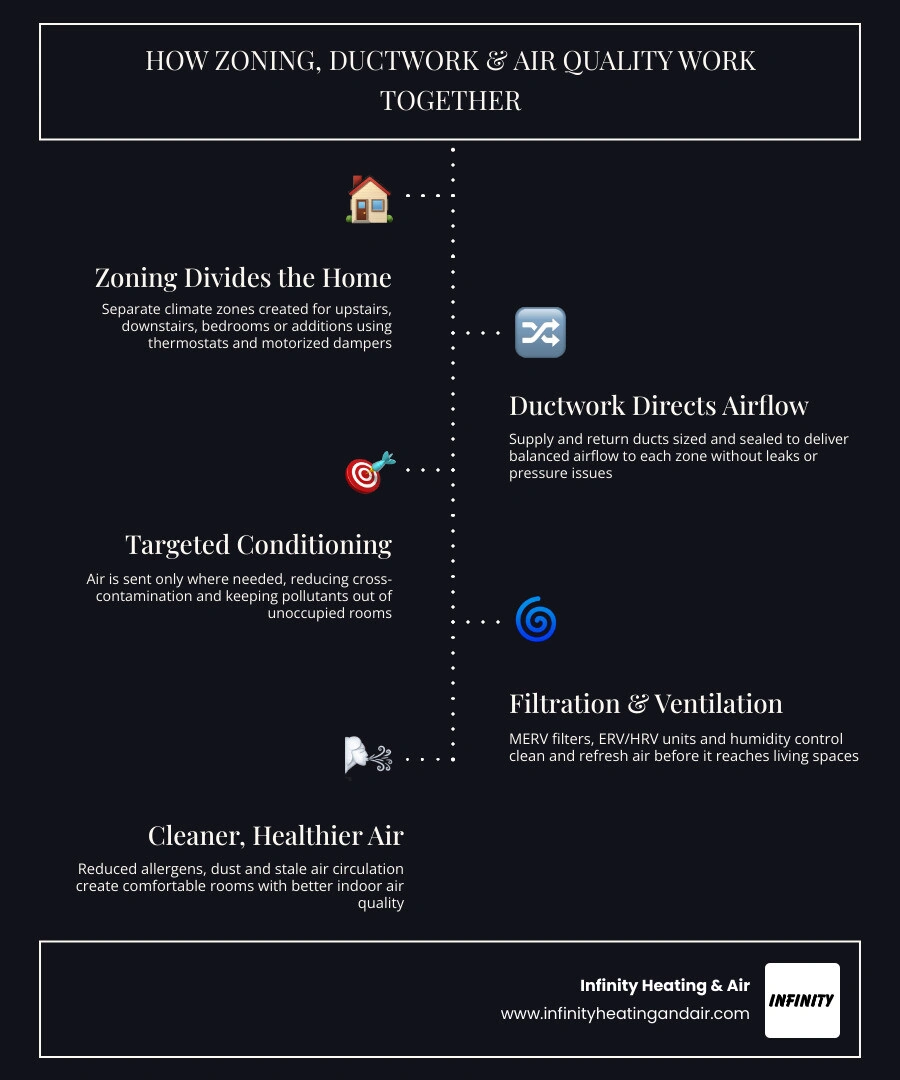
At a basic level, zoning tells air where to go, and ductwork determines how well it gets there. Air quality depends on both.
A zoned HVAC system divides a home into separate areas with different comfort needs. Those areas might be upstairs and downstairs, a bedroom wing and living area, a finished basement, or an addition that never seems to match the rest of the house. Each zone has its own control point, but all zones still share the same larger airflow system.
That matters because supply ducts deliver conditioned air into a zone, while return ducts pull air back to the equipment to be filtered, heated, cooled, and redistributed. If either side is poorly designed, pollutants, pressure problems, and temperature imbalances can follow.
What HVAC zoning is and how it divides a home into separate climate-controlled areas
HVAC zoning is the practice of splitting a home into independent comfort areas based on real conditions, not just walls on a blueprint.
Common zone layouts include:
- Upstairs and downstairs in multi-level homes
- Bedroom wing separated from main living spaces
- Finished basements with different temperature patterns
- Rooms with large west- or south-facing windows
- Additions or bonus rooms with unique heating and cooling loads
- Home offices that are occupied during the day while the rest of the home is not
Good zoning follows thermal loads and occupancy patterns. In plain English: spaces that heat up, cool down, or get used differently should not always be treated exactly the same.
How air quality ductwork and zoning work together in everyday operation
In day-to-day operation, a zoned system uses motorized dampers inside the ducts to direct airflow only where it is needed. When one thermostat calls for heating or cooling, the zone controller tells the right dampers to open and others to stay partially closed or closed, depending on system design.
That affects indoor air quality in several ways:
- Less unnecessary airflow through unused rooms means less dust and debris circulation
- Better directed supply air can help reduce stale or stuffy areas
- Balanced return airflow helps contaminants get pulled back to filtration instead of lingering
- Sensitive areas like bedrooms can be managed more consistently for comfort and cleaner air delivery
Zoning does not magically scrub the air, but it does improve how air moves. And cleaner airflow patterns are often half the battle.
Homes that benefit most from zoning and duct upgrades
Some homes are basically asking for zoning. Others can do well with a single comfort setting. The homes that benefit most usually have obvious imbalance issues.
Best-use scenarios include:
- Two-story homes with hot upstairs bedrooms and cool lower floors
- Homes with high ceilings where heat collects above occupied areas
- Houses with large window walls or strong afternoon sun exposure
- Long hallway layouts where far rooms never feel right
- Homes with finished basements, bonus rooms, or additions
- Families with different schedules or thermostat preferences
- Homes with recurring dust, airflow, or stale-air complaints
- Remote work setups where one room needs comfort all day
The Controls Behind a Zoned System
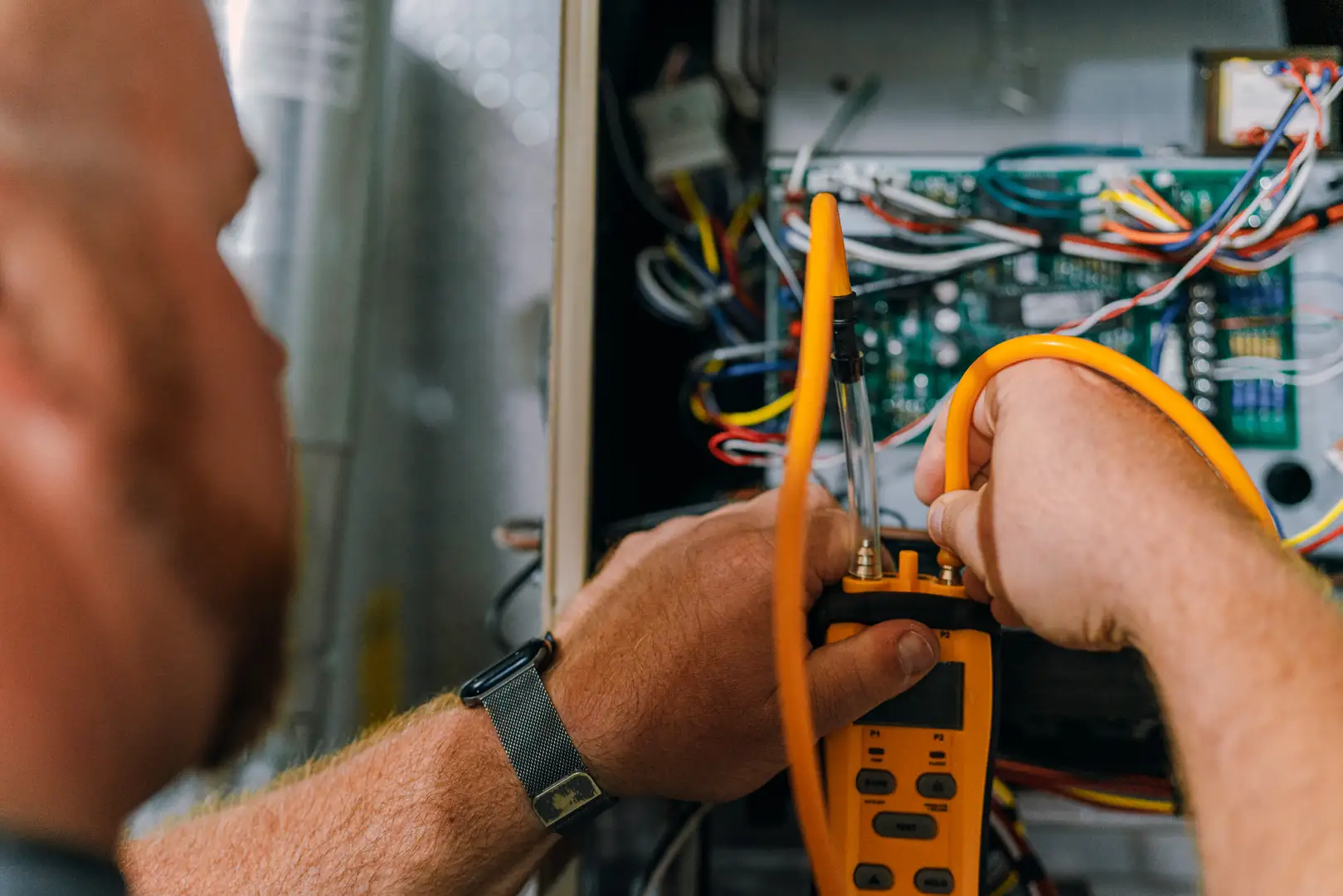
The hardware behind zoning is simple in concept but important in execution: thermostats sense conditions, the zone controller acts as the brain, and dampers adjust airflow.
How motorized dampers, zone controllers, and smart thermostats work together
Here is the usual chain of events:
- A thermostat or zone sensor detects that its area needs heating or cooling.
- That signal goes to the zone controller.
- The controller opens the dampers serving that zone and manages the equipment response.
- The HVAC system runs and sends conditioned air through the open supply paths.
- Return air comes back through the return side, passes through filtration, and repeats the cycle.
Smart thermostats add another layer. They can handle schedules, remote access, humidity awareness, and usage patterns. Some also provide energy reporting and maintenance reminders, which helps homeowners spot waste before it turns into a comfort complaint.
One important limitation: a single conventional forced-air system cannot usually heat one zone and cool another at the exact same time. It has to be in one mode or the other.
Why zoning cannot replace proper duct design
Zoning is not a shortcut around bad ductwork. If the ducts are undersized, leaky, poorly sealed, or missing proper returns, adding dampers just gives the problem a fancy control panel.
This is also why simply closing supply registers is not the same as real zoning. Closing vents can raise static pressure, reduce airflow across the equipment, create noise, and lead to short cycling or system stress. Your HVAC system is not being dramatic when it complains with banging ducts and uneven temperatures.
Proper zoning depends on:
- Correct supply and return sizing
- Acceptable static pressure
- Balanced airflow when one zone or several zones call
- Pressure relief strategies when dampers close
- Equipment that can handle varying airflow, ideally variable-speed or variable-capacity
Smart features that improve comfort, scheduling, and efficiency
Modern controls can make zoning much more useful, especially in busy households across Tacoma, Puyallup, Auburn, Olympia, and surrounding communities where daily routines and weather shifts can change quickly.
Helpful features include:
- App-based remote temperature control
- Occupancy-based schedules
- Humidity monitoring
- Alerts for filter replacement or service needs
- Energy-use reports by time or usage pattern
- Fine-tuned setback schedules for guest rooms or home offices
Why Ductwork Design Makes or Breaks Zoning Performance
If zoning is the traffic signal, ductwork is the road system. Bad roads create traffic no matter how smart the signals are.
A good zoned system starts with proper load calculations and duct design. That means understanding how much heating and cooling each room needs, how much airflow each zone requires, and how the supply and return paths will behave when only one zone is calling.
For homeowners considering ductwork installation or replacement, this is often the point where comfort, efficiency, and air quality all meet.
Supply-air and return-air duct sizing for multi-zone airflow
Supply trunks in a zoned system should be able to serve each zone without choking airflow when that zone operates by itself. In many designs, separate supply trunks branch off near the main plenum so each zone has a defined path.
Return air matters just as much. If a zone gets plenty of supply air but has poor return pathways, pressure imbalances can develop. That can cause rooms to feel stuffy, doors to swing oddly, and conditioned air to leak where it should not.
Well-designed multi-zone duct systems aim for:
- Adequate airflow to each zone at peak demand
- Low enough velocity to avoid noise
- Low pressure drop through trunks and branches
- Return paths that support each active zone
- Sealed connections to prevent leakage and contamination
Sealing and repairing ducts to support clean, balanced air delivery
Leaky ducts waste comfort and can pull contaminants into the system from attics, crawlspaces, wall cavities, or garages. That is bad for both efficiency and indoor air quality.
If you want to understand the energy side of that problem, see How Leaky Ducts Waste Energy and Money. For a deeper look at solutions, read the Air Duct Sealing Complete Guide.
Sealing helps zoning work better because it:
- Keeps airflow where the controller intends it to go
- Reduces dust and pollutant entry into duct runs
- Improves room-to-room balance
- Lowers wasted runtime from lost conditioned air
- Supports better filtration performance by reducing bypass leakage
Warning signs existing ductwork may need repair before zoning is added
Before adding zoning to an older system, we usually look for signs the ductwork itself is the first problem to solve.
Common warning signs include:
- Rooms with consistently weak airflow
- Hot and cold spots that never improve
- Noisy ducts or whistling grilles
- Excess dust buildup in certain rooms
- Sagging or damaged flex ducts
- Poorly sealed joints
- Undersized or missing return-air pathways
If those sound familiar, Signs Your Ductwork Needs Repair or Replacement is a helpful next read.
How Zoning and Ductwork Improve Indoor Air Quality
Indoor air quality is not controlled by one single product. It is the result of airflow, filtration, ventilation, humidity management, and cleanliness all working together.
How zoning can reduce pollutant circulation between rooms
Zoning can reduce pollutant movement by limiting unnecessary circulation through spaces that do not need conditioning at that moment. If fewer zones are active, less air is being pushed through every branch of the house.
That can help with:
- Reducing movement of settled dust from low-use rooms
- Limiting spread of odors between living and sleeping areas
- Improving comfort in bedrooms by controlling airflow more precisely
- Supporting cleaner delivery to occupied spaces instead of conditioning the whole house all at once
Again, this is not isolation in the medical sense. It is simply smarter airflow management.
The role of filters, ventilation, and humidity control alongside zoning
This is where many articles stop too early. Zoning helps direct air, but filters clean it, ventilation refreshes it, and humidity control keeps the environment from becoming mold-friendly or uncomfortably dry.
Important supporting pieces include:
- Quality air filtration with appropriate MERV ratings that capture particles without over-restricting airflow
- Mechanical ventilation such as ERVs or HRVs to bring in fresh outdoor air efficiently
- Humidifiers or dehumidifiers to keep indoor moisture in a healthy range
- Proper pressure balance so fresh air and exhaust systems work as intended
For more on whole-home solutions, visit Indoor Air Quality and Indoor Air Quality Services and Solutions.
When duct cleaning and sanitization support better air quality results
Duct cleaning is not something every home needs on a rigid schedule, but it can make sense in the right conditions, especially when paired with duct repairs or zoning improvements.
It is often worthwhile after:
- Major remodeling or drywall dust events
- Visible debris buildup in ducts
- Evidence of microbial growth linked to moisture issues
- Heavy pet dander or allergy concerns
- Long periods of neglected maintenance
If sanitization is being considered, it should be part of a broader plan that includes fixing moisture and airflow issues first. You can learn more in the Air Duct Sanitization Ultimate Guide.
Installing or Retrofitting Zoning in New and Existing Homes
Whether zoning is easy or challenging usually comes down to timing. New construction gives us a clean slate. Existing homes give us... character.
| Consideration | New construction | Existing home retrofit |
|---|---|---|
| Duct layout | Planned around zones from day one | May require modification to existing trunks and branches |
| Return-air design | Easier to place returns per zone | May need creative return pathways or added returns |
| Damper installation | Built into the original design | Depends on access to existing duct runs |
| IAQ upgrades | Easier to integrate ventilation and humidity control | Often added in stages based on access and compatibility |
| Commissioning | Full system can be tested as one package | Testing is critical to catch inherited duct issues |
New construction: the easiest time to combine zoning, ductwork, and IAQ upgrades
If you are building a home or doing a major whole-home installation, this is the best time to combine zoning, duct design, and indoor air quality upgrades into one strategy.
Benefits of doing it early include:
- Dedicated supply trunks by zone
- Better return-air placement
- Cleaner integration of fresh-air ventilation
- Easier wiring and thermostat placement
- More flexibility for future comfort changes
If you are planning a new system in our area, this HVAC Installation Guide Tacoma WA can help you understand the bigger picture.
Existing homes: common challenges and how to solve them
Retrofitting zoning into an existing home is very possible, but it requires honest evaluation first.
Common challenges include:
- Limited access to ducts in finished spaces
- Existing ducts that are too small for zoned airflow patterns
- Missing or undersized returns
- High static pressure
- Poor equipment compatibility
- Leakage that should be sealed before dampers are added
In many retrofit projects, the right order is:
- Fix leakage and obvious duct defects
- Verify airflow and return design
- Confirm equipment compatibility
- Add dampers, controls, and commissioning
When combining zoning, ductwork improvements, and air quality measures makes the most sense
The best time to combine these upgrades is when your home is already giving you strong clues.
It often makes the most sense when you are:
- Replacing HVAC equipment
- Remodeling or finishing a basement
- Adding onto the home
- Dealing with persistent hot and cold rooms
- Concerned about allergies, dust, or stale air
- Seeing signs of moisture imbalance
- Trying to reduce obvious energy waste
How air quality ductwork and zoning work together for energy savings and reduced wear
When properly designed and installed, zoning can reduce wasted conditioning in unoccupied areas and help the system run more intentionally. Research commonly cites energy savings up to 30%, and the U.S. Department of Energy notes that a correctly designed zoned system with programmable thermostats can save as much as 35% on energy bills.
Just as important, balanced airflow can reduce unnecessary strain on equipment. That can mean fewer extreme run conditions, less cycling stress, and more stable comfort.
The catch is simple: those savings depend on correct duct design, sealing, control logic, and commissioning. Zoning done badly is just expensive confusion.
Frequently Asked Questions about How Air Quality Ductwork and Zoning Work Together
Can I just close vents instead of installing a zoning system?
No. Closing vents is not the same as real zoning. It restricts airflow without giving the system a controlled way to manage pressure, equipment staging, or return balance. That can increase static pressure and stress your HVAC equipment. If your home needs different temperatures in different areas, proper zoning is the right solution.
Do zoned systems improve air quality on their own?
Not by themselves. Zoning improves airflow control, which can reduce unnecessary pollutant circulation and help occupied spaces stay more comfortable. But true IAQ improvement also depends on filtration, ventilation, humidity control, duct sealing, and maintenance. Think of zoning as one important player on the team, not the whole roster.
How often should a zoned HVAC system and ductwork be checked?
Filters should be checked regularly and replaced on the schedule recommended for your system and home conditions. Zoned systems also benefit from seasonal maintenance that includes damper operation, thermostat calibration, airflow checks, and inspection of duct condition and sealing. For homeowners in Northwest Washington, Benefits of Regular HVAC Maintenance in Pacific Northwest is a useful guide.
Conclusion
When homeowners ask us about comfort problems, energy waste, or dusty rooms, the answer is often not just the thermostat, and not just the ductwork. It is the relationship between airflow design, zone control, and indoor air quality.
That is the real story behind how air quality ductwork and zoning work together: better ducts deliver air more effectively, zoning sends it where it is actually needed, and air quality upgrades make that air healthier to breathe.
For homes across Northwest Washington, this whole-home approach can mean:
- Fewer hot and cold spots
- More consistent airflow
- Lower wasted energy
- Better support for filtration and ventilation
- A healthier, more comfortable living space
If you are dealing with uneven temperatures, dusty rooms, or ductwork that may be holding your system back, we can help you evaluate the full picture. Explore our HVAC services.
Written & reviewed by the Infinity Heating & Air team — licensed WA HVAC contractor (INFINHA841B8). Family-owned in Graham, answering 24/7 across the South Sound.
Choose Infinity & enjoy endless comfort.
Your perfect home environment awaits — call (253) 740-5135 or schedule service online and our team will take it from there.
Open 24/7 · 100% Satisfaction Guaranteed · Graham, WA