What to Expect During a Same-Day AC Diagnostic Visit in Graham
Facing a summer cooling failure? Find out exactly what to expect during a same-day AC diagnostic visit in Graham. Get clear answers before the heat worsens.
Facing a Sudden AC Breakdown? Here is What Happens Next
The thermostat is set to 70 degrees, but the indoor temperature keeps climbing, and the air coming from your vents feels lukewarm at best. Dealing with an urgent cooling failure and wondering what to expect during a same-day AC diagnostic visit in Graham can be incredibly stressful, especially when the house starts to feel like a greenhouse during July peak-heat. At Infinity Heating & Air, our team understands that when the temperatures outside are soaring, a broken air conditioner quickly shifts from a minor inconvenience to a major disruption for your household.
You know you need professional help, but you might also be wondering what exactly happens when a technician arrives at your home. A proper diagnostic visit goes far beyond a quick glance and a wild guess. It is a systematic, multi-point evaluation designed to isolate the root cause of the failure safely and accurately. Modern cooling systems are complex networks of electrical components, pressurized refrigerants, and precise airflow dynamics. Finding the exact point of failure requires specialized tools and technical expertise.
The primary goal of this visit is to remove the guesswork from the equation. By methodically testing each section of the cooling cycle, our certified professionals can pinpoint exactly why the equipment stopped working. If you are currently dealing with a breakdown, exploring professional air conditioning services is the first step toward restoring your comfort. Scheduling a comprehensive AC inspection and testing in Graham ensures that your system receives the thorough evaluation necessary to recommend a lasting, effective solution.
Step 1: The Technician's Arrival and Initial System Intake
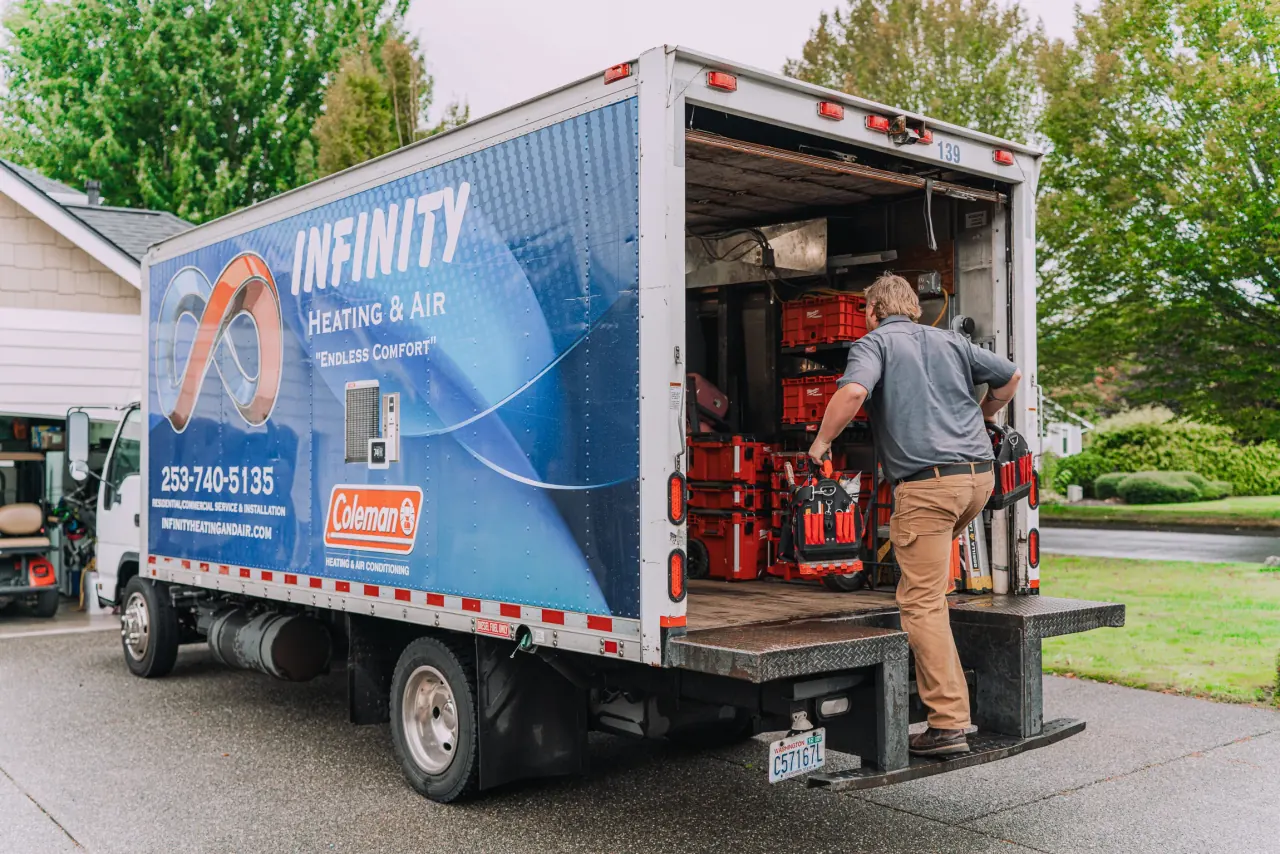
The first few minutes of a same-day emergency visit are all about gathering context and establishing a safe working environment. Prompt, professional arrival sets the tone for a stress-free diagnostic experience. For instance, our dispatch team recently received a call from a local salon owner during a summer heat wave when their AC stopped working entirely, jeopardizing their business day. One of our technicians arrived in less than two hours, immediately beginning the intake process to get the system fixed and restore cooling to the building.
When an Infinity Heating & Air technician arrives at your Graham WA property, they do not immediately start dismantling your outdoor unit. Instead, they begin with a structured intake process to understand the history of the breakdown.
- The Initial Consultation: The technician will ask you a few targeted questions about the symptoms you have noticed. They will want to know when the system stopped working, if you heard any unusual noises leading up to the failure, and whether you have noticed any ice buildup or water leaks.
- Establishing the Baseline State: Before turning wrenches, our professional observes the system exactly as it sits. This means checking if the thermostat screen is blank, listening for humming sounds at the indoor air handler, and noting if the outdoor fan is attempting to spin.
- Safety Perimeter Checks: High-voltage electricity and pressurized refrigerants pose significant safety risks. The technician will perform initial safety checks around the indoor and outdoor units, verifying that the breaker panels are secure and that there are no exposed wires or dangerous electrical shorts present before proceeding with the physical inspection.
This careful, methodical start ensures that no vital clues are missed. The symptoms you describe during this intake phase often guide our technicians toward the most likely areas of failure, streamlining the rest of the diagnostic process.

Step 2: Evaluating Your Thermostat and Indoor Airflow
Once the initial intake is complete, the diagnostic moves to the indoor portion of your HVAC system. In our years of restoring comfort across Graham, our team frequently sees that while many homeowners assume an AC failure is always linked to the large metal box sitting outside, a significant percentage of cooling problems originate right inside the home. Evaluating the indoor components requires precision and a deep understanding of airflow dynamics.
The Command Center: Thermostat Calibration
The technician will begin by testing the thermostat. This device acts as the brain of your entire climate control system. If the thermostat is miscalibrated, has failing batteries, or suffers from a compromised wiring connection, it cannot send the correct cooling signals to the equipment. Our professionals use multimeters to verify that the 24-volt control signal is successfully traveling from the thermostat sub-base down to the indoor air handler control board.
Airflow and Filtration Dynamics
Next, the focus shifts to the return air pathways. An air conditioner does not actually create cold air; it removes heat from the existing air in your home. If airflow is restricted, the entire heat transfer process collapses. The technician will inspect the condition of your air filter. A severely clogged filter acts like a brick wall, suffocating the blower motor and causing the system to overwork.
Using specialized anemometers or manometers, the technician will measure the supply and return airflow. These measurements detect potential blockages within the ductwork or indicate if the indoor blower motor is failing to move the required volume of air per minute. Proper airflow is absolutely critical during July peak-heat when the system is operating at maximum capacity.
Evaporator Coil Inspection
Finally, the technician will visually inspect the indoor evaporator coil. This is the component responsible for absorbing heat from your indoor air. They will verify that the coil is free of heavy dust accumulation and, most importantly, free of ice. If the evaporator coil is frozen solid, it usually points directly to either a severe airflow restriction or a low refrigerant charge, providing a critical clue for the next phase of the diagnostic.
Step 3: Inspecting Electrical Components and Refrigerant Levels
After thoroughly evaluating the indoor equipment, the technician moves outside to the condenser unit. This is where the heavy lifting of the cooling cycle occurs, and it is also where the highest voltages and pressures are found. Because of the inherent dangers, this phase of the diagnostic relies heavily on professional tools, specialized gauges, and rigorous safety protocols.
Testing the Electrical Nervous System
Because we serve the Pacific Northwest, our technicians know that air conditioning systems here often sit completely dormant for eight to nine months out of the year. When suddenly subjected to extreme summer heat, electrical components are highly vulnerable to sudden failure. The technician will use a specialized multimeter to test the dual run capacitor, the contactor, and various electrical relays.
The capacitor acts as a massive battery that provides the initial jolt of energy needed to start the compressor and the condenser fan motor. If the multimeter shows that the capacitor's microfarad reading has dropped below the manufacturer's specified tolerance, it must be replaced. Similarly, the contactor is inspected for pitted or burned points that could prevent high-voltage electricity from reaching the compressor.
Refrigerant Pressures and Mechanical Health
If the electrical components are functioning correctly, the technician will connect digital refrigerant gauges to the service valves. These gauges measure the exact pressures and temperatures of the refrigerant flowing through the lines. By calculating the superheat and subcooling values, the technician can determine if the system is perfectly charged, overcharged, or suffering from a microscopic leak.
During this phase, listening to the unit's operation is a key diagnostic tool. A professional ear can detect mechanical stress in the compressor or a failing bearing in the condenser fan motor. If you have been hearing a buzzing, grinding, or squealing sound, it is highly recommended to learn more about strange noises coming from your AC, as these auditory clues often point directly to mechanical friction.
| Observed Symptom at Outdoor Unit | Common Diagnostic Finding |
|---|---|
| Loud buzzing but fan is not spinning | Failed run capacitor or seized fan motor bearing |
| System runs constantly but air is barely cool | Low refrigerant charge or severe coil dirt buildup |
| Unit clicks at the thermostat but outside stays silent | Failed contactor relay or tripped high-voltage breaker |
| Ice forming on the thick copper refrigerant line | Indoor airflow restriction or refrigerant leak |
By combining electrical multimeter readings with precise refrigerant gauge data, our Graham WA technicians build a complete, factual picture of your system's mechanical health.
Step 4: Reviewing the Findings and Exploring Repair Options
The physical inspection is only half of the diagnostic process; the other half is communicating those findings clearly to the homeowner. Once the technician has compiled all the data from the airflow, electrical, and mechanical tests, they will transition from troubleshooting to consultation.
Our technicians will sit down with you to review exactly what they discovered. They will explain the 'why' behind the breakdown, translating complex technical readings into plain language. For example, rather than just saying "it is broken," they will explain that a clogged filter caused the indoor coil to freeze, which in turn placed extreme stress on the outdoor compressor during the July peak-heat.
At Infinity Heating & Air, this is where our relationship-driven service truly stands out. The goal of the diagnostic is honest, transparent communication of the facts, explicitly avoiding high-pressure sales tactics. You will be presented with evidence-based solutions tailored to your specific situation. If a simple part replacement is all that is needed, that is exactly what will be recommended. We may also point out if any general utility incentive programs or tax credits apply to qualifying high-efficiency upgrades, though we always recommend verifying current offerings with your utility provider.
By understanding the root cause, you are empowered to make an informed decision without feeling rushed. Whether the solution involves a quick electrical fix or a more complex mechanical intervention, partnering with a professional AC repair service ensures that the agreed-upon repair plan is executed with precision and care, restoring your home's comfort reliably.
Frequently Asked Questions About Same-Day AC Diagnostics
What exactly does an AC diagnostic include?
A professional AC diagnostic includes a comprehensive check of electrical components, refrigerant levels, and indoor airflow dynamics. The technician will perform visual and mechanical inspections of both the indoor air handler and the outdoor condenser unit. The process concludes with a final report detailing the exact root cause of the cooling failure and a clear explanation of the necessary repair steps.
How long does an HVAC diagnostic take?
A standard diagnostic visit typically ranges from 30 to 60 minutes depending on the complexity of the issue and the accessibility of the equipment. Straightforward failures, like a blown capacitor, can often be identified very quickly. However, intermittent electrical issues or hidden refrigerant leaks may require slightly more time to isolate safely and accurately.
Why is my AC running but not cooling the house?
In our experience, this common issue is frequently caused by dirty air filters severely restricting indoor airflow over the evaporator coil. It may also indicate a refrigerant leak that has depleted the system's cooling capacity, or a failing compressor that is no longer pumping refrigerant effectively. Because there are multiple potential causes, it requires professional gauge testing and airflow measurement to confirm the exact culprit.
Should I turn off my AC before the technician arrives?
Yes, if the system is blowing warm air, making unusual grinding noises, or running continuously without changing the indoor temperature, you should turn it off at the thermostat. Continuing to run a compromised system can cause further mechanical damage to the compressor. Additionally, turning it off stops the indoor coil from freezing over completely, which allows our Graham WA technicians to begin testing immediately upon arrival rather than waiting for solid ice to thaw.
What is the difference between a diagnostic visit and routine maintenance?
Diagnostics focus specifically on isolating and identifying a specific, active failure or sudden breakdown in the system. The goal is troubleshooting a known problem. Routine maintenance, on the other hand, is entirely preventative. Maintenance focuses on cleaning coils, clearing drain lines, tightening electrical connections, and tuning an already operational unit to extend its lifespan and maximize energy efficiency.
Get Your Cooling System Back on Track Today
Understanding what goes into a professional diagnostic visit takes the mystery out of unexpected HVAC failures. When you know that a technician is methodically testing airflow, electrical loads, and refrigerant pressures, you can feel confident that the resulting recommendations are based on hard evidence, not guesswork.
Dealing with a broken air conditioner during July peak-heat is frustrating, but you do not have to navigate it alone. Relying on transparent, professional evaluations empowers you to make the right choice for your home and your budget. If your system is struggling to keep up with the summer heat, do not wait for a complete breakdown. Schedule a comprehensive diagnostic inspection with the team at Infinity Heating & Air today to get your cooling system back on track and restore your family's comfort.
Written & reviewed by the Infinity Heating & Air team — licensed WA HVAC contractor (INFINHA841B8). Family-owned in Graham, answering 24/7 across the South Sound.
Choose Infinity & enjoy endless comfort.
Your perfect home environment awaits — call (253) 740-5135 or schedule service online and our team will take it from there.
Open 24/7 · 100% Satisfaction Guaranteed · Graham, WA