How to Fix Emergency HVAC Repair Tips for the South Puget Sound Area Homeowners
Get emergency HVAC repair tips for the South Puget Sound area homeowners with safety steps, quick troubleshooting, and 24/7 support.
Emergency HVAC Repair Tips Every South Puget Sound Homeowner Should Know Right Now
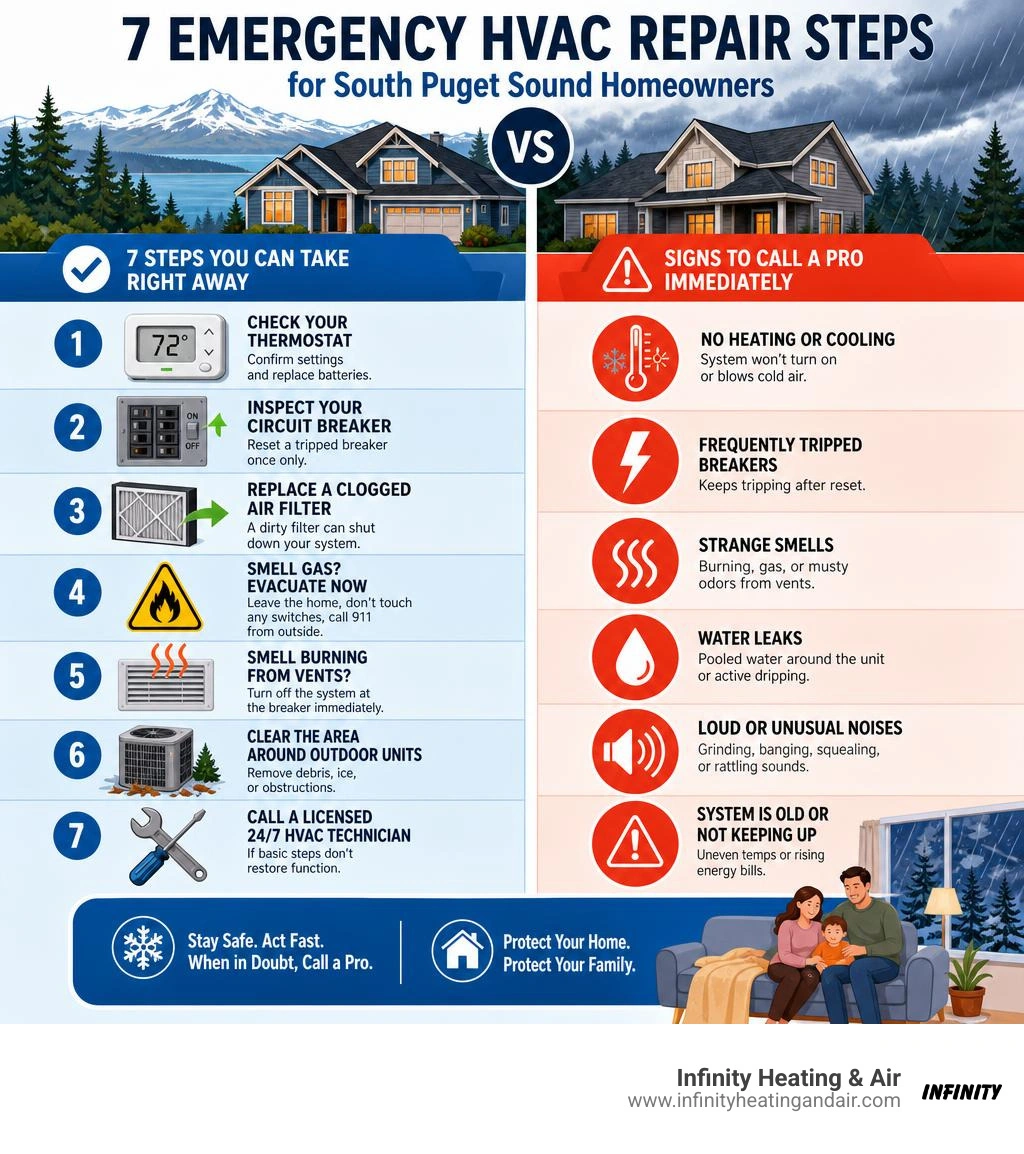
If you need emergency HVAC repair tips for the South Puget Sound area homeowners, here's what to do immediately:
- Check your thermostat - Replace batteries and confirm settings are correct
- Inspect your circuit breaker - Reset a tripped breaker once only
- Replace a clogged air filter - A dirty filter can shut down your entire system
- Smell gas? Evacuate now - Leave the home, don't touch any switches, call 911 from outside
- Smell burning from vents? - Turn off the system at the breaker immediately
- Clear the area around outdoor units - Remove debris, ice, or obstructions
- Call a licensed 24/7 HVAC technician - If basic steps don't restore function
Your furnace just went silent at midnight. Outside, a damp Pacific Northwest cold front is pushing temperatures toward freezing. Inside, the heat is fading fast.
This scenario plays out for South Puget Sound homeowners more often than you'd think. In fact, 70% of homeowners experience an HVAC breakdown during peak seasons — and the region's unique combination of damp winters, salt air, and dramatic temperature swings puts local systems under serious stress.
The good news? About 40% of HVAC emergencies trace back to simple causes like a tripped breaker or a failing thermostat. Knowing what to check — and what not to touch — can mean the difference between a quick fix and a dangerous situation.
This guide walks you through exactly what to do, step by step, when your heating or cooling system fails in the South Puget Sound area.
Introduction
Living in the South Puget Sound region means our heating and cooling systems must endure a highly unique maritime climate. From the damp, bone-chilling winters of Olympia and Tacoma to the increasingly hot summer heatwaves in Puyallup and Federal Way, our HVAC systems work hard year-round. Because the average American spends 93% of their time indoors, a sudden system failure directly impacts your quality of life, comfort, and safety.
When your system stops working during extreme weather, it is easy to panic. However, understanding the difference between a routine repair issue and a true safety emergency is the key to managing the situation effectively. A routine issue, like an unusual noise or slightly uneven temperatures, can usually wait for a standard business-hours appointment. A true emergency, such as a complete loss of heat during a winter freeze or a burning electrical odor, requires immediate professional intervention.
By familiarizing yourself with basic troubleshooting and safety protocols, you can protect your family and your home while waiting for an expert technician to arrive.
What Counts as an HVAC Emergency in Western Washington?
In the Pacific Northwest, we are accustomed to mild weather, but recent years have brought dramatic temperature swings. When extreme weather hits, a broken HVAC system is no longer just an inconvenience; it becomes a direct threat to your home and health.
A true HVAC emergency in Western Washington is defined by several critical factors:
- Extreme Temperatures: If the outdoor temperature drops below 35°F or climbs above 90°F, a total system failure is an immediate emergency. In winter, freezing temperatures can lead to burst water pipes and severe structural damage. In summer, indoor temperatures can rise by 10 to 15 degrees in less than an hour, putting vulnerable residents at risk of heat exhaustion.
- Vulnerable Occupants: The presence of infants, elderly family members, or individuals with chronic respiratory or cardiovascular conditions upgrades any climate control failure to an emergency. Additionally, pets are highly sensitive to extreme temperatures; dogs and cats can quickly suffer heatstroke when indoor temperatures rise above 82°F.
- Carbon Monoxide Risks: Gas furnaces carry a small but serious risk of carbon monoxide (CO) leaks if the heat exchanger cracks or the venting system becomes blocked. Carbon monoxide is colorless, odorless, and deadly. If your CO detector sounds, or if you experience symptoms like dizziness, nausea, or headaches, it is a life-threatening emergency.
- Electrical and Fire Hazards: Visible smoke, sparks, or a persistent burning plastic smell coming from your vents indicates a severe electrical fault, such as a seized blower motor or melting wire insulation.
- Active Refrigerant or Fuel Leaks: Pooling water, hissing sounds from refrigerant lines, or the distinct rotten-egg smell of a natural gas leak require immediate attention to prevent property damage or explosions.
To help you distinguish between routine issues and urgent situations, use this comparison table:
| Issue | Routine Repair (Schedule Next Day) | True HVAC Emergency (Call 24/7) |
|---|---|---|
| Heating Performance | System is blowing lukewarm air but keeping the home at a safe 65°F. | Complete system failure with outdoor temperatures below 35°F. |
| System Noises | Occasional clicking, humming, or slight rattling when cycling. | Loud, continuous screeching, metal-on-metal scraping, or loud banging. |
| Smells & Odors | A brief dusty smell when turning the furnace on for the first time in autumn. | Rotten-egg sulfur smell (gas leak) or a strong burning plastic odor. |
| System Behavior | System cycles slightly more frequently than usual. | Rapid short-cycling accompanied by a tripped circuit breaker that won't reset. |
| Water & Ice | Minor condensation around the indoor drain line. | Large pools of standing water around the indoor unit or thick ice buildup on the coils. |
If you are experiencing a heating crisis during a cold snap, consult our Emergency Heating Repair Tacoma Guide or our Emergency Heating Repair Guide Puyallup WA. If your heat pump is failing to warm your home, refer to our comprehensive Emergency Heat Pump Repair Tacoma Guide to identify the issue.
Essential Emergency HVAC Repair Tips for the South Puget Sound Area Homeowners
When your system fails, taking the right steps can keep your family safe and potentially save you from an unnecessary service call. Here are the essential emergency HVAC repair tips for the South Puget Sound area homeowners to keep in mind.
Safety First: Emergency HVAC Repair Tips for the South Puget Sound Area Homeowners
Before you worry about fixing the equipment, you must prioritize the safety of your household.
- Respond Immediately to Gas Odors: Natural gas utilities mix a chemical called mercaptan into gas lines to give it a highly noticeable rotten-egg or sulfur smell. If you smell this near your furnace or vents, do not attempt to locate the leak, do not flip any light switches, and do not use your phone inside. Evacuate everyone—including pets—immediately and call 911 or your gas utility from a safe distance outside.
- Install and Test Carbon Monoxide Detectors: Ensure you have CO detectors installed on every level of your home, especially near sleeping areas. Test them monthly. If a CO alarm sounds, evacuate the home immediately and call emergency services.
- Shut Down Power for Electrical Issues: If you smell burning plastic, see smoke, or hear loud electrical buzzing, go directly to your main electrical panel and shut off the dedicated circuit breaker for your HVAC system. Never attempt to open the electrical access panels on your furnace, heat pump, or air conditioner, as these systems run on high-voltage 240-volt circuits that present severe shock hazards.
- Avoid DIY Component Repairs: While checking basic settings is safe, never attempt to repair gas valves, electrical wiring, or refrigerant lines yourself. Handling refrigerant requires specialized EPA certification, and amateur repairs can easily void your manufacturer's warranty or cause permanent damage to your system.
Troubleshooting Before Calling: Emergency HVAC Repair Tips for the South Puget Sound Area Homeowners
Before calling for emergency service, run through this quick checklist. You might resolve the issue yourself or gather valuable details for the technician.
- Check the Thermostat: It sounds simple, but a blank thermostat screen is often just a sign of dead batteries. Replace them with fresh AA or AAA batteries. Ensure the thermostat is set to "Heat" (or "Cool" in summer) and that the temperature setting is at least 5 degrees above or below the current room temperature.
- Inspect the Circuit Breaker: Check your home's main electrical panel for a tripped breaker labeled "HVAC," "Furnace," or "AC." If the breaker has tripped to the middle position, flip it completely to the "Off" position, then back to "On." Warning: If the breaker trips again immediately, do not attempt to reset it a second time. This indicates a serious electrical fault that requires professional repair.
- Examine the Air Filter: A severely clogged air filter restricts airflow to a crawl. This restriction causes heat to build up inside a furnace, triggering the high-limit safety switch and shutting the system down to prevent a fire. In cooling mode, a clogged filter causes the indoor evaporator coil to freeze into a block of ice. If your filter is caked in dust, replace it immediately and wait 15 to 20 minutes for the system's safety switches to reset before turning it back on.
- Verify the Shutoff Switches: Many furnaces have an emergency power switch that looks exactly like a standard light switch, often located on the side of the furnace or on a nearby wall. Ensure this switch has not been accidentally flipped to "Off."
If you have performed these steps and your system still refuses to start, you can find more targeted troubleshooting advice in our local guides:
- Emergency Heater Not Working Help Lakewood
- 24 Hour Heater Not Working Federal Way WA
- 24hr Heater Not Working Olympia WA Guide (Note: Please use the exact URL: 24hr Heater Not Working Olympia WA Guide)
What to Expect During an Emergency HVAC Service Call
If basic troubleshooting does not restore your comfort, it is time to call in the professionals. Knowing what happens during an emergency visit can help reduce your stress.
When you call for emergency service, the process typically unfolds in these steps:
- The Dispatch Call: Our coordinator will gather critical details. Be prepared to share your system's brand, approximate age, and a description of the symptoms (e.g., "The outdoor unit is humming, but the indoor blower is not pushing air").
- Home Preparation: While waiting for the technician, you can speed up the visit by clearing a safe, three-foot workspace around your indoor furnace, air handler, thermostat, and outdoor unit. If it is winter, clear any snow or ice accumulation from the path leading to your outdoor equipment. Secure your pets in a separate room so they remain safe and do not distract the technician.
- Arrival and Diagnostic Testing: Upon arrival, the technician will perform a series of tests. This includes checking electrical connections, testing voltage and amperage draws, inspecting safety switches, measuring refrigerant pressures, and checking the integrity of the heat exchanger or ignition system.
- The Repair Plan: Once the root cause is identified, the technician will explain the diagnosis and outline the necessary repairs. If a specialized, non-standard part is required and cannot be sourced immediately after hours, they will discuss temporary heating or cooling options to keep your home safe until the permanent fix can be completed.
- Quality Assurance Testing: After completing the repair, the technician will run the system through a full operating cycle, verifying proper airflow, temperature rise, and safety control operation before departing.
To better understand this entire process, read our detailed guide on Emergency HVAC Repair What to Expect.
Protecting Your System from the Damp Pacific Northwest Climate
The South Puget Sound's climate presents unique challenges for mechanical equipment. Our damp, mild winters and high relative humidity can quietly accelerate wear and tear on your HVAC system.
- Salt Air Corrosion: For homeowners living in coastal areas like Gig Harbor, Steilacoom, or near the Puget Sound shoreline in Tacoma, salt air is a silent system killer. Salt spray carries corrosive sodium chloride, which deposits on the delicate aluminum fins and copper tubing of outdoor condenser units. This leads to pitting corrosion, which reduces heat transfer efficiency and eventually causes expensive refrigerant leaks. Homeowners in these areas should gently rinse their outdoor coils with fresh water from a garden hose once a month to remove salt deposits.
- High Humidity and Mold Prevention: Persistent dampness can lead to moisture accumulation inside your ductwork and drain pans. If your system's condensate drain line becomes clogged with algae or debris, water can back up, triggering a float switch that shuts down your system to prevent water damage. Keeping your ducts clean and ensuring your indoor relative humidity stays between 30% and 50% is critical for preventing mold growth and maintaining excellent indoor air quality.
- The Power of Seasonal Maintenance: Regular maintenance is your best defense against unexpected emergency breakdowns. In fact, routine inspections can catch up to 90% of common failure points before they lead to a system shutdown.
To keep your system running smoothly through every season, refer to our Emergency Heating Maintenance Guide Puyallup WA. If you rely on a heat pump for year-round comfort, explore our localized maintenance tips in the Emergency Heat Pump Repair Puyallup Guide and the Emergency Heat Pump Repair Graham WA Guide.
Frequently Asked Questions About South Sound HVAC Emergencies
Here are quick answers to some of the most common questions we receive from South Sound homeowners during HVAC crises.
What should I do if I smell gas or a burning odor coming from my vents?
If you smell natural gas (a rotten-egg odor), immediately evacuate all occupants and pets from the home. Do not turn lights on or off, do not unplug appliances, and do not use your phone indoors, as these actions can create a tiny electrical spark capable of igniting the gas. Call 911 or your gas utility from outside.
If you notice a burning plastic or electrical odor, immediately shut off power to your HVAC system at your main electrical panel's circuit breaker, then call for emergency service. This smell usually indicates a failing blower motor or damaged electrical wiring, which poses a serious fire hazard if left running.
How long does an emergency HVAC repair typically take to complete?
Most emergency repairs are completed within one to three hours of the technician's arrival. Simple fixes—such as replacing a failed start capacitor, clearing a clogged condensate drain line, or replacing a thermostat—typically take 30 to 60 minutes.
More complex repairs, such as replacing a blower motor or repairing a refrigerant leak, can take several hours. If a highly specialized part must be ordered from a manufacturer, the technician will secure your system and discuss temporary heating or cooling solutions to keep your household comfortable until the part arrives.
Can a clogged air filter actually cause my entire heating system to shut down?
Yes, absolutely. A severely clogged air filter restricts the volume of air flowing through your furnace. Without sufficient airflow to carry the heat away, the temperature inside the heat exchanger rapidly climbs to dangerous levels. To prevent an electrical fire or a cracked heat exchanger, the furnace's high-limit safety switch will trip, instantly shutting down the heating cycle.
In a heat pump or air conditioning system, restricted airflow causes the temperature of the indoor evaporator coil to drop below freezing, turning the condensation on the coil into a solid block of ice and completely halting the cooling process. Replacing your filters every 30 to 90 days is the easiest way to prevent these stressful, avoidable shutdowns.
Conclusion
Facing an HVAC breakdown in the middle of a South Puget Sound weather extreme is undeniably stressful. However, by staying calm, performing basic safety checks, and knowing when to call in the professionals, you can protect your home and restore your peace of mind quickly.
At Infinity Heating & Air, we are proud to serve families across Northwest Washington—including Tacoma, Puyallup, Lakewood, Federal Way, Olympia, Graham, and surrounding communities. We specialize in designing, installing, and servicing high-efficiency heating and cooling systems. Our mission is to craft endless comfort for your home through reliable, expert service.
We offer 24/7 emergency support and flexible financing options to ensure you are never left in the cold (or the heat) when you need us most. If your heating or cooling system is struggling, don't wait for a complete breakdown. Contact us today for reliable Emergency HVAC Service and let our expert team restore your home's comfort.
Written & reviewed by the Infinity Heating & Air team — licensed WA HVAC contractor (INFINHA841B8). Family-owned in Graham, answering 24/7 across the South Sound.
Choose Infinity & enjoy endless comfort.
Your perfect home environment awaits — call (253) 740-5135 or schedule service online and our team will take it from there.
Open 24/7 · 100% Satisfaction Guaranteed · Graham, WA