Ultimate Checklist for HVAC Maintenance During Rainy Season
Protect your system with hvac maintenance during the rainy season—clear debris, prevent mold, and keep your Pacific Northwest unit running efficiently.
.webp)

What You Need to Know About HVAC Maintenance During the Rainy Season
HVAC maintenance during the rainy season is one of the most important — and most overlooked — things a Northwest Washington homeowner can do to protect their heating and cooling system.
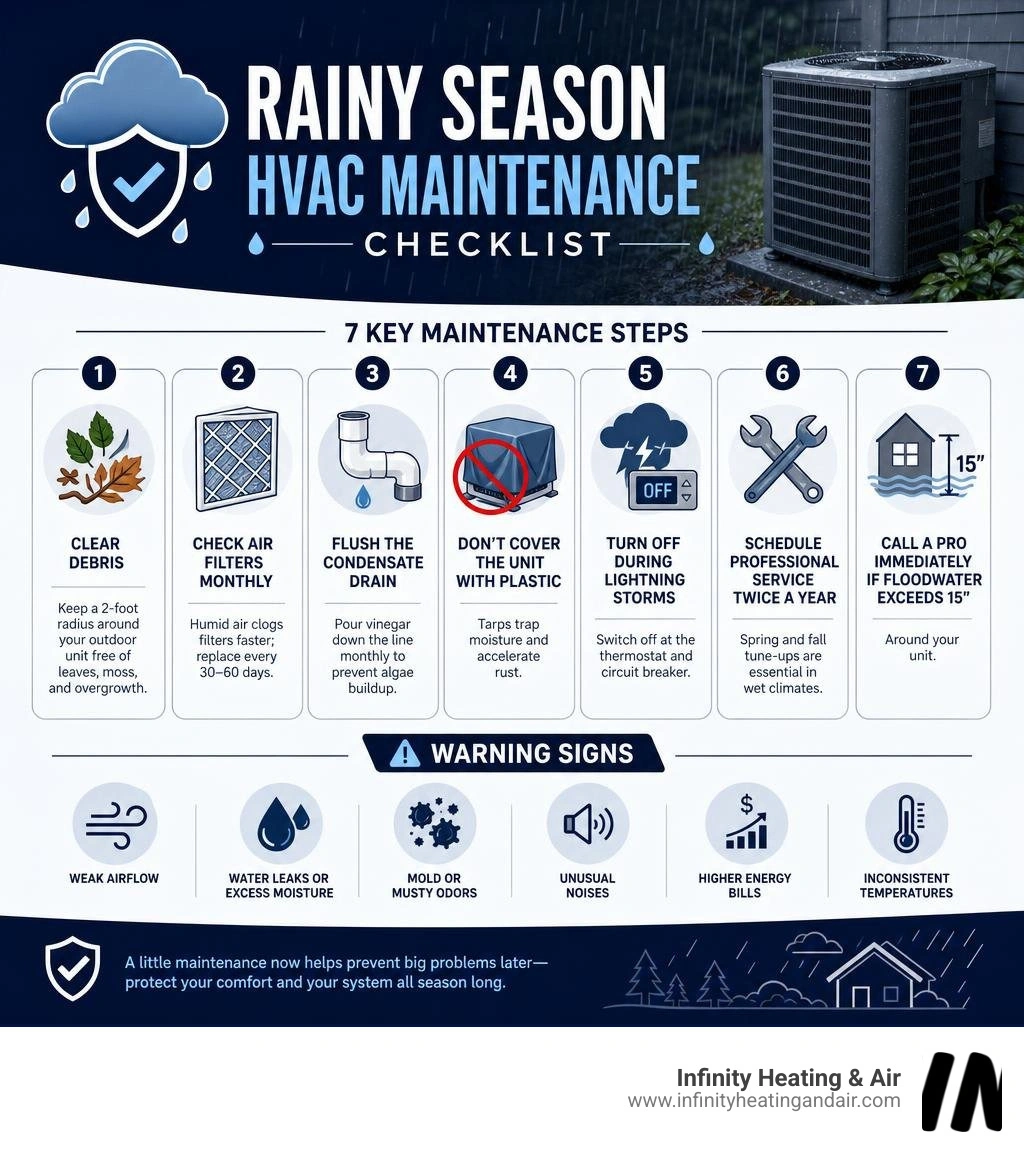
Here's a quick summary of what to do:
- Clear debris — Keep a 2-foot radius around your outdoor unit free of leaves, moss, and overgrowth
- Check air filters monthly — Humid air clogs filters faster; replace every 30–60 days
- Flush the condensate drain — Pour vinegar down the line monthly to prevent algae buildup
- Don't cover the unit with plastic — Tarps trap moisture and accelerate rust
- Turn off the system during lightning storms — Switch off at the thermostat and circuit breaker
- Schedule professional service twice a year — Spring and fall tune-ups are essential in wet climates
- Call a pro immediately if floodwater exceeds 15 inches around your unit
Rain alone rarely ruins an HVAC system. Modern outdoor units are built with weather-resistant housing, insulated electrical components, and corrosion-resistant materials designed to handle years of exposure to the elements.
But the Pacific Northwest isn't just rainy — it's persistently damp. With humidity regularly topping 75% from October through May and over 150 rainy days per year in many areas, that constant moisture creates a slow, steady strain on your system that dry-climate maintenance schedules simply aren't designed to handle.
The result? Accelerated corrosion, clogged drain lines, reduced airflow, mold growth, and efficiency losses that quietly drive up your energy bills — often before you notice anything is wrong.
This guide gives you a complete, actionable checklist to protect your HVAC system through every wet season.
Hvac maintenance during the rainy season terms simplified:
How Rain and Humidity Impact Your Outdoor Unit
Your outdoor condenser is the workhorse of your home's climate control system. In places like Tacoma, Gig Harbor, and Puyallup, this unit is exposed to relentless moisture for months on end. While manufacturers design these systems to withstand standard weather patterns, the reality of a long, wet winter or a humid summer shoulder season can take a toll.
When rain falls, it actually performs a minor service by rinsing away light dust and pollen from the condenser coils. However, persistent dampness is a different story. Constant exposure to high humidity means moisture stays trapped on the metal surface of the aluminum fins, copper lines, and steel casings. Over time, this accelerates oxidation and corrosion, leading to microscopic leaks in your refrigerant lines and a breakdown of the metal fins that facilitate heat transfer.
Furthermore, high humidity increases the "specific heat capacity" of the air. This means the air holds more moisture, forcing your air conditioner or heat pump to work twice as hard to remove both sensible heat (temperature) and latent heat (humidity). When a system is forced to handle a heavy latent heat load without proper maintenance, you will experience a noticeable drop in efficiency. In fact, neglected heat pumps in wet climates can experience a 5% to 15% annual decline in energy efficiency, driving up your monthly utility bills. For a deeper dive into these environmental stressors, read about how Pacific Northwest rain and humidity affect your HVAC.
Is It Safe to Run Your System During Storms?
For standard, steady rainfall, it is completely safe to run your air conditioner or heat pump. The electrical wiring, control boards, and fan motors in your outdoor unit are heavily insulated and sealed against water intrusion.
However, the rules change when a severe lightning storm rolls through Western Washington. Lightning strikes can hit utility poles or nearby trees, sending massive power surges through your home's electrical grid. These surges can instantaneously fry the sensitive control boards, compressor motors, and thermostat wiring of your HVAC system.
To protect your equipment, we recommend turning off your HVAC system at the thermostat before a major storm arrives. For maximum protection, flip the dedicated circuit breaker in your electrical panel. Relying solely on standard household surge protectors is often not enough; installing a dedicated, heavy-duty HVAC surge protector at the outdoor disconnect box is the best defense against lightning-induced damage.
The Danger of Improper Covers and Plastic Tarps
One of the most common mistakes we see homeowners in Olympia, Lacey, and Federal Way make is wrapping their outdoor condenser in a plastic tarp or a tight, non-ventilated cover to "protect" it from winter rain.
While this seems like a logical way to keep the unit dry, it actually does the exact opposite. Plastic tarps trap rising ground moisture and condensation inside the unit, creating a highly destructive "greenhouse effect." This trapped, stagnant humidity accelerates rust and corrosion on electrical terminals, fan blades, and coil fins far faster than open exposure to rain ever would.
Additionally, a dark, dry, enclosed space wrapped in plastic is the ultimate invitation for local pests. Mice, rats, and squirrels love to nest inside covered units during the cold months, where they frequently chew through critical wiring insulation, causing expensive electrical shorts when you turn the system back on in the spring. If you must use a cover, choose a breathable mesh cover or a simple rigid top-shield that prevents falling debris from entering the top fan grille while leaving the sides completely open for airflow.
Essential DIY HVAC Maintenance During the Rainy Season
Taking a proactive approach to DIY maintenance is the easiest way to prevent unexpected breakdowns when the autumn downpours arrive. By spending just a few minutes on your system, you can save yourself from emergency service calls during peak winter periods.
How often should I perform DIY hvac maintenance during the rainy season?
During the heavy rainy season (typically November through March in our region), we recommend establishing a consistent maintenance routine:
- Weekly checks (5 minutes): Walk out to your outdoor unit and check for piled-up leaves, fallen branches, or standing water around the concrete pad.
- Monthly maintenance (15 minutes): Inspect your indoor air filters, check the condensate drain line outlet for proper flow, and clear any visible debris from the outdoor unit's top grille.
- Seasonal inspection (Before winter & spring): Schedule a professional tune-up and perform a thorough cleanup of the surrounding landscape.
Clearing Debris and Preventing Moss Growth
In forested or heavily landscaped neighborhoods throughout Gig Harbor, University Place, and Lakewood, falling pine needles, wet leaves, and organic debris pose a constant threat. When leaves pile up against the base of your outdoor unit, they trap moisture against the metal casing and restrict the critical airflow your system needs to transfer heat efficiently.
Furthermore, the damp, shaded environments of Western Washington are prime breeding grounds for moss and algae. Moss can easily begin growing directly on the aluminum fins of your outdoor coil. This moss acts like a wet sponge, holding moisture permanently against the coils and accelerating metal decay while choking off airflow.
Always maintain a strict two-foot clearance zone around all sides of your outdoor unit. Trim back nearby shrubs, rake away leaf piles, and cut back overhanging tree branches. If you notice moss starting to build up on the concrete pad or the lower portion of the unit, carefully brush it away with a soft-bristle brush (never use a pressure washer, as the high-pressure water will instantly bend and ruin the delicate aluminum fins).
Additionally, make it a habit to clean your gutters in late October and verify that downspouts direct water completely away from your HVAC pad. Overflowing gutters dumping sheets of water directly onto your outdoor unit will erode the soil beneath the concrete pad, causing the unit to tilt and putting severe stress on the copper refrigerant lines.
Managing Air Filters and Condensate Drains
Your indoor air filter is your system's primary line of defense. During wet, humid months, the air inside your home carries more moisture. Damp air causes airborne dust, pet dander, and pollen to clump together, which clogs your air filter much faster than dry air. A clogged filter severely restricts airflow, forcing your blower motor to work harder, run longer, and consume up to 15% more energy. In wet climates, you should check your filter every 30 days and replace it at least every 60 days.
Equally important is your condensate drain system. As your system cools or dehumidifies, it pulls gallons of water out of the indoor air. This water collects in a drain pan and flows outside through a small PVC condensate line.
Because this line is constantly wet and warm, it is highly susceptible to algae, mold, and slime growth. Over time, this biological buildup creates a thick clog, causing the drain pan to overflow. This can result in costly water damage to your ceilings, drywall, or crawlspace. To prevent this, locate your indoor condensate drain T-pipe and pour a cup of plain white vinegar down the line once a month. The natural acidity of the vinegar kills off algae and mold spores before they can form a clog. For more tips on managing indoor moisture, read our guide on combating mold and mildew in your HVAC unit.
Why Wet Climates Demand Professional HVAC Care
While DIY tasks are essential, they cannot replace the highly specialized tools and training of a professional technician. Marine and wet climates demand a level of care that goes far beyond what is required in dry, arid regions.
| Maintenance Need | Wet Climate (e.g., Puget Sound) | Dry Climate (e.g., Desert Southwest) |
|---|---|---|
| Service Frequency | Twice per year (Spring & Fall) | Once per year |
| Filter Replacement | Every 30–60 days | Every 90 days |
| Coil Cleaning Needs | High (due to moss, salt air, and organic debris) | Moderate (primarily dust and sand) |
| Electrical Inspection | Critical (high humidity corrodes terminals rapidly) | Standard annual check |
| Condensate Line Flushing | Monthly (high risk of algae and mold) | Rare (dry air produces minimal condensation) |
Why is professional hvac maintenance during the rainy season more critical in wet climates?
In dry climates, an annual checkup is often sufficient to keep a system running smoothly. However, in our mild, wet Pacific Northwest climate, skipping seasonal service can lead to rapid system decline. The constant presence of high humidity and salt air (especially for homes in waterfront areas like Steilacoom, Gig Harbor, or Bainbridge Island) accelerates wear on electrical contacts, causing them to pit, corrode, and fail prematurely.
Additionally, regular professional maintenance is often a strict requirement to keep your manufacturer's warranty valid. Brands like Carrier, Daikin, and Trane require documented annual or semi-annual professional maintenance to cover major component failures. Neglecting your system not only risks an expensive mid-winter breakdown but can also leave you paying out of pocket for repairs that would have otherwise been covered under warranty. To understand the long-term financial benefits, explore our article on annual HVAC maintenance: is it worth it?.
To keep your system running reliably, we recommend checking out our benefits of regular HVAC maintenance in Pacific Northwest mild wet resources, and consulting our guide on how often should you service your HVAC?.
Preventing Mold and Protecting Indoor Air Quality
When outdoor humidity levels hover above 75% for months, keeping indoor humidity within the EPA-recommended range of 30% to 50% becomes a challenge. High indoor humidity makes your home feel clammy and warm, but the real danger is invisible.
Spore-producing mold can begin growing on damp surfaces, inside ductwork, or on your indoor evaporator coils in as little as 48 hours. Once mold takes hold in your HVAC system, every run cycle sends millions of microscopic mold spores circulating through your indoor air, triggering allergies, asthma, and respiratory issues.
Professional technicians use specialized, non-corrosive chemical rinses to deep-clean your indoor evaporator coils, removing the organic film that mold feeds on. We also inspect your ductwork for leaks that might be pulling damp, musty crawlspace air into your living spaces. Learn more about how we keep your air clean by reading about how proper HVAC maintenance prevents mold growth.
What a Professional Wet-Season Tune-Up Includes
When an Infinity Heating & Air technician performs a wet-season tune-up, we don't just kick the tires. Our comprehensive inspection is designed to address the specific vulnerabilities of systems operating in damp climates. A standard visit includes:
- Deep Coil Cleaning: We rinse the outdoor condenser coils with specialized solutions to clear away embedded dirt, pine needles, and moss.
- Electrical Safety Check: We inspect all electrical connections, tighten terminals, and apply protective coatings to prevent rust and corrosion on control boards.
- Condensate System Flush: We mechanically flush the drain line and treat the drain pan to prevent future algae clogs.
- Refrigerant Charge Verification: We check operating pressures to ensure there are no slow, corrosion-induced leaks.
- Blower Motor & Fan Inspection: We test the amp draw of your motors to ensure they aren't working overtime due to restricted airflow.
For a complete breakdown of what our team covers, see our guide on what does an HVAC maintenance visit include? and review our HVAC maintenance plan guide 2026.
Warning Signs Your System Needs Immediate Attention
Even with diligent care, severe weather can occasionally overwhelm your system. Knowing how to spot the early warning signs of water damage can help you avoid a complete system replacement.
Common Causes of AC Water Leakage and Poor Cooling
If you notice water pooling around the base of your indoor furnace or air handler, or if your system is running but failing to cool your home, you are likely dealing with one of two common rainy-season issues:
- A Clogged Condensate Line: High indoor humidity increases the volume of water your system extracts. If your drain line has a minor algae restriction, this sudden surge of water will quickly back up and overflow the drain pan.
- Frozen Evaporator Coils: When a dirty air filter or restricted ductwork reduces airflow, the refrigerant flowing through your indoor coils drops below freezing. The high moisture content in the humid air instantly freezes onto the coils, building up a thick block of ice. This chokes off airflow entirely and stops all cooling.
If you suspect your system is struggling, act quickly. Learn how to prevent HVAC emergencies with maintenance before minor issues turn into major failures.
Post-Storm Inspection and Emergency Indicators
After a major wind or rainstorm in areas like Puyallup, Spanaway, or Orting, perform a quick visual inspection of your outdoor unit. Be on the lookout for these critical warning signs that indicate your system needs immediate professional attention:
- Unusual Noises: Screeching, rattling, or heavy buzzing sounds can indicate that storm debris (like small twigs or pinecones) has fallen through the top grille and is blocking the fan blade, or that the compressor is struggling due to an electrical fault.
- Musty or Burning Odors: A strong, musty smell when the air turns on indicates mold growth within the ductwork or drain pan. A burning, metallic smell suggests water has compromised the electrical wiring.
- Short-Cycling: If your system turns on and off rapidly every few minutes, it is likely tripping a safety limit switch due to restricted airflow, water intrusion, or a failing control board.
Ignoring these warning signs can lead to catastrophic system failure. For a detailed look at the financial consequences of delaying service, read about the true cost of neglecting HVAC maintenance.
Frequently Asked Questions About Wet Weather HVAC Care
Can heavy rain damage my outdoor heat pump or AC unit?
No, standard rainfall will not damage your outdoor unit. The cabinet is constructed of heavy-gauge, galvanized steel with a baked-on powder coat finish designed to resist rust. All electrical components, including the fan motor and compressor terminals, are sealed inside waterproof enclosures. However, heavy rain can cause damage indirectly if it leads to localized flooding that submerges the unit, or if wind-blown debris punctures the delicate aluminum coils.
What should I do if my outdoor HVAC unit is flooded?
If heavy rain or poor yard drainage causes standing water to rise around your outdoor unit, follow these safety protocols immediately:
- Do not touch the unit or stand in the water around it while the power is on.
- Go to your home’s main electrical panel and shut off the dedicated circuit breaker for the HVAC system.
- If the floodwater rises above 15 inches (which is the typical height of the lower electrical control box and compressor terminals), do not attempt to restart the system after the water recedes.
- Call a professional technician to perform a complete safety inspection. We will disassemble the unit, dry out the electrical components, check for short circuits, and verify that the system is safe to operate.
Why does my heat pump run constantly when it is cold and raining?
If you have a heat pump, you may notice it running almost non-stop on cold, damp days (typically when outdoor temperatures are between 35°F and 45°F). This is actually normal behavior, but it is highly affected by humidity.
When the outdoor air is saturated with moisture, that moisture condenses onto the cold outdoor coils of your heat pump and quickly freezes into a layer of frost. To clear this ice, the heat pump must periodically enter its defrost cycle. During defrost mode, the system temporarily reverses operation to send heat back to the outdoor coils to melt the ice. While this is happening, your system may rely on auxiliary electric heat strips to keep your home warm, which consumes more energy and makes the unit run longer cycles.
Conclusion
Living in Northwest Washington means embracing the rain, but it shouldn't mean sacrificing your indoor comfort or risking the lifespan of your heating and cooling system. By following this checklist and staying proactive with both DIY care and professional tune-ups, you can ensure your system runs efficiently, keeps your energy bills low, and provides clean, healthy air for your family through every wet season.
At Infinity Heating & Air, we are proud to serve our neighbors throughout Auburn, Gig Harbor, Tacoma, Puyallup, Lakewood, and the surrounding areas. We specialize in crafting endless comfort with reliable, expert service, offering 24/7 emergency support and flexible financing options to keep your home safe and warm when you need it most.
Is your system ready to handle the next big Pacific Northwest storm? Don't wait for a mid-winter breakdown to find out. Contact our team of certified professionals today to schedule your seasonal tune-up and experience the peace of mind that comes with a truly storm-proof home comfort system.
Schedule your rainy-season tune-up with Infinity Heating & Air today!
Endless Comfort
Starts Here
Our expert technicians are ready to serve you and your home.