The Cold Hard Truth About HVAC Upgrades and Resale Value
Discover how a new hvac system increases home value by 5-10% in 2026. Boost ROI, sell faster & maximize resale in the Pacific Northwest!
Introduction
What Homeowners Need to Know About How a New HVAC System Increases Home Value
How a new HVAC system increases home value is one of the most practical questions you can ask before listing your property — and the answer is backed by solid data.
Here's the short version:
| What Changes | How Much |
|---|---|
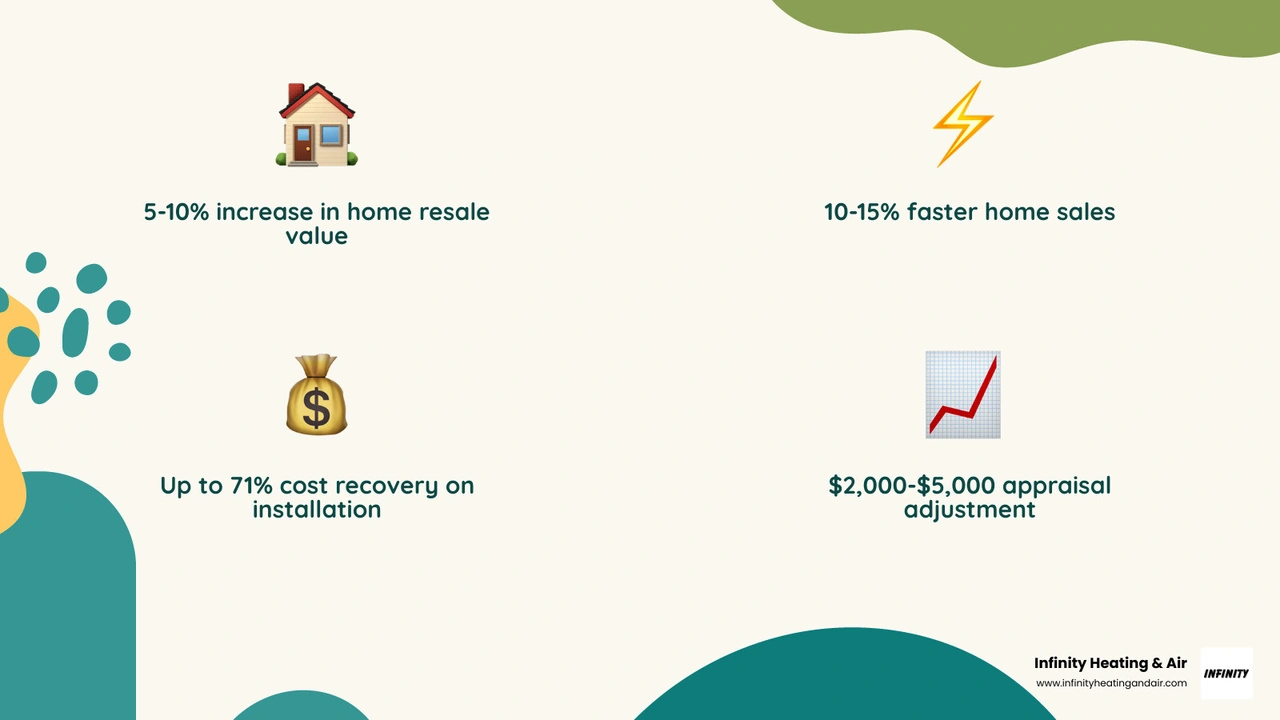
| Home resale value increase | 5% to 10% |
| Homes sell faster | 10% to 15% quicker |
| Cost recovery at resale | Up to 71% of installation cost |
| Appraiser value adjustment | $2,000 to $5,000 upward |
| Realtors who say it speeds sales | 89% |
Most homeowners focus on kitchens or bathrooms when prepping a home to sell. But buyers in 2026 — especially here in Northwest Washington — are asking a different question first: "How old is the HVAC?"
That's because heating and cooling accounts for nearly half of a home's total energy use. A system that's aging, inefficient, or flagged during inspection doesn't just make buyers nervous. It gives them a negotiating weapon.
A new, high-efficiency system does the opposite. It signals that the home has been cared for. It removes a major source of buyer hesitation. And in a competitive market, that peace of mind often translates directly into stronger offers and faster closings.
The data from the National Association of Realtors and independent real estate research consistently shows that move-in-ready homes with updated mechanical systems outperform comparable listings — not by a little, but meaningfully.
The Financial Impact: How a New HVAC System Increases Home Value
When we talk about home improvements, we often distinguish between "wants" and "needs." A marble countertop is a want; a functioning climate control system is a non-negotiable need. In 2026, the financial impact of upgrading this "need" is more significant than ever. Research indicates that a new HVAC system can increase your home's resale value by 5% to 10%. For a $500,000 home in Tacoma or Olympia, that translates to an added $25,000 to $50,000 in market appeal.
Beyond the sticker price, the Return on Investment (ROI) is impressive. Homeowners can expect to recover approximately 71% of the project costs during the resale. This is often a higher recovery rate than visible renovations like minor kitchen remodels or deck additions. By increasing the equity in your home, you aren't just spending money; you are shifting it from your bank account into the walls of your property.
However, timing is everything. If your current unit is showing signs of age—strange noises, frequent repairs, or inconsistent temperatures—knowing When to Replace Your HVAC System is crucial to capturing this value before you list.

Understanding how a new hvac system increases home value through energy efficiency
In May 2026, energy efficiency isn't just a buzzword; it’s a financial strategy. Modern systems utilize SEER2 (Seasonal Energy Efficiency Ratio) ratings, which are more stringent than the standards of just a few years ago. By upgrading to an Energy Efficient HVAC system, you can offer potential buyers a home that costs 10% to 30% less to operate every month.
ENERGY STAR-certified equipment acts as a badge of honor on a real estate listing. In a world of rising utility costs, a buyer is much more likely to stretch their budget for a home that promises lower monthly overhead. We’ve seen that 80% of homebuyers prioritize these efficiency upgrades because they represent long-term savings they don't have to finance later.
How a new hvac system increases home value in the Pacific Northwest climate
Our local climate in Northwest Washington presents unique challenges. With our wet, chilly winters and increasingly warm summers, a system must be a "jack of all trades." In areas like Puyallup and Tacoma, heating-heavy requirements dominate the year, but the demand for reliable cooling is higher than it has ever been.
A system that offers dual-season performance—providing both cozy warmth in January and crisp cooling in August—is a massive selling point. Prospective buyers in the Puget Sound region often inquire about the furnace or heat pump service history during the very first tour. Providing them with a HVAC Installation Puyallup WA Complete Guide or similar documentation for a new system proves the home is ready for our specific weather patterns.
Maximizing ROI: Which Features Drive the Most Resale Value in 2026?
Not all HVAC upgrades are created equal. To get the best "bang for your buck," you need to choose features that buyers value most in today's market.
| System Type | Estimated Value Boost | Primary Benefit |
|---|---|---|
| Heat Pumps | $1,260 – $2,280 | High efficiency; dual heating/cooling |
| Central AC | $1,170 – $2,370 | Essential for summer comfort |
| Geothermal | $1,300 – $7,300 | Maximum sustainability and long-term ROI |
Smart thermostats and zoning controls are also high-value additions. These allow homeowners to heat or cool specific rooms rather than the whole house, further slashing energy bills. For larger homes in Graham or South Hill, zoning is often the difference between a "comfortable" home and a "luxury" one. If you are considering an upgrade, our Ultimate Heat Pump Replacement Guide Graham WA can help you navigate these choices.
High-Efficiency Heating Solutions
In 2026, the transition toward electric heating is in full swing, but gas remains a staple for many. If you stick with gas, a High Efficiency Furnace with a high AFUE (Annual Fuel Utilization Efficiency) rating is essential. Modern furnaces can reach ratings of 95% or higher, meaning almost no heat is wasted. This efficiency is a major "green" flag for eco-conscious buyers.
Modern Cooling and Air Quality
Indoor Air Quality (IAQ) has become a top priority for families. Systems equipped with HEPA filtration, UV purification, and advanced humidity control don't just move air; they clean it. This is a powerful selling feature for buyers with allergies or health concerns. A Residential Heat Pump Replacement in Puyallup WA often includes these IAQ features, turning the HVAC system into a comprehensive home wellness center.
Buyer Psychology and Market Speed: Why Modern Systems Sell Homes Faster
The "wow" factor of a new kitchen is great, but the "phew" factor of a new HVAC system is what closes deals. When a buyer sees a brand-new outdoor unit or a modern furnace, their "risk meter" drops. They know they won't be hit with a $10,000 emergency repair three months after moving in.
This peace of mind leads to 10-15% faster sales. In fact, 89% of realtors report that energy-efficient HVAC features speed up the time a home sits on the market. By reducing the perceived risk, you encourage buyers to make cleaner, higher offers without demanding credits for "impending" repairs.
Neglecting this can be costly. We often discuss The True Cost of Neglecting HVAC Maintenance with our clients; in a real estate context, that cost is usually a massive price reduction at the closing table.
Strategic Timing: Should You Replace or Offer a Credit Before Selling?
We often hear the question: "Should I just give the buyer a credit?" In most cases, the answer is no.
If your system follows the "15-year rule"—meaning it is 15 years or older—it will likely be flagged by an inspector as "near end of life." Buyers use this as a "negotiation weapon" to demand credits that are often far higher than the actual cost of a replacement. They aren't just asking for the equipment cost; they are asking for a "hassle discount" too.
Furthermore, 2026 brings new regulatory standards. The EPA’s AIM Act has shifted the industry toward eco-friendly R-454B refrigerants. Older units using phased-out R-22 are now seen as "dinosaurs." Replacing an old unit before listing ensures your home is compliant with modern standards, making it much easier to market. If you're unsure about your current system's status, check out our guide on When Should You Replace Your Furnace.
Navigating Appraisals, Mortgages, and 2026 Regulatory Standards
Professional appraisers in 2026 are specifically trained to look for high-efficiency mechanicals. A new HVAC system can result in an appraisal adjustment of $2,000 to $5,000 upward. This is critical because it helps ensure the home appraises for the agreed-upon sale price, preventing the deal from falling through due to financing issues.
Additionally, certain loan types like FHA and VA loans require primary home systems to be in good working order. An old, failing furnace can actually disqualify a buyer from getting a mortgage on your home, shrinking your pool of potential offers.
To offset the cost of these upgrades, we always recommend looking into federal tax credits and Inflation Reduction Act rebates. In 2026, you may be eligible for up to $2,000 in federal credits for heat pumps alone. Keeping your system in peak condition through an HVAC Service Plan also ensures that your warranty remains valid and transferable to the next owner—another huge selling point.
Frequently Asked Questions about HVAC and Property Value
What is the expected ROI for a full HVAC replacement in 2026?
The direct equity ROI is typically between 30% and 50%. However, when you factor in the money saved by avoiding buyer concessions, price drops, and extended time on the market, the "total" ROI can reach 85% to 100%. It is one of the safest investments you can make in your property.
How does an HVAC system older than 15 years affect my sale price?
An HVAC system older than 15 years is often viewed as a liability. Buyers will likely subtract the full cost of a new system from their offer, and may even ask for more to cover the "risk" of failure. In a buyer's market, an old system can be a deal-breaker.
Are there specific tax credits available in 2026 for HVAC upgrades?
Yes! Under the Inflation Reduction Act, homeowners can claim federal tax credits for high-efficiency equipment. Heat pumps currently offer the highest credits (up to $2,000), while high-efficiency central AC and furnaces can qualify for up to $600. Local utility rebates in Washington can often be stacked on top of these for even more savings.
Conclusion
At Infinity Heating & Air, we understand that your home is your most significant investment. Whether you are in Tacoma, Puyallup, or Lacey, we are here to help you maximize that investment through expert HVAC solutions.
Upgrading your system isn't just about staying cool in the summer or warm in the winter—it's about "crafting endless comfort" and building lasting home value. From the initial design to the final installation, we specialize in the Advantages of a Custom Designed Comfort System tailored specifically to your home’s footprint and the Northwest Washington climate.
Don't let an aging HVAC system hold back your home's potential. Schedule your professional HVAC installation today and see how we can help you breathe easier and sell smarter.
Written & reviewed by the Infinity Heating & Air team — licensed WA HVAC contractor (INFINHA841B8). Family-owned in Graham, answering 24/7 across the South Sound.
Choose Infinity & enjoy endless comfort.
Your perfect home environment awaits — call (253) 740-5135 or schedule service online and our team will take it from there.
Open 24/7 · 100% Satisfaction Guaranteed · Graham, WA