A Quick Start Guide to Staying Safe in a Heating or Cooling Emergency
Learn how to stay safe during a heating or cooling emergency with immediate steps, safety tips, and backup plans for extreme weather.
When Your Heat or AC Fails: What Every Northwest Washington Homeowner Needs to Know
Knowing how to stay safe during a heating or cooling emergency could mean the difference between a stressful night and a life-threatening situation — especially when temperatures in Northwest Washington swing from hard freezes to rare but dangerous summer heat waves.
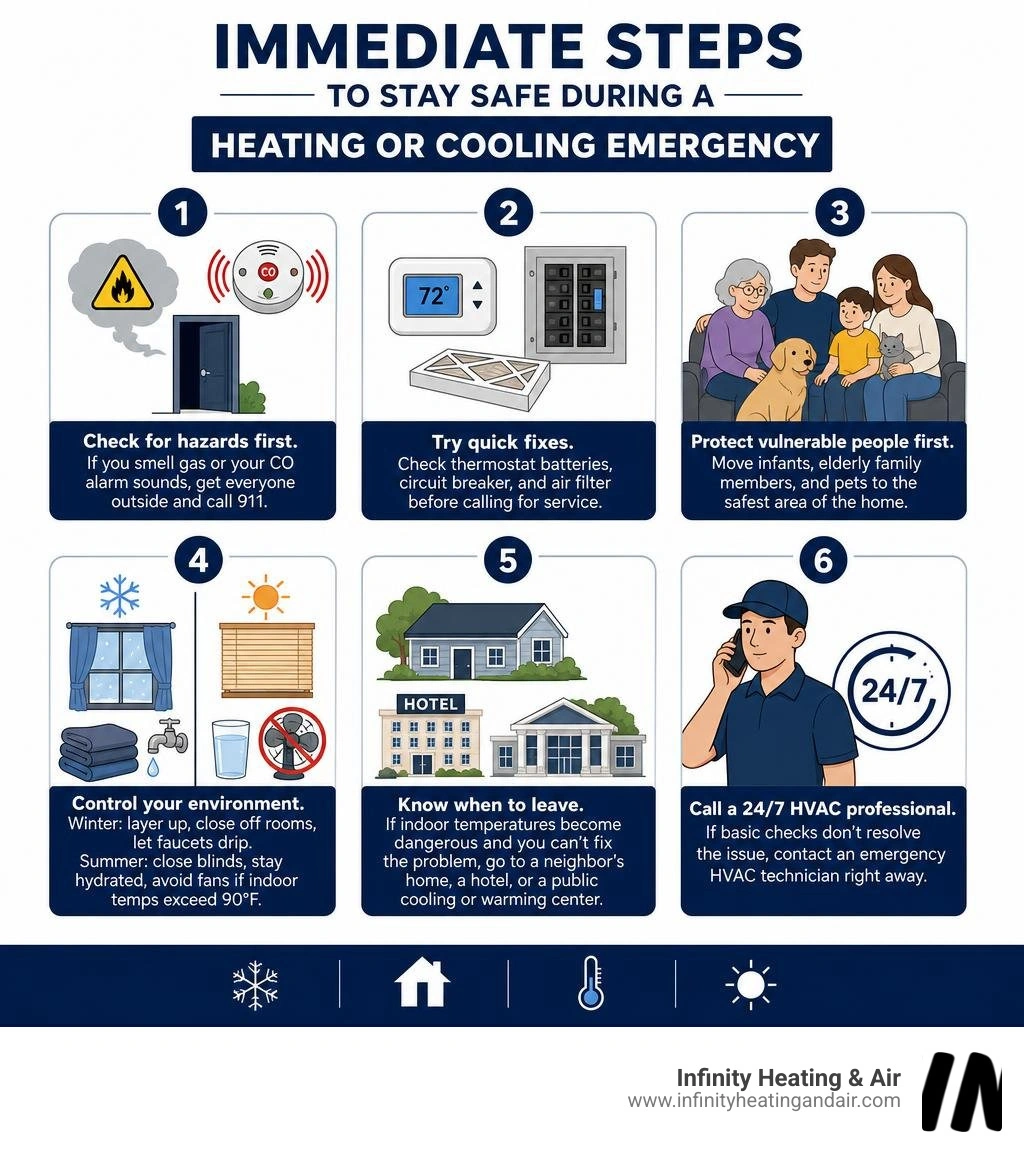
If your HVAC fails right now, here are the immediate steps:
- Check for hazards first — If you smell rotten eggs (gas leak) or your CO alarm sounds, evacuate everyone immediately and call 911 from outside. Do not touch any switches.
- Try quick fixes — Check your thermostat batteries, circuit breaker, and air filter before calling for service. About 25% of "emergencies" are resolved this way.
- Protect vulnerable people first — Move infants, elderly family members, and pets to the safest area of the home.
- Control your environment — In winter: layer up, close off rooms, and let faucets drip. In summer: close blinds, stay hydrated, and avoid fans if indoor temps exceed 90°F.
- Know when to leave — If indoor temperatures become dangerous and you can't fix the problem, go to a neighbor's home, a hotel, or a public cooling or warming center.
- Call a 24/7 HVAC professional — If basic checks don't resolve the issue, contact an emergency HVAC technician right away.
HVAC systems have a habit of failing at the worst possible moments — the coldest January night or the peak of a July heat wave. And when they do, most homeowners aren't sure what to do first.
The good news? Most emergencies follow a predictable pattern. A clear plan makes all the difference.
This guide walks you through every step — from spotting a gas leak to protecting your pipes to recognizing heat stroke — so you're never caught off guard.
Learn more about how to stay safe during a heating or cooling emergency:
- emergency hvac repair tips for the south puget sound area homeowners
- emergency hvac repair what to expect
- how to prevent hvac emergencies with maintenance
How to Stay Safe During a Heating or Cooling Emergency: Immediate Action Steps
When your heating or cooling system fails unexpectedly, the first ten minutes are the most critical. Before you worry about the system itself, you must ensure that your household is not in immediate danger.
If your system shuts down and you notice any of the following red flags, treat it as a life-threatening hazard rather than a simple mechanical failure:
- The Smell of Gas (Rotten Eggs): Natural gas is naturally odorless and colorless, but utility companies add a chemical called mercaptan to give it a distinct, pungent rotten egg smell. If you smell this near your furnace or anywhere in your home, do not try to locate the leak. Do not flip light switches, use your phone, or light matches indoors, as a single spark can trigger an explosion. Evacuate everyone (including pets) immediately, move at least 100 feet away from the property, and call 911 or your local gas utility.
- Carbon Monoxide (CO) Alarms: Carbon monoxide is a completely colorless, odorless, and tasteless gas. It can leak silently from cracked heat exchangers or blocked vents. If your CO detector sounds, do not assume it is a false alarm. Evacuate immediately, get to fresh air, and call 911. Symptoms of CO poisoning include persistent headaches, dizziness, nausea, confusion, and flu-like symptoms that miraculously improve once you step outside.
- Smoke or Burning Smells: If you see smoke rolling out of your vents or smell electrical burning (a sharp, plastic, or metallic odor), shut off the system at the thermostat and the main circuit breaker immediately. If the smoke persists, evacuate and call the fire department.
Once you are safely outside or have confirmed there are no immediate physical hazards, you can begin planning your next steps. To understand what happens next once you contact a professional, review our detailed overview on Emergency HVAC Repair What to Expect.
Recognizing Life-Safety Hazards vs. Minor Inconveniences
In the middle of a seasonal weather swing in Tacoma or Auburn, any HVAC breakdown feels like a crisis. However, to keep emergency services clear for those who need them most, it helps to distinguish between a true utility emergency and a minor, non-critical inconvenience.
A true HVAC emergency exists when:
- Outdoor temperatures drop below 32°F and you have no heating source, putting your plumbing and physical health at risk.
- Indoor temperatures exceed 90°F during a heat wave, and you have vulnerable residents (infants, seniors, or chronically ill individuals) in the home.
- There are visible safety hazards present, such as electrical sparking, burning smells, or active water flooding from a burst hydronic line.
- Your system enters a safety lockout. If a modern furnace or heat pump shuts down and trips a safety lockout more than twice, do not attempt to repeatedly reset it. Repeated resets can bypass safety controls and create severe fire or carbon monoxide hazards.
Conversely, a minor inconvenience that can typically wait for a standard business-hours appointment includes:
- Your system is running but struggling to maintain your exact preferred temperature (e.g., keeping the home at 68°F instead of 72°F).
- A single room in your home is drafty or unevenly cooled, but the rest of the living space is safe and comfortable.
- The system is making a minor, unusual noise (like a soft hum or rattle) but is otherwise operating safely without sparking or smoking.
For a deeper dive into managing these situations locally, read our Emergency HVAC Repair Tips for the South Puget Sound Area Homeowners.
How to Stay Safe During a Heating or Cooling Emergency: DIY Troubleshooting vs. Professional Help
Did you know that nearly a quarter of all emergency HVAC service calls are resolved by simple adjustments that you can perform yourself? Before you pick up the phone to book an after-hours technician, run through this quick, safe DIY troubleshooting checklist:
- Check the Thermostat: Ensure your thermostat is actually set to "Heat" or "Cool" (not "Off"). If the screen is blank or flashing a low-battery icon, replace the batteries with fresh, high-quality alkaline batteries. Sometimes, a simple battery swap is all it takes to bring a dead system back to life.
- Inspect the Circuit Breaker: Locate your home's main electrical panel and check the breakers labeled "Furnace," "AC," or "Heat Pump." If a breaker has tripped to the middle position, flip it completely to "Off" and then back to "On" once. Warning: If the breaker immediately trips again, do not force it. This indicates a serious electrical fault, and repeatedly resetting it can cause an electrical fire.
- Check the Air Filter: A heavily clogged, dusty air filter restricts airflow. In the winter, this can cause your furnace to overheat and shut down via its high-limit safety switch. In the summer, restricted airflow causes the evaporator coils to freeze over, blocking all cool air. Hold your filter up to a light source; if no light can pass through it, replace it immediately.
- Inspect Vents and Registers: Make sure your return air grilles and supply registers are open and completely unblocked by furniture, heavy drapes, or rugs.
- Examine the Outdoor Unit: For heat pumps and air conditioners, check the outdoor condenser unit. Ensure it has at least two feet of clear space around it, free of accumulated snow, fallen leaves, tall weeds, or storage boxes.
If you have completed these steps and your system still refuses to start, or if you notice ice building up on your copper refrigerant lines, it is time to call in the professionals. For Puyallup residents, our Emergency Heating Maintenance Guide Puyallup WA offers excellent local preparation tips.
Surviving the Deep Freeze: Winter Heating Failure Protocols
When a winter storm sweeps through Western Washington, dropping temperatures below freezing in Olympia or Federal Way, a sudden furnace or heat pump failure requires immediate, defensive action to keep your family warm and your property intact.
During a prolonged heating outage, your primary goal is to conserve whatever ambient heat is left inside your home.
- Gather in a Central Room: Select a single, well-insulated room (preferably one with few windows and a southern exposure to capture daytime sunlight) and designate it as your temporary living space. Close the doors to all unused rooms to prevent heat from dissipating.
- Block Drafts: Roll up towels or blankets and place them firmly against the base of exterior doors. If you have drafty windows, tape plastic sheeting or heavy blankets over them to trap warmth.
- Dress in Layers: Wear thermal undergarments, loose-fitting layers, warm socks, and a winter hat (as a significant amount of body heat escapes through your head).
To understand the safety risks of various warming methods, refer to the comparison table below:
| Warming Method | Description & Best Practices | Safety Risk Level | Primary Hazards |
|---|---|---|---|
| Passive Warming | Layering clothes, using heavy blankets, blocking drafts, and gathering in a single room. | Zero Risk | None. This is the safest way to preserve warmth. |
| UL-Approved Space Heaters | Electric plug-in heaters placed on flat, non-flammable surfaces. | Low to Medium | Fire hazard if kept within 3 feet of bedding or drapes; electrical overload if plugged into extension cords. |
| Fireplaces & Wood Stoves | Traditional wood-burning systems with open chimneys. | Medium | Carbon monoxide buildup or chimney fires if not professionally swept annually. |
| Gas Ovens & Stoves | Turning on kitchen appliances to radiate heat. | EXTREME RISK | Rapid carbon monoxide poisoning and severe fire hazard. Never use these for heating. |
| Outdoor Generators | Portable engines used to power electric heaters. | EXTREME RISK | Fatal CO poisoning if run indoors, in garages, or within 20 feet of open windows. |
Protecting Your Home's Plumbing from Freezing
Your body isn't the only thing vulnerable to extreme cold; your home's plumbing is also at severe risk. When indoor temperatures drop below 55°F, water pipes running through unconditioned spaces (like crawlspaces, attics, or exterior walls) can freeze in as little as 3 to 6 hours. Because water expands with immense force when it turns to ice, frozen pipes frequently split, leading to catastrophic water damage once the home warms back up.
To protect your plumbing during a heating failure:
- Drip Your Faucets: Turn on your faucets to a slow, steady drip. Use a mix of both hot and cold water. Keeping water moving through the pipes, even at a trickle, makes it incredibly difficult for ice to form.
- Open Cabinet Doors: Open the cabinet doors under your kitchen and bathroom sinks. This allows the remaining warm air in your living spaces to circulate around the water supply lines.
- Locate the Main Water Shut-Off: Make sure you know exactly where your home's main water shut-off valve is located (usually in the basement, crawlspace, or near the street). If a pipe does freeze and burst, shutting this valve off immediately will prevent thousands of dollars in water damage.
If you are currently facing a winter heating crisis in Thurston or King County, check out our localized guides: the 24hr Heater Not Working Olympia WA Guide and the 24 Hour Heater Not Working Federal Way WA guide.
Safe Alternative Heating Methods
If you choose to use alternative heating sources while waiting for an emergency repair, safety must remain your top priority. Portable electric space heaters are highly effective, but they are also responsible for thousands of home fires every year.
Always follow the 3-foot rule: keep all space heaters at least three feet away from blankets, curtains, furniture, paper, and pets. Never plug a space heater into an extension cord or power strip; their high electrical draw can easily overheat the cord and spark a fire. Always plug them directly into a wall outlet.
Additionally, if you are running a portable generator to keep your appliances going, never run it indoors, in a garage, or near an open window. Generators must be placed outdoors, at least 20 feet away from your home, to prevent deadly carbon monoxide from seeping inside.
For residents in need of urgent professional assistance during a cold snap, read our Emergency Heating Repair Guide Puyallup WA or our Emergency Heating Repair Tacoma Guide.
Beating the Heat: Summer Cooling Emergency Strategies
While Northwest Washington is famous for its mild climate, summer heat waves are becoming increasingly common and severe. Extreme heat is actually responsible for the highest number of annual deaths among all weather-related hazards in the United States — killing more than 700 people across the country every single year.
If your air conditioner fails during a summer spike, you must take proactive steps to keep your indoor environment tolerable:
- Block the Sun: Close all drapes, blinds, and window shades, especially on the south and west-facing sides of your home. Using light-colored window coverings or reflective window film can block a massive amount of solar heat gain.
- Stay Hydrated: Drink plenty of water throughout the day, even if you do not feel actively thirsty. Avoid sugary, caffeinated, or alcoholic beverages, as these can accelerate dehydration.
- Utilize Lower Levels: Because hot air rises, the ground floor or basement of your home will remain significantly cooler than upper levels. Move your activities and sleeping arrangements downstairs if possible.
- Find Community Cooling Centers: If your home's interior temperature continues to climb and becomes unsafe, identify local public spaces with strong air conditioning, such as libraries, community centers, or shopping malls. Spending even a few hours in a cooled environment can give your body a much-needed break from heat stress.
Recognizing Heat-Related Illnesses
When your home loses cooling, it is critical to monitor everyone closely for signs of heat-related illnesses. Recognizing the early symptoms of heat exhaustion can prevent a situation from spiraling into a life-threatening case of heat stroke.
- Heat Exhaustion: Symptoms include heavy sweating, cold, pale, and clammy skin, a rapid but weak pulse, muscle cramps, dizziness, headache, nausea, and extreme fatigue.
- What to do: Move the person to a cooler room, loosen their clothing, apply cool, wet cloths to their skin, and have them sip water slowly.
- Heat Stroke: This is a severe medical emergency. Symptoms include a body temperature rising above 103°F, red, hot, and dry skin (with no active sweating), a rapid and strong pulse, throbbing headache, confusion, hallucinations, and loss of consciousness.
- What to do: Call 911 immediately. Move the person to a cool area, remove excess clothing, and cool them down rapidly by placing ice packs or cold, wet towels on their neck, armpits, and groin. Do not give them anything to drink.
If you are experiencing heat pump issues during a hot spell, refer to our Emergency Heat Pump Puyallup Guide and our Emergency Heat Pump Repair Tacoma WA guide for local troubleshooting steps.
When to Avoid Using Fans and Other Backup Cooling Methods
A common mistake homeowners make during an AC failure is relying heavily on electric box fans or ceiling fans to cool down a hot room.
Here is a critical safety rule: When indoor temperatures rise above 90°F, electric fans will not lower your body temperature. Because fans merely move air around without cooling it, blowing air that is hotter than your body temperature across your skin actually accelerates dehydration and heat stress.
In these high temperatures, fans create a false sense of comfort while actively worsening physical strain. If your home exceeds 90°F, seek an air-conditioned space immediately.
For residents planning system upgrades to prevent these summer emergencies, check out our Emergency Heating Installation Lacey WA resource.
Protecting Vulnerable Household Members and Preparing for the Future
During any temperature crisis, certain members of your household will require extra attention and protection. Infants, seniors, and pets do not regulate their body temperatures as efficiently as healthy adults, making them highly susceptible to rapid hypothermia or heat stroke.
How to Stay Safe During a Heating or Cooling Emergency with Vulnerable Family Members
To keep the most vulnerable members of your home safe:
- Infants and Young Children: Keep babies warmly dressed in layers during a winter freeze, but avoid heavy blankets in their cribs due to suffocation risks. In the summer, monitor them closely for heat rashes or lethargy, and ensure they are hydrated.
- Seniors and Chronically Ill Individuals: Older adults may not feel temperature extremes as acutely as younger people, or they may have medical conditions (like heart disease or poor circulation) that make temperature regulation difficult. Check on elderly family members and neighbors at least twice a day during an emergency.
- Pets: Never leave pets outdoors during extreme weather. In the summer, hot asphalt can quickly burn your dog's paws. Provide plenty of fresh, cool water, and never leave them in a closed room without ventilation.
- Medical Equipment Planning: If anyone in your home relies on life-sustaining medical equipment (such as oxygen concentrators), register with your local utility provider in advance for priority power restoration, and always keep a backup battery or generator plan in place.
- Food Safety: During a power outage, keep your refrigerator and freezer doors closed as much as possible. According to safety guidelines, an unopened refrigerator will keep food safely cold for about 4 hours. A full freezer will maintain its temperature for about 48 hours (or 24 hours if it is only half full).
Frequently Asked Questions About HVAC Emergencies
What is the very first thing I should do if I smell rotten eggs near my furnace?
The very first thing you should do is evacuate the home immediately. Do not search for the source of the leak, do not use your phone, and do not touch any electrical switches or appliances inside the house. Once everyone is safely at least 100 feet away from the property, call 911 or your local natural gas utility provider.
How long can a house go without heat before pipes freeze?
In a well-insulated home, it typically takes 24 to 36 hours for indoor temperatures to drop low enough to freeze pipes during a winter storm. However, in poorly insulated homes or during extreme, sub-zero wind chills, pipes in exterior walls or unconditioned crawlspaces can freeze in as little as 4 to 8 hours.
Why shouldn't I rely on electric fans when my home is over 90°F?
When the indoor air temperature is higher than your body temperature (above 90°F to 95°F), a fan does not cool you down. Instead, it acts like a convection oven, blowing hot air over your skin and accelerating dehydration and heat exhaustion. In these conditions, you must seek an air-conditioned environment.
Conclusion
When a heating or cooling emergency strikes, you don't have to face the elements alone. At Infinity Heating & Air, we are dedicated to crafting endless comfort for families throughout Northwest Washington. From Auburn and Puyallup to Olympia, Tacoma, and Federal Way, our experienced, friendly technicians are available 24/7 to handle your emergency HVAC needs safely and reliably.
Whether you need a quick repair, emergency system maintenance, or a complete system replacement, we are always here to help you stay safe and comfortable.
Do you need immediate assistance or want to schedule a preventative maintenance check? Schedule Emergency HVAC Service with the trusted team at Infinity Heating & Air today.
Written & reviewed by the Infinity Heating & Air team — licensed WA HVAC contractor (INFINHA841B8). Family-owned in Graham, answering 24/7 across the South Sound.
Choose Infinity & enjoy endless comfort.
Your perfect home environment awaits — call (253) 740-5135 or schedule service online and our team will take it from there.
Open 24/7 · 100% Satisfaction Guaranteed · Graham, WA