How to Prevent HVAC Emergencies: Ultimate Checklist
Learn how to prevent HVAC emergencies with maintenance using our ultimate checklist for year-round system reliability and peace of mind.
Why Most HVAC Emergencies Are Completely Preventable
The best way to prevent HVAC emergencies with maintenance is to stay consistent with a few simple habits before your system is under stress. Here's a quick summary:
- Change your air filter every 30-90 days
- Schedule professional tune-ups twice a year — spring for AC, fall for heating
- Keep outdoor units clear with at least 2 feet of space around them
- Flush your condensate drain with vinegar every few months
- Watch for early warning signs — strange noises, weak airflow, short cycling, or rising energy bills
Most homeowners don't think about their HVAC system until it stops working — usually on the hottest day of July or the coldest night in January.
That's not bad luck. That's a pattern.
Research shows that 70% of homeowners experience an HVAC breakdown during peak seasons. Almost all of those failures have something in common: they built slowly over months of small, ignored problems.
The good news? Regular maintenance can reduce the chance of a costly HVAC failure by up to 95%. Homeowners who stay on top of basic upkeep are 50% less likely to face an emergency breakdown at all.
In Northwest Washington, where damp winters and humid Pacific air push heat pumps hard year-round, this kind of proactive care isn't just smart — it's essential.
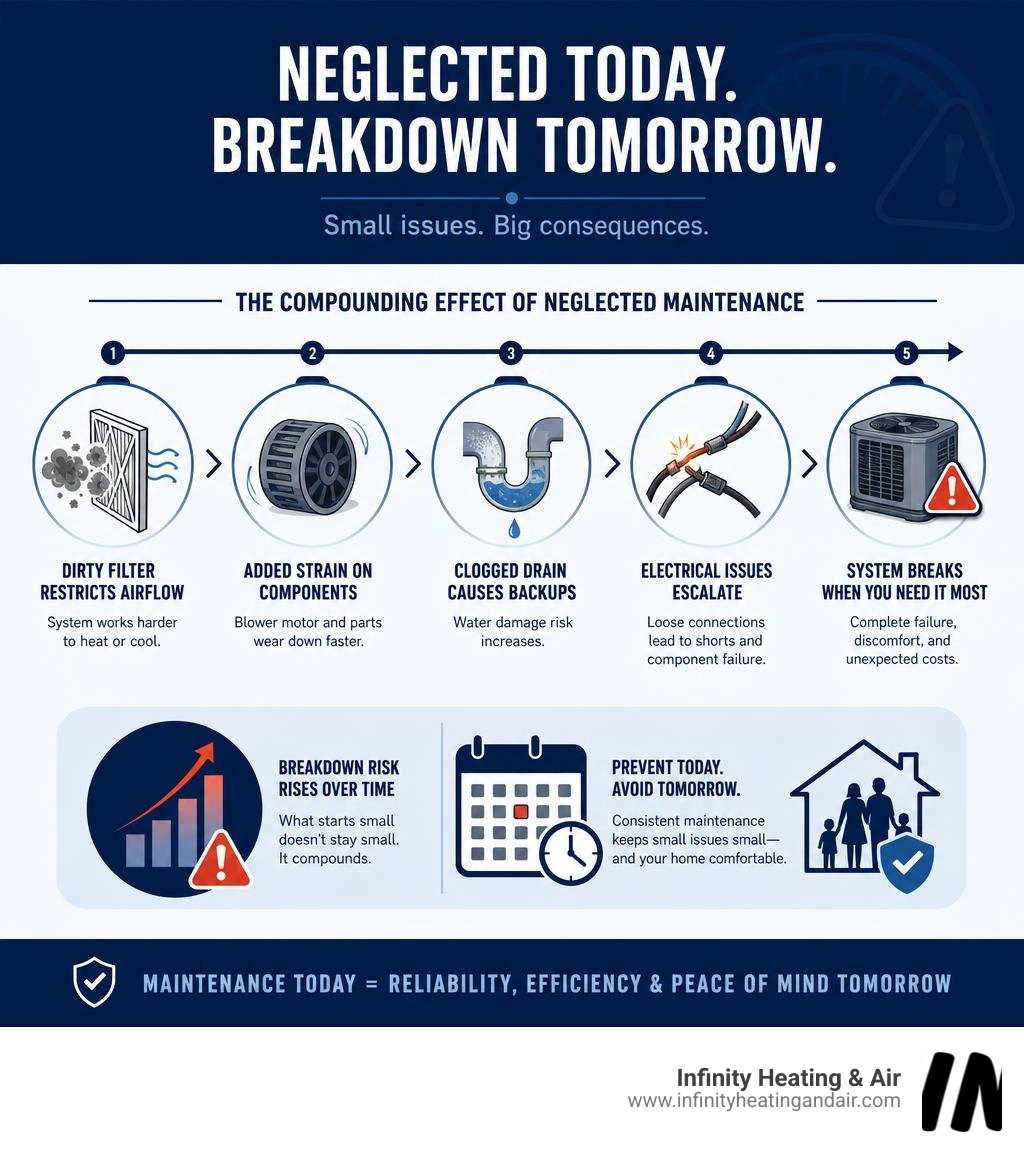
A neglected system doesn't fail all at once. A dirty filter strains the blower motor. A clogged drain line backs up into the home. A loose electrical connection causes a short. Each small issue compounds until the whole system gives out — often at the worst possible moment.
The fix isn't complicated. It's consistent.
This guide walks you through exactly what to do, when to do it, and what to watch for — so you can keep your home comfortable and avoid the stress of an emergency call.
Must-know how to prevent hvac emergencies with maintenance terms:
- emergency hvac repair tips for the south puget sound area homeowners
- emergency hvac repair what to expect
Defining a True HVAC Emergency vs. Common System Failures
Not every HVAC problem is an emergency. Some issues are inconvenient. Others can threaten your safety, your home, or your equipment.
A true HVAC emergency is any heating or cooling issue that creates an immediate risk to people, property, or critical comfort. That includes:
- Smelling gas or rotten eggs near a furnace or gas appliance
- Seeing sparks, smoke, or signs of electrical burning
- Losing heat during freezing weather
- Losing cooling during dangerous heat, especially if infants, older adults, or medically vulnerable people are in the home
- Discovering a major water leak from the HVAC system
- Hearing loud bangs, grinding, or metal-on-metal noises
- Seeing ice buildup on refrigerant lines or coils
- Noticing a burning plastic or electrical odor
- Having no airflow from the system at all
Common system failures, on the other hand, may not always be immediate emergencies, but they should still be handled quickly. Examples include uneven temperatures, weak airflow, a thermostat that will not hold settings, or a system that runs longer than usual.
The trouble is that today’s “minor” symptom can become tomorrow’s emergency. A dirty filter can freeze an evaporator coil. A clogged condensate drain can overflow and damage ceilings or flooring. A loose electrical connection can eventually short out a component.
If you are ever unsure whether your situation is urgent, it is safer to get help. Our Emergency HVAC Service is available for serious heating and cooling problems, and our guide to Emergency HVAC Repair What to Expect explains what happens when you call for emergency support.
Before help arrives, take these safety-first steps:
- Turn the system off at the thermostat if you smell burning, see smoke, or hear alarming noises.
- If safe, turn off power to the system at the breaker.
- Leave the home immediately if you smell gas, then contact the appropriate emergency service.
- Do not open HVAC panels, handle refrigerant lines, or attempt electrical repairs.
- Keep pets and children away from the equipment area.
Your HVAC system is supposed to keep the drama out of your day. If it starts creating drama, treat that as a message.
How to Prevent HVAC Emergencies with Maintenance: The Ultimate Homeowner Strategy
The core strategy is simple: reduce strain before the system is under peak demand.
HVAC emergencies usually come from a handful of preventable causes:
- Restricted airflow from dirty filters, blocked vents, or dirty coils
- Electrical wear from loose connections, weak capacitors, or failing controls
- Refrigerant issues such as leaks or improper charge
- Clogged condensate drains
- Thermostat problems or poor calibration
- Worn blower motors, belts, bearings, or fan components
- Dirty burners, flame sensors, or heat exchangers in heating systems
- Neglected heat pump outdoor units exposed to debris, leaves, snow, or ice
Regular maintenance targets those causes before they trigger a shutdown. A well-maintained HVAC system can operate 15-20% more efficiently than a neglected one, and maintenance can improve energy efficiency by 10-20% in many homes. That means less runtime, less stress on parts, and fewer surprise breakdowns.
It also helps protect your system’s lifespan. Many heating and cooling systems can last 15-20 years with proper care, while neglected systems often fail much sooner. Maintenance records also matter for warranty protection, because many manufacturers expect documented professional maintenance to keep warranty coverage valid.
For a deeper look at what happens when maintenance gets skipped, read The True Cost of Neglecting HVAC Maintenance. If you are wondering whether annual or seasonal service is worth it, we also explain the value in Annual HVAC Maintenance Is It Worth It.
Note: The correct link for the neglect guide is The True Cost of Neglecting HVAC Maintenance.
Why Learning How to Prevent HVAC Emergencies with Maintenance Saves Your Peace of Mind
The biggest benefit of maintenance is not just efficiency. It is confidence.
When your system has been checked, cleaned, tested, and tuned before peak season, you are much less likely to wonder, “Is today the day it quits?” That matters in Tacoma, Puyallup, Auburn, Olympia, Federal Way, Gig Harbor, Lakewood, and across the South Puget Sound, where our heating and cooling systems often deal with damp air, chilly nights, pollen, wildfire smoke, and year-round heat pump use.
Homeowners who keep up with regular HVAC care are 50% less likely to deal with emergency breakdowns. Consistent maintenance can reduce costly HVAC failures by up to 95% because it catches small issues while they are still manageable.
Early warning signs to watch for include:
- New rattling, buzzing, grinding, squealing, or clicking sounds
- Weak airflow from supply vents
- Rooms that are suddenly too hot or too cold
- Short cycling, where the system turns on and off every few minutes
- A thermostat that seems inaccurate
- A sudden increase in energy use
- Musty, burning, or chemical-like odors
- Ice on refrigerant lines
- Water around the indoor unit
- Heat pump outdoor unit frequently icing over
If you notice these signs, do not wait for a total breakdown. Maintenance is like listening to your car before the check engine light turns into a tow truck situation. For guidance on timing, see How Often Should You Service Your HVAC.
Climate-Specific Care: Pacific Northwest vs. Other Regions
HVAC maintenance is not one-size-fits-all. Here in Northwest Washington, homes face a different mix of challenges than homes in hotter, drier, or more extreme climates.
For our service areas around Tacoma, Auburn, Bonney Lake, Puyallup, Olympia, Spanaway, Lakewood, Sumner, Lacey, and nearby communities, the biggest local factors include:
- Damp winters: Moisture can contribute to corrosion, musty odors, drain issues, and biological growth.
- Heat pump reliance: Many homes use heat pumps for both heating and cooling, which means the system works most of the year.
- Mild but humid summers: AC systems may not run constantly like they do in desert climates, but humidity control and coil cleanliness still matter.
- Pollen and seasonal debris: Cottonwood, leaves, grass clippings, and needles can clog outdoor units.
- Wildfire smoke events: Filters may load faster during smoky periods and should be checked more often.
- Coastal and Puget Sound air: Moisture exposure makes electrical inspections and corrosion checks especially important.
In other regions, maintenance may focus more heavily on intense cooling demand, deep-freeze heating preparation, or dust control. In our climate, the key is balanced year-round care, especially for heat pumps that rarely get a true off-season.
If you are in or near Tacoma, our HVAC Service Maintenance Tacoma WA page explains how we help local homeowners keep systems reliable through every season.
The Proactive Maintenance Checklist: DIY Tasks and Timing
You do not need to be an HVAC expert to prevent many common breakdowns. A few simple homeowner tasks go a long way.
| Maintenance task | Homeowner timing | Why it matters | Leave to a professional? |
|---|---|---|---|
| Check air filter | Every 30 days | Prevents airflow restriction, frozen coils, overheating, and blower strain | No |
| Replace air filter | Every 30-90 days | Keeps air moving freely and protects indoor components | No |
| Clear outdoor unit | Monthly and after storms | Prevents blocked airflow and overheating | No |
| Keep 2 feet of clearance | Year-round | Helps the system release or absorb heat properly | No |
| Vacuum vents and registers | Monthly or as needed | Improves airflow and reduces dust buildup | No |
| Check thermostat settings | Seasonally | Prevents unnecessary runtime and comfort issues | No |
| Flush condensate drain | Every few months during cooling season | Helps prevent water backups and algae clogs | Usually DIY, if accessible |
| Inspect visible ductwork | Seasonally | Finds loose sections, gaps, or damage | Basic visual check only |
| Clean coils deeply | Seasonal tune-up | Restores heat transfer and efficiency | Yes |
| Check refrigerant charge | Seasonal tune-up | Low refrigerant can cause icing and compressor damage | Yes |
| Tighten electrical connections | Seasonal tune-up | Reduces shorts, overheating, and control failures | Yes |
| Test safety controls | Seasonal tune-up | Protects against unsafe operation | Yes |
| Inspect heat exchanger | Fall heating tune-up | Helps identify serious furnace safety risks | Yes |
Dirty filters are one of the most common causes of preventable HVAC problems. For most homes, replacing filters every 30-90 days is the right range. During heavy heating or cooling use, wildfire smoke, high pollen, remodeling, or pet-heavy households, check monthly and replace sooner if the filter looks loaded.
For MERV ratings, many homes do well with a quality mid-range filter. Higher-MERV filters can capture smaller particles, but overly restrictive filters can reduce airflow if your system is not designed for them. If you are unsure, ask us which filter type fits your equipment.
For cooling-specific service, visit AC Service Maintenance Tacoma WA.
Step-by-Step: How to Prevent HVAC Emergencies with Maintenance Through DIY Care
Here is a simple homeowner routine we recommend.
Monthly:
- Check the air filter.
- Make sure supply and return vents are open and not blocked by furniture, rugs, curtains, or pet beds.
- Listen for unusual sounds during startup and shutdown.
- Look around the indoor unit for water, rust, or odors.
- Check the outdoor unit for leaves, needles, grass clippings, or debris.
Every 1-3 months:
- Replace the air filter.
- Vacuum registers and return grilles.
- Pour distilled vinegar into the condensate drain if it is accessible and your system setup allows it.
- Review energy usage for sudden spikes.
- Test thermostat operation and replace batteries if needed.
Seasonally:
- Trim shrubs and vegetation so the outdoor unit has at least 2 feet of clearance.
- Gently rinse the outdoor coil with a garden hose after turning off power. Do not use a pressure washer.
- Inspect visible ductwork in attics, crawlspaces, garages, or basements for disconnected sections or gaps.
- Make sure the area around your furnace, air handler, or heat pump indoor unit is clear.
- Test heating before cold weather and cooling before warm weather.
Ductwork deserves special attention. Many homes lose 20-30% of conditioned air through duct leaks. That lost air makes your system work harder, increases energy use, and can leave rooms uncomfortable. If you see disconnected ducts, torn insulation, or dusty streaks around seams, schedule a professional duct evaluation.
For heat pump homeowners, our Heat Pump Service Maintenance Tacoma WA page covers system-specific care for equipment that heats and cools year-round.
Leveraging Smart Thermostats and Modern Technology
Smart thermostats are not just fancy wall gadgets that make your home feel like it belongs in 2026. They can also help spot developing HVAC problems.
Modern thermostat technology can:
- Track system runtime
- Send filter change reminders
- Alert you when temperatures do not reach the setpoint
- Show unusual heating or cooling patterns
- Help identify short cycling
- Provide energy reports
- Allow remote adjustments when you are away
- Reduce unnecessary runtime with schedules and setbacks
For example, if your AC usually cools the home in a certain amount of time but suddenly runs much longer, that may point to a dirty filter, dirty coil, refrigerant issue, duct problem, or failing component. If your heat pump cycles constantly on a mild day, that may signal airflow issues, sensor problems, or thermostat miscommunication.
Smart thermostats do not replace professional maintenance, but they are excellent early-warning tools. Think of them as your HVAC system’s polite way of saying, “Hey, something is getting weird.”
Used correctly, they can also improve efficiency by reducing wasted heating and cooling. Just avoid extreme temperature swings. Large setbacks can make the system work harder to recover, especially during cold, damp Northwest Washington mornings.
Professional Seasonal Tune-Ups: What Happens Twice a Year
DIY care is important, but it cannot replace a professional tune-up. Homeowners can change filters, clear debris, and spot visible problems. Professionals can test, measure, clean, and diagnose the parts you cannot safely or accurately evaluate.
We recommend scheduling professional maintenance twice a year:
- Spring: Cooling system or heat pump cooling preparation
- Fall: Furnace, air handler, or heat pump heating preparation
This schedule helps your system enter peak demand clean, safe, and ready. It is also the best way to catch worn parts before they trigger a no-heat or no-cool emergency.
A professional maintenance visit commonly includes:
- Thermostat calibration and communication checks
- Filter inspection
- Electrical testing
- Tightening electrical connections
- Capacitor and contactor checks
- Blower motor inspection
- Fan and belt inspection where applicable
- Condenser and evaporator coil inspection
- Refrigerant pressure and temperature checks
- Condensate drain inspection and clearing
- Temperature split testing
- Airflow evaluation
- Safety control testing
- Furnace burner inspection
- Flame sensor cleaning
- Heat exchanger inspection
- Carbon monoxide safety checks where combustion equipment is present
For more detail, read What Does an HVAC Maintenance Visit Include. For heating-specific service, visit Heating Service Maintenance Tacoma WA.
Spring AC and Fall Furnace Checklists
Spring cooling checklist:
- Replace or inspect the air filter
- Clear debris from the outdoor condenser or heat pump
- Check refrigerant charge and look for signs of leaks
- Inspect and clean condenser coils
- Inspect evaporator coil condition
- Test capacitors, relays, and contactors
- Flush or clear condensate drain lines
- Confirm thermostat operation
- Measure temperature split
- Verify airflow at vents
- Check for unusual vibration or noise
- Confirm safe startup and shutdown
Spring maintenance matters because dirty coils can reduce efficiency significantly. When coils cannot move heat properly, the system runs longer, works harder, and is more likely to fail during warm weather.
Fall heating checklist:
- Replace or inspect the air filter
- Test thermostat heating mode
- Inspect burners and ignition components
- Clean flame sensor if needed
- Inspect heat exchanger
- Test safety switches and limit controls
- Check blower operation
- Tighten electrical connections
- Lubricate moving parts where applicable
- Check venting and combustion air
- Test carbon monoxide detectors
- Inspect heat pump defrost operation where applicable
- Clear debris around outdoor heat pump units
Fall maintenance is especially important for gas furnaces because heating safety is about more than comfort. A cracked heat exchanger, poor combustion, blocked vent, or failing safety control should never be ignored.
The Critical Role of Professional Inspections
Professional inspections catch issues that are easy to miss during DIY care.
A homeowner may notice weak airflow. A technician can determine whether it is caused by a dirty blower wheel, clogged coil, duct restriction, failing motor, or static pressure problem.
A homeowner may notice the outdoor unit sounds louder than usual. A technician can test the capacitor, fan motor, compressor operation, and electrical components before a part fails.
A homeowner may notice water near the indoor unit. A technician can inspect the condensate system, drain pan, float switch, evaporator coil, and drain slope.
This is why maintenance is so effective at preventing emergencies. It turns vague symptoms into specific action.
Professional maintenance also helps with warranty compliance. Many manufacturers require proof of regular service before approving certain warranty claims. Keeping maintenance records is a simple way to protect your investment.
Our recommendation: keep a folder or digital note with:
- Service dates
- Filter size and replacement dates
- Maintenance reports
- Repair history
- Thermostat settings or system notes
- Photos of unusual issues, if any
It may not be glamorous, but neither is explaining to your future self why nobody wrote down the filter size.
Frequently Asked Questions about HVAC Maintenance
What constitutes a true HVAC emergency that requires immediate attention?
A true HVAC emergency is a problem that threatens safety, health, property, or essential comfort.
Call for immediate help if you notice:
- Gas or rotten egg odors
- Smoke, sparks, or burning electrical smells
- Complete loss of heat during freezing weather
- Complete loss of cooling during dangerous heat
- Major water leaks from HVAC equipment
- Loud banging, grinding, or screeching noises
- Ice on coils or refrigerant lines
- No airflow from the system
- Carbon monoxide alarm activation
- Furnace short cycling with burning odors or repeated shutdowns
If there is any sign of gas, fire, smoke, or carbon monoxide, leave the home and contact emergency services first. Then contact HVAC support once the immediate safety risk is addressed.
For urgent heating and cooling problems, we offer Emergency HVAC Service.
How often should I change my air filters to avoid a system breakdown?
Most homeowners should check filters every 30 days and replace them every 30-90 days, depending on the home and system.
Use this general guide:
- Every 30 days: Pets, allergies, wildfire smoke, high pollen, heavy system use, or dusty conditions
- Every 60 days: Average household use with moderate filtration needs
- Every 90 days: Light use, no pets, cleaner indoor conditions, and a filter that still looks clean
- Every 6-12 months: Some thicker media filters, depending on manufacturer guidance and actual condition
The safest habit is to check monthly. If the filter looks gray, packed with dust, or visibly clogged, replace it.
A dirty filter can cause:
- Weak airflow
- Frozen AC coils
- Furnace overheating
- Blower motor strain
- Higher energy use
- Short cycling
- Poor indoor air quality
- Emergency shutdowns
Never run your system without a filter. That may seem like a shortcut, but it allows dust to collect on coils, motors, and internal components.
Can a smart thermostat really help prevent major HVAC breakdowns?
Yes, a smart thermostat can help prevent breakdowns by spotting patterns earlier than most homeowners would.
Smart thermostats can help by:
- Tracking longer-than-normal runtimes
- Sending filter reminders
- Notifying you when the home is not reaching the set temperature
- Identifying unusual cycling patterns
- Showing energy usage trends
- Allowing remote monitoring when you are away
- Helping reduce unnecessary strain through better scheduling
For example, if your heat pump suddenly runs much longer than usual on a mild day, that may indicate restricted airflow, a dirty coil, low refrigerant, or a thermostat issue. If you catch that early, you may prevent compressor strain or a peak-season failure.
That said, smart thermostats are not magic. They cannot clean coils, tighten electrical connections, inspect heat exchangers, or fix drain lines. They work best when paired with regular DIY care and professional seasonal maintenance.
Conclusion
The best answer to how to prevent hvac emergencies with maintenance is not one big heroic repair. It is a steady routine.
Change the filter. Clear the outdoor unit. Keep vents open. Watch for warning signs. Use smart technology wisely. Schedule professional maintenance before peak heating and cooling seasons. These steps protect comfort, efficiency, safety, warranty coverage, and long-term system life.
In Northwest Washington, where homes from Tacoma and Puyallup to Olympia, Auburn, Federal Way, Bonney Lake, Gig Harbor, Lakewood, Sumner, Spanaway, and surrounding communities rely on dependable year-round comfort, proactive HVAC care is one of the smartest things you can do for your home.
At Infinity Heating & Air, we design, install, maintain, and service heating, cooling, and home air quality systems with one goal: crafting endless comfort through reliable, expert service.
If your system is making strange noises, struggling to keep up, leaking water, short cycling, or giving you that “something is not right” feeling, do not wait for a full breakdown. Schedule maintenance before it becomes an emergency.
And if the emergency has already arrived, our team is here with Emergency HVAC Service, including 24/7 support when comfort and safety cannot wait.
Written & reviewed by the Infinity Heating & Air team — licensed WA HVAC contractor (INFINHA841B8). Family-owned in Graham, answering 24/7 across the South Sound.
Choose Infinity & enjoy endless comfort.
Your perfect home environment awaits — call (253) 740-5135 or schedule service online and our team will take it from there.
Open 24/7 · 100% Satisfaction Guaranteed · Graham, WA