A Practical Guide to HVAC Maintenance Plan Value
Is an HVAC maintenance plan worth it for reliable comfort and efficiency in Graham WA?
Is an HVAC Maintenance Plan Worth It? Here's the Short Answer
Is an HVAC maintenance plan worth it for most homeowners? The short answer is: yes, for most people — but it depends on a few key factors.
Here's a quick breakdown to help you decide:
| Situation | Maintenance Plan Worth It? |
|---|---|
| System is 3+ years old | Yes |
| You live in a climate with harsh seasons | Yes |
| Your system is brand new and under full warranty | Probably not yet |
| You want priority scheduling during peak season | Yes |
| You rarely use your HVAC system | Maybe not |
| Your system is 10+ years old | Strongly yes |
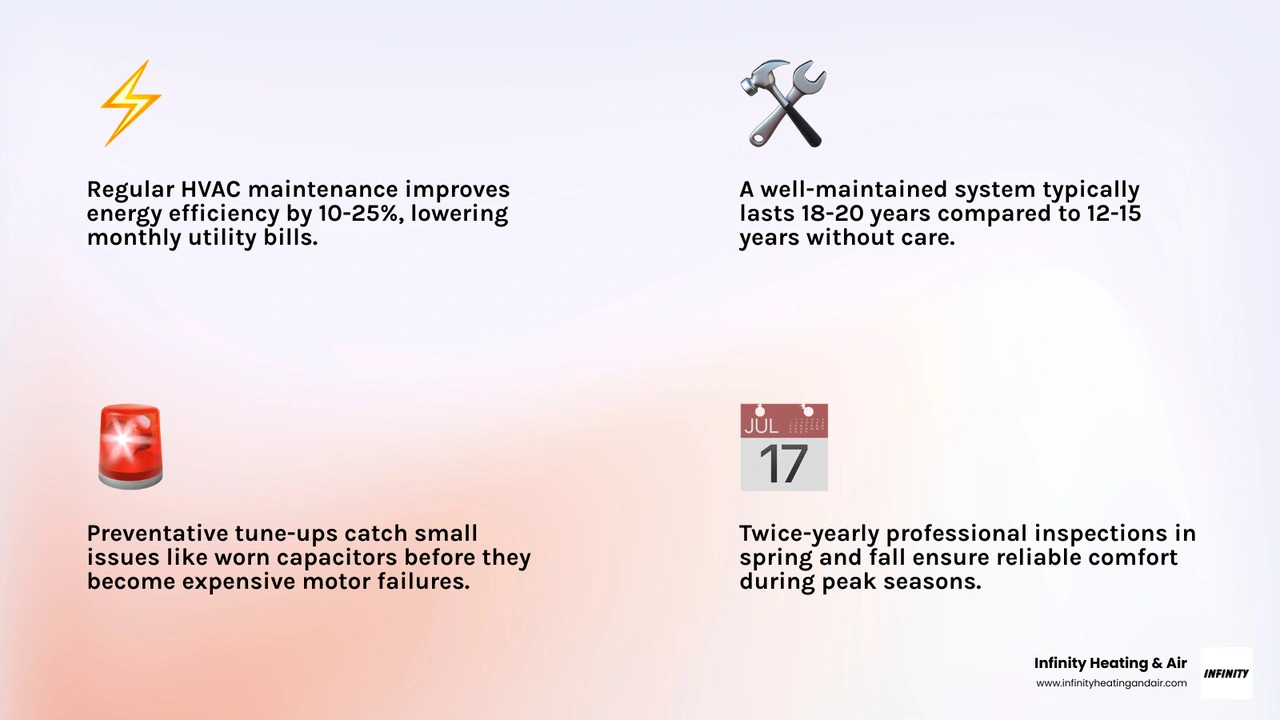
The core idea is simple: regular professional maintenance prevents small problems from becoming expensive failures. A worn capacitor caught early costs a fraction of what a failed motor does. A clean coil uses less energy than a dirty one. And a system that gets consistent care can last 18-20 years instead of the typical 12-15.
For homeowners in Northwest Washington — where damp winters and warm summers put real seasonal stress on heating and cooling equipment — skipping maintenance isn't just inconvenient. It can mean a breakdown on the coldest night of the year with a multi-day wait for service.
This guide walks through exactly what maintenance plans include, what they cost to skip, and how to decide if one makes sense for your home and system.
What is an HVAC Service Agreement and What Does It Include?
An HVAC service agreement is essentially a proactive care program for your home's heating and cooling system. Instead of waiting for your furnace to stop blowing warm air in January or your heat pump to freeze up in July, you partner with professionals who inspect, clean, and tune your equipment on a recurring schedule.
When you sign up for an HVAC Service Plan, you are scheduling preventative checkups designed to catch wear and tear before it leads to system failure. But what actually happens when a technician arrives at your home for a scheduled visit?
A comprehensive tune-up is far more than a quick glance at your thermostat. To understand the full scope of these visits, it helps to look at What Does an HVAC Maintenance Visit Include? and the critical tasks performed:
- Tightening Electrical Connections: Over time, the natural vibrations of your heating and cooling systems can loosen electrical connections. Technicians measure voltage and current on motors, tightening any loose wires to prevent short circuits or component damage.
- Testing Safety Controls: Your system has built-in safety switches designed to shut it down if dangerous conditions arise, such as a blocked flue or overheating. Technicians test these limits to ensure they will protect your home in an emergency.
- Cleaning Evaporator and Condenser Coils: Dirty coils force your compressor to work much harder to transfer heat, which jacks up your utility bills and accelerates system wear.
- Checking Refrigerant Levels: Operating an air conditioner or heat pump with too little or too much refrigerant damages the compressor and drastically reduces cooling performance.
- Inspecting and Flushing Condensate Drains: Standing water in a clogged drain line can back up, causing water damage to your ceilings or walls, or triggering a safety switch that shuts down your entire system.

By bundling these tasks into a seasonal routine, a service agreement ensures that your system is prepared to handle whatever weather Western Washington throws our way.
Is an HVAC maintenance plan worth it for long-term performance?
When evaluating whether is an hvac maintenance plan worth it, the decision often comes down to long-term performance and financial common sense. Think of it like changing the oil in your car: you could skip it and save a little money today, but you will pay a massive premium later when the engine seizes.
The direct link between regular checkups and system efficiency is well-documented. A neglected air conditioner or furnace runs 5% to 15% less efficiently than a system that receives annual professional attention. Over a single season of heavy use, that drop in efficiency translates directly into higher utility bills. In fact, industry data shows that a well-maintained HVAC system can use 10% to 25% less energy compared to completely neglected systems.
This performance gap is why understanding The True Cost of Neglecting HVAC Maintenance is so eye-opening. When dust and debris accumulate on your system's blower wheel, coils, and burners, the unit has to run longer and work harder to reach your thermostat’s target temperature. This extra strain doesn't just waste energy—it actively shortens the equipment's lifespan.
While a neglected system might fail and require a complete replacement after just 12 to 15 years, regular professional care can extend that residential lifespan to 18-20 years. That is half a decade of extra service you get out of your original investment, simply by keeping the system clean and calibrated.
To see how these differences stack up over time, consider this comparison:
| Performance Metric | Maintained HVAC System | Neglected HVAC System |
|---|---|---|
| Average Lifespan | 18 to 20 years | 12 to 15 years |
| Energy Efficiency | Optimal (saves 10% to 25% on bills) | Degraded (5% to 15% efficiency loss) |
| Breakdown Frequency | Very low; potential issues caught early | High; unexpected failures during peak seasons |
| Manufacturer Warranty | Fully compliant and protected | Voided due to lack of professional service |
| Airflow & Comfort | Consistent, balanced temperatures | Uneven heating/cooling, weak airflow |
| Repair Costs | Reduced by member discounts | Full price emergency rates |
If you want to dive deeper into the return on investment of preventative care, explore our detailed breakdown on Annual HVAC Maintenance: Is It Worth It?
Weighing the Pros and Cons of Professional Service Agreements
Like any home service, professional maintenance agreements come with trade-offs. To make an informed choice, you have to look at both the immediate perks and the potential drawbacks.
The Major Pros
- Priority Scheduling: When temperatures drop below freezing in Western Washington, HVAC companies are flooded with emergency calls. If your system breaks down, you could face a wait of several days. Maintenance plan members bypass the standard queue, receiving priority service to get their heat back on quickly.
- Repair Discounts: Most plans include a built-in discount (typically 5% to 15%) on parts and labor. If a major component like a blower motor or control board fails, this discount can easily offset the annual cost of the plan.
- Warranty Compliance: Many homeowners do not realize that major manufacturers require proof of annual professional maintenance to keep their parts warranties valid. If your compressor fails in year seven, but you cannot prove the system was serviced annually, the manufacturer may reject your warranty claim.
- Peace of Mind: Knowing that a certified technician has tested your heat exchanger for dangerous carbon monoxide leaks and verified all safety switches are functional provides invaluable comfort.
Our local climate also plays a major role in these benefits. For a look at how our unique regional weather patterns affect your system, read about the Benefits of Regular HVAC Maintenance in Pacific Northwest Mild Wet conditions.
The Potential Cons
- Unused Benefits: If you sign up for a plan but forget to schedule your visits, you are paying for a service you aren't using.
- Newer System Overlap: If your heating and cooling system is brand new, it is highly unlikely to break down in the first couple of years. Some homeowners feel that paying for a plan on a system that is still under a labor warranty isn't a top priority, though keeping up with maintenance is still necessary to protect the manufacturer's parts warranty.
Professional agreements act as loss prevention. Catching a weak capacitor during a scheduled autumn visit is always more convenient and affordable than dealing with a sudden system shutdown in the middle of a winter storm.
Frequently Asked Questions About Home Comfort Care
How often should I schedule service to make sure my HVAC maintenance plan is worth it?
To maximize the value of your plan, you should schedule professional service twice a year: once in the spring for your cooling system (or heat pump) and once in the fall for your heating system.
This twice-yearly cadence aligns perfectly with the seasonal shifts in our region. For a complete guide on timing, check out How Often Should You Service Your HVAC?
By scheduling your tune-ups during these transitional seasons, you ensure your system is fully prepared before the extreme weather hits. To learn more about getting your home ready for seasonal shifts, read our guide on Seasonal HVAC Preparation: Live in Comfort Year-Round.
Can I perform DIY maintenance instead of buying a plan?
There are several important maintenance tasks that homeowners should handle themselves. However, DIY care cannot completely replace a professional maintenance plan.
What you can (and should) do yourself:
- Change Air Filters: This is the single most important task a homeowner can perform. Check your filters monthly and replace them every 1 to 3 months. Dirty, clogged filters restrict airflow, forcing your system to work harder and dramatically shortening its lifespan.
- Maintain Outdoor Clearance: Keep bushes, weeds, and debris cleared at least two feet away from your outdoor condenser unit to ensure proper airflow.
- Keep Vents Clear: Make sure return and supply registers inside your home are not blocked by furniture or drapes.
You can learn more about preparing your system for the warmer months by reading about Spring AC and HVAC Maintenance and reviewing our comprehensive Spring HVAC Checklist: Preparing for Summer.
Why you still need a professional:While changing a filter is simple, tasks involving high-voltage electrical components, refrigerant handling, and combustion analysis require specialized tools and certified training. A homeowner cannot safely test a capacitor, check for subtle refrigerant leaks, or inspect a gas furnace's heat exchanger for microscopic cracks that could leak carbon monoxide. Professional safety checks are essential for keeping your home safe and your system running efficiently.
When is an HVAC maintenance plan worth it for older systems?
An HVAC maintenance plan is incredibly valuable for older systems (typically those over 5 to 7 years old). As heating and cooling units age, their components naturally experience wear and tear, making them much more susceptible to sudden failures.
Signing up for a dedicated Maintenance Plan for an older system is a smart financial move for several reasons:
- Early Component Failure Prevention: Technicians can identify parts that are beginning to degrade—such as a worn contactor or a weak capacitor—and replace them before they cause a chain reaction that damages more expensive components, like the compressor or blower motor.
- Maintaining Efficiency: Older systems naturally lose efficiency over time. Regular cleaning and calibration keep them running as efficiently as possible, helping to keep your winter heating bills under control.
- Extending Remaining Lifespan: If your system is approaching the end of its typical lifespan, consistent professional care can help you squeeze a few extra years of reliable service out of it, giving you more time to plan and save for an eventual replacement.
For older systems, a maintenance plan offers peace of mind, ensuring that you aren't caught off guard by a major breakdown when you need your heating or cooling the most.
Conclusion
Determining whether is an hvac maintenance plan worth it comes down to how much you value predictable performance, lower utility bills, and long-term peace of mind. While skipping professional service might seem like a way to save money in the short term, the hidden costs of neglected systems—ranging from premature equipment failure to inflated energy bills—almost always outweigh the cost of proactive care.
At Infinity Heating & Air, we are dedicated to crafting endless comfort for families throughout Northwest Washington. From Auburn and Puyallup to Tacoma, Olympia, Yelm, and Graham, our team of reliable experts is here to ensure your heating and cooling systems operate safely and efficiently year-round.
Don't wait for the next major weather event to find out if your system is up to the task. Schedule professional maintenance in Graham WA or contact us today to learn how our expert services can keep your home comfortable in every season.
Written & reviewed by the Infinity Heating & Air team — licensed WA HVAC contractor (INFINHA841B8). Family-owned in Graham, answering 24/7 across the South Sound.
Choose Infinity & enjoy endless comfort.
Your perfect home environment awaits — call (253) 740-5135 or schedule service online and our team will take it from there.
Open 24/7 · 100% Satisfaction Guaranteed · Graham, WA