Spring HVAC Transition Tips for a Seamless Season Change
Master your spring hvac transition from heating to cooling with expert tips on maintenance, thermostat tweaks, and troubleshooting for efficiency and comfort.
Why the Spring HVAC Transition From Heating to Cooling Deserves Your Attention This April
The spring HVAC transition from heating to cooling is something every homeowner needs to handle before the warm weather arrives — and it's more than just flipping a switch on your thermostat.
Here's a quick overview of what the process involves:
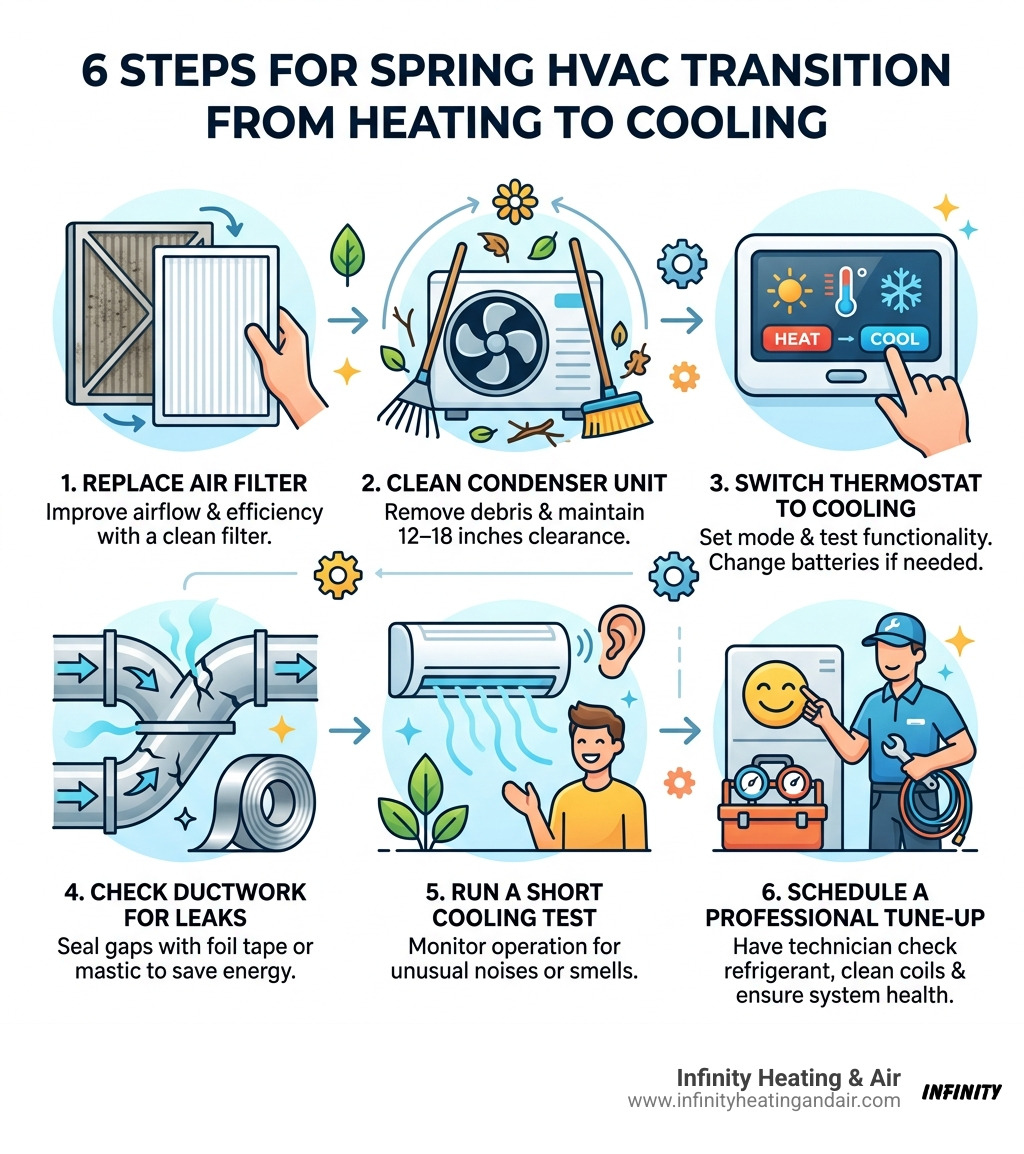
- Replace your air filter — dirty filters restrict airflow and hurt efficiency
- Inspect and clear the outdoor condenser unit — remove debris and ensure at least 12–18 inches of clearance around it
- Switch your thermostat to cooling mode — check settings, test the system, and replace batteries if needed
- Check your ductwork — leaky ducts can waste up to 30% of conditioned air
- Run a short cooling test — listen for unusual noises or smells before peak season hits
- Schedule a professional tune-up — a technician can check refrigerant levels, clean coils, and catch problems early
Spring in Northwest Washington brings unpredictable temperature swings — chilly mornings, warm afternoons, and plenty of pollen. Your HVAC system has been working hard all winter, and making the switch without a little prep can lead to breakdowns right when you need cool air most.
The good news? A few simple steps now can save you from a sweaty, stressful summer.
Spring hvac transition from heating to cooling terminology:
Why the spring hvac transition from heating to cooling Matters
As we settle into April 2026, the temptation to simply ignore your HVAC system until the first 80-degree day is real. However, the spring hvac transition from heating to cooling is a critical period for your home’s mechanical "health." Think of it like a professional athlete warming up before a big game. You wouldn't expect a sprinter to sit on the couch all winter and then run a marathon without stretching, right? Your AC is the same way.
Protecting Your System’s Lifespan
During the winter, your system has been focused on heat. Whether you use a furnace or a heat pump, the components have faced months of heavy lifting. Transitioning properly ensures that the wear and tear of winter doesn't carry over into the cooling season. By cleaning components and checking for issues now, you prevent small problems from turning into catastrophic (and expensive) failures in July.
Keeping Energy Bills Under Control
Efficiency is the name of the game. When your system is clogged with winter dust or the outdoor unit is choked by fallen leaves, it has to work twice as hard to move air. This extra effort shows up directly on your utility bills. Proper Spring AC and HVAC Maintenance can help ensure your system operates at peak performance, keeping your home comfortable without draining your wallet.
Indoor Air Quality (IAQ)
In Northwest Washington, spring means pollen. If your system isn't prepared, it will simply circulate those allergens throughout your home. A proper transition involves cleaning the "lungs" of your home—the filters and ducts—so you can breathe easy even when the trees are in full bloom.
Essential Steps for Preparing Your System for the Cooling Season
Preparing for the switch requires a blend of simple DIY tasks and professional oversight. In places like Puyallup, Tacoma, and Olympia, the damp winter can leave behind more than just a few leaves. It can leave moisture, mold spores, and debris that interfere with your AC’s ability to breathe.
Follow this Spring HVAC Checklist: Preparing for Summer to ensure you don't miss a beat.
Step-by-Step Guide for Your spring hvac transition from heating to cooling
The most effective way to handle the transition is to take it one step at a time. Here is our recommended workflow for homeowners in the South Puget Sound area:
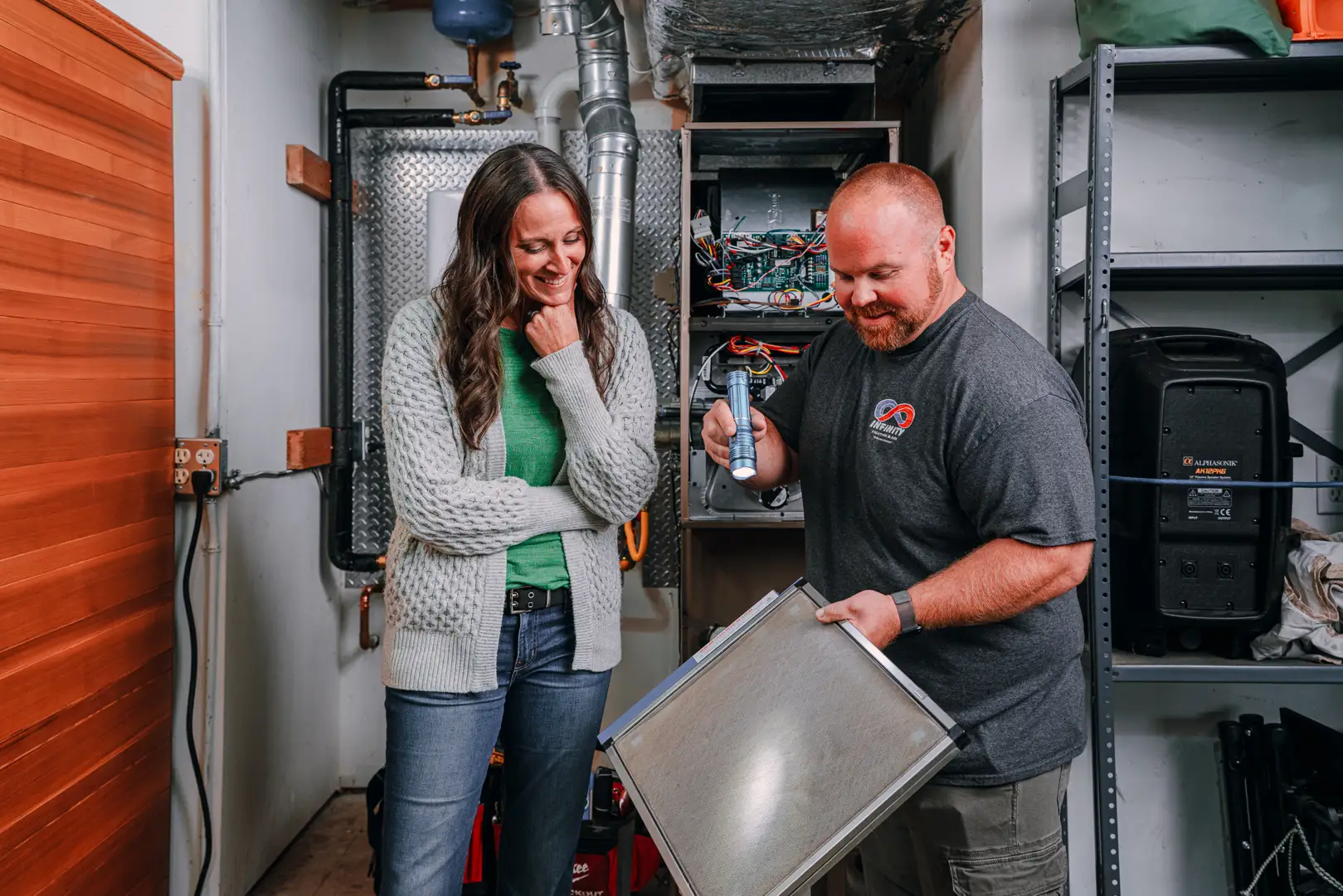
- Filter Replacement: This is the single most important DIY task. After a long winter of heating, your filter is likely packed with dust and pet dander. A clogged filter restricts airflow, which can cause your cooling coils to freeze up. Check our Spring Air Filter Replacement Guide for specific tips on MERV ratings and installation.
- The "Light Test": Not sure if your filter needs changing? Hold it up to a bright light. If you can't see the light through the fibers, it’s time for a new one.
- Clear the Vents: Walk through your home and make sure no furniture, rugs, or curtains have moved over the winter to block your supply or return vents. Blocked vents create pressure imbalances that strain the blower motor.
- Debris Removal: Head outside and look at your condenser. Remove any branches, nests, or piles of wet leaves that have accumulated against the unit.
Cleaning and Inspecting the Outdoor AC Condenser Unit
Your outdoor unit is the "heat dispatcher." It takes the heat from inside your home and dumps it outside. If it’s dirty, that heat has nowhere to go.
- Maintain Clearance: You need at least 12 to 18 inches of clear space around the entire unit. Trim back any bushes or ornamental grasses that have grown too close.
- Gently Clean the Fins: Use a garden hose (not a pressure washer!) to gently rinse away dust and pollen from the exterior fins. Avoid using high pressure, as it can bend the delicate aluminum fins and block airflow.
- Inspect for Damage: Look for frayed wires or signs that a local critter might have tried to make a winter home inside the cabinet. If you see chewed wires, do not turn the system on—call us immediately.
For a deeper dive into what to look for, check out our comprehensive AC Maintenance Checklist.
Optimizing Your Thermostat and Indoor Air Quality
The thermostat is the brain of your HVAC system. During the spring hvac transition from heating to cooling, the brain can get a little confused by the "thermostat whiplash" common in Washington. One day you need the furnace to take the chill off a 45-degree morning, and by 3:00 PM, the sun is out and the house is 75 degrees.
Managing Thermostat Whiplash During the spring hvac transition from heating to cooling
Frequent mode switching can place significant strain on your system, especially on older units. Here is how to handle the "in-between" weather:
- Use the "Auto" Setting Carefully: Many modern thermostats have an "Auto" mode that switches between heat and cool based on the temperature. While convenient, ensure there is a "deadband" (a temperature range of about 3–5 degrees) where neither system runs. This prevents the heater and AC from "fighting" each other.
- The 5-Minute Rule: If you are manually switching from heat to cool, wait at least five minutes between cycles. This allows the refrigerant pressures to equalize and prevents damage to the compressor.
- Gradual Adjustments: Don't crank the AC down to 60 degrees just because it's the first warm day. Lower it a few degrees at a time to let the system reach the setpoint without overworking.
For more advice on staying comfortable during these swings, read about Seasonal HVAC Preparation: Live in Comfort Year-Round.
The Role of Smart Thermostats in Seasonal Changes
If you haven't upgraded to a smart or programmable thermostat yet, April 2026 is the perfect time. Statistics show that programmable thermostats can cut heating and cooling costs by about 10% annually.
Smart thermostats go a step further by learning your routine. They can automatically adjust the temperature when you're at work in Tacoma or sleeping in Lacey, ensuring you aren't paying to cool an empty house. They also provide better Air Quality Washington management by allowing you to run the fan periodically to circulate air through your high-efficiency filter, even when the AC isn't actively running.
Troubleshooting Common Issues During the Seasonal Switch
Sometimes, despite your best efforts, the transition doesn't go smoothly. Keep your eyes (and ears and nose) open for these common red flags:
- Musty Smells: If you turn on the AC and it smells like a locker room ("Dirty Sock Syndrome"), you might have mold or bacterial growth on your evaporator coils. This often happens after a damp winter.
- Unusual Noises: Grinding, squealing, or banging noises are never good. They could indicate a failing blower motor, a loose belt, or a compressor issue.
- Weak Airflow: If the air coming out of the vents feels like a tiny whisper, you likely have a severely clogged filter or a leak in your ductwork. Leaky ducts can lose up to 30% of the air passing through them!
- The Reversing Valve (Heat Pumps Only): If you have a heat pump and it refuses to switch to cooling mode, the reversing valve might be stuck. This is a component that physically changes the direction of the refrigerant. If it fails, you'll need a pro to get it moving again.
- Clogged Condensate Drain: Your AC removes moisture from the air. That water has to go somewhere. If the drain line is clogged with winter sludge, it can back up and cause water damage or trigger a safety switch that shuts your system down.
If you encounter these issues, it's a sign that your HVAC in Washington needs professional attention.
Why Professional Maintenance is Key in 2026
While DIY steps are great, there are things only a certified technician can do. Just like a car needs an oil change and a tire rotation, your AC needs a professional tune-up to ensure it’s safe and efficient.
When we perform Spring AC and HVAC Maintenance for the South Puget Sound Area, we go deep into the system:
- Refrigerant Levels: Low refrigerant doesn't just make the air less cold; it causes the compressor to overheat and eventually fail. We check for leaks and ensure your levels are spot on.
- Electrical Connections: We tighten all electrical connections and measure voltage and current on motors. Faulty wiring is a leading cause of HVAC fires and component failure.
- Coil Cleaning: We clean both the indoor evaporator coil and the outdoor condenser coil. This maximizes heat transfer and significantly lowers your energy bills.
- Lubrication: We lubricate all moving parts to reduce friction and wear.
- Calibration: We verify that your thermostat is communicating correctly with the system and that all safety controls are functioning.
Frequently Asked Questions about Spring HVAC Transitions
When is the best time to switch from heating to cooling mode?
In the Northwest, we usually recommend waiting until daytime highs consistently reach the mid-70s. However, if your home has a lot of south-facing windows and holds heat, you might need to make the switch sooner. The key is to perform your maintenance before you actually need the cooling.
How often should I replace air filters during the spring transition?
During the heavy pollen season in Washington, we recommend checking your filter every month. At a minimum, you should replace it every three months. If you have pets or family members with allergies, once a month is the gold standard for maintaining air quality.
Can I run my heat and AC on the same day?
Yes, you can, but do so with caution. If you have a chilly morning in Graham and a hot afternoon, you can run both. Just ensure the system has completely finished its heating cycle and has been off for at least five minutes before you switch to cooling. Using a thermostat with a "deadband" setting is the safest way to automate this.
Conclusion
The spring hvac transition from heating to cooling is your opportunity to set the stage for a comfortable, worry-free summer. By taking a little time this April to clean, inspect, and test your system, you’re investing in your home’s efficiency and your family’s comfort.
At Infinity Heating & Air, we are proud to be your Northwest Washington experts. From Tacoma to Olympia and everywhere in between, we are dedicated to crafting "endless comfort" for our neighbors. Whether you need a quick tune-up or a full system upgrade, our reliable, expert service is just a phone call away.
Don't wait for the first heatwave to find out your AC isn't ready. Take action today and ensure your home stays cool all season long.
Sign up for our Maintenance Plan to take the guesswork out of seasonal transitions and enjoy priority service year-round!
Written & reviewed by the Infinity Heating & Air team — licensed WA HVAC contractor (INFINHA841B8). Family-owned in Graham, answering 24/7 across the South Sound.
Choose Infinity & enjoy endless comfort.
Your perfect home environment awaits — call (253) 740-5135 or schedule service online and our team will take it from there.
Open 24/7 · 100% Satisfaction Guaranteed · Graham, WA