The Best Ways to Add AC to a House Without Ductwork
Discover top adding cooling without ductwork options compared: mini-splits vs high-velocity. Save energy, get zoned comfort—explore now!
Why adding cooling without ductwork options compared Matters for Homeowners Without Ducts
Adding cooling without ductwork options compared is one of the most common questions homeowners face when their house was built without a central air system. If your home runs on radiators, baseboards, or a boiler, you have no duct system — and adding traditional central air would mean tearing into walls, ceilings, and floors. That's a major project many homeowners want to avoid.
The good news: you have real, proven alternatives.
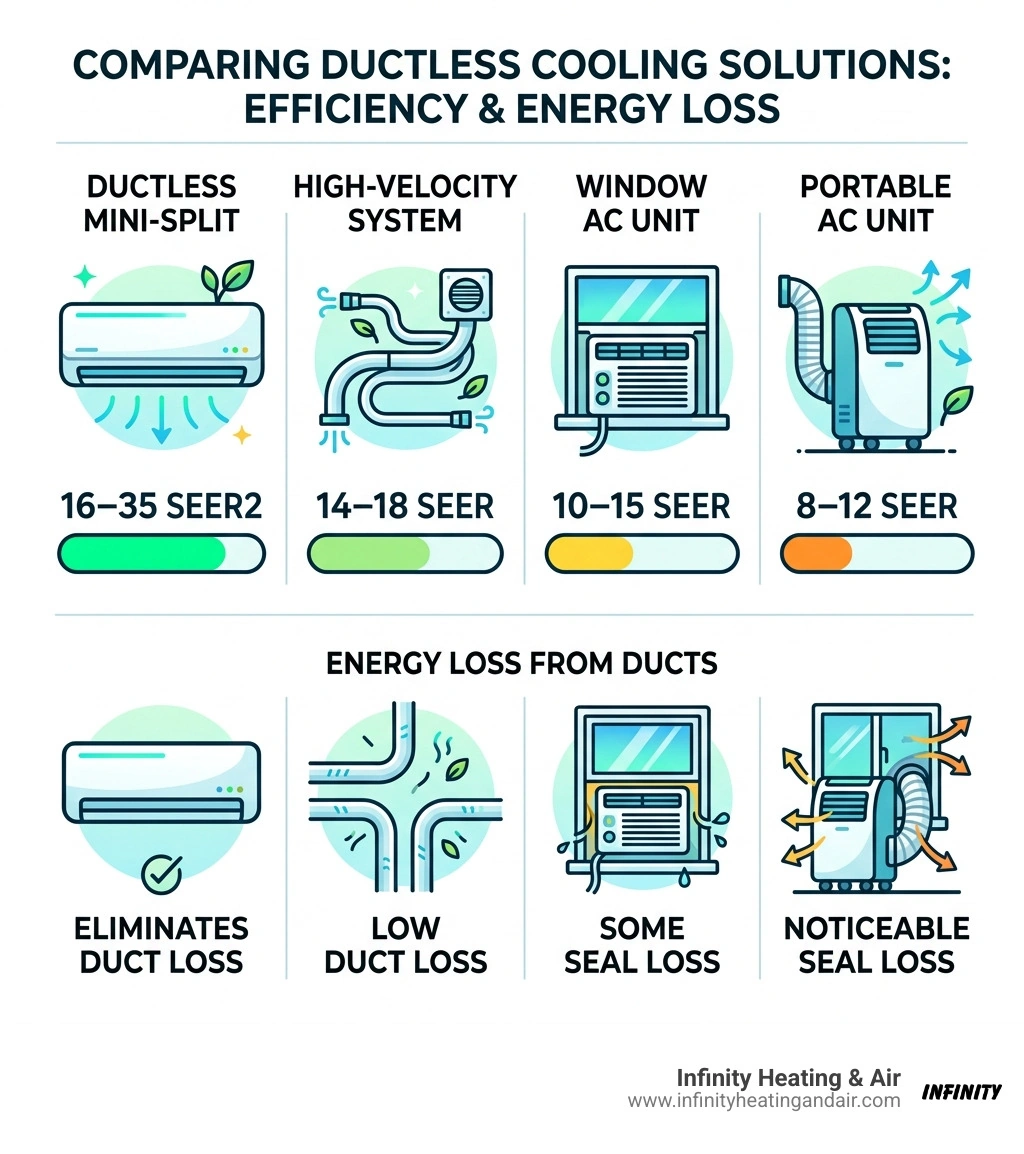
Here's a quick look at the main options:
| Option | SEER Rating | Disruption Level | Best For |
|---|---|---|---|
| Ductless Mini-Split | 16–35 SEER2 | Very Low (3" wall hole) | Whole-home or zoned cooling |
| High-Velocity Small-Duct | 14–18 SEER | Low-Moderate (2" flexible ducts) | Historic homes needing central feel |
| Window AC Unit | 10–15 SEER | None | Single room, temporary use |
| Portable AC Unit | 8–12 SEER | None | Short-term or rental situations |
The difference in efficiency is significant. According to the U.S. Department of Energy, homes with traditional ductwork can lose up to 30% of their cooling power through leaks and gaps alone. Ductless systems eliminate that loss entirely.
For older Northwest Washington homes — many built before central air was standard — this comparison matters even more. Plaster walls, original woodwork, and tight spaces make invasive duct installation impractical and expensive.
Adding Cooling Without Ductwork Options Compared
When we sit down with homeowners in Puyallup, Tacoma, or Olympia, the conversation usually starts with a simple problem: "It’s hot upstairs, and I don’t want to ruin my house to fix it." Whether you are living in a historic craftsman or a modern addition that wasn't tied into the main HVAC, adding cooling without ductwork options compared reveals that you don't have to settle for a "band-aid" fix.
Traditional central AC is often the first thing people think of, but in a home without existing vents, it’s rarely the best choice. You can read more about the differences in our Central AC vs Ductless Mini-Split Comparison. For most of our neighbors in Northwest Washington, the real choice comes down to a permanent, high-efficiency Mini Split system versus temporary units or specialized high-velocity setups.
Long-Term Value vs. Short-Term Savings
Window units and portable ACs are the "budget champions" of the world, but they come with hidden costs. They block your view, create security risks (since a window must remain unlocked), and sound like a jet engine taking off in your bedroom. More importantly, they rarely last more than 5 to 10 years.
In contrast, a professionally installed ductless system or a high-velocity system is an investment in your home’s equity. These systems can last 15 to 20+ years with proper care. When adding cooling without ductwork options compared, the long-term ROI of a permanent system usually outweighs the low upfront cost of portable units, especially when you factor in the massive difference in monthly utility bills.
Why Mini-Splits Win when Adding Cooling Without Ductwork Options Compared
If there is a "gold standard" for homes without ducts, the mini-split is it. These systems consist of an outdoor condenser unit connected to one or more indoor air handlers by a small conduit.
The Power of Inverter Technology
Unlike traditional AC units that are either "100% on" or "completely off," modern mini-splits use inverter-driven compressors. Think of this like cruise control for your comfort. Instead of the system constantly cycling on and off (which wastes energy and creates temperature swings), the inverter slows down or speeds up to match the exact cooling load of the room. This technology allows some models to achieve SEER2 ratings as high as 35, which is nearly double that of many standard central AC systems.
Zoned Cooling and Energy Savings
One of the biggest advantages we see for homes in areas like Lacey or Federal Way is "zoned comfort." You stop paying to cool rooms you aren't using. By only cooling the occupied spaces, you can achieve up to a 40% reduction in energy consumption compared to conventional ducted systems.
This is also a marriage-saver in many households! If one person likes the bedroom at 68 degrees and another wants the home office at 74, a multi-zone mini-split makes it possible. You can dive deeper into these benefits in our guide on Why You Should Install a Ductless Heating System.
High-Velocity Systems: Adding Cooling Without Ductwork Options Compared
For some homeowners, the "look" of a mini-split handler on the wall is a dealbreaker. This is where high-velocity, small-duct systems come in. These are a hybrid between central air and ductless technology.
High-velocity systems use a specialized air handler that pushes air through tiny, 2-inch flexible ducts. These "mini-ducts" are small enough to be snaked through existing wall cavities, closets, and floor joists without the need for major remodeling or bulky soffits.
Pros of High-Velocity Systems:
- Aesthetics: The only visible part in your room is a small, circular vent (about the size of a CD) that can be painted to match your ceiling or wall.
- Moisture Removal: Because the coils run colder than standard AC, these systems remove up to 30% more moisture from the air. In the humid stretches of a Washington summer, this makes the air feel much cooler at higher temperatures.
- Centralized Control: You still have a single thermostat, which some people prefer over multiple remotes.
The Trade-offs:While they are great for historic preservation, high-velocity systems are generally less efficient (14–18 SEER) than mini-splits. They also tend to be noisier due to the high speed of the air moving through the small vents, though proper "attenuation" tubing can help quiet the hiss.
Maximizing Performance with Manual J Sizing and Home Prep
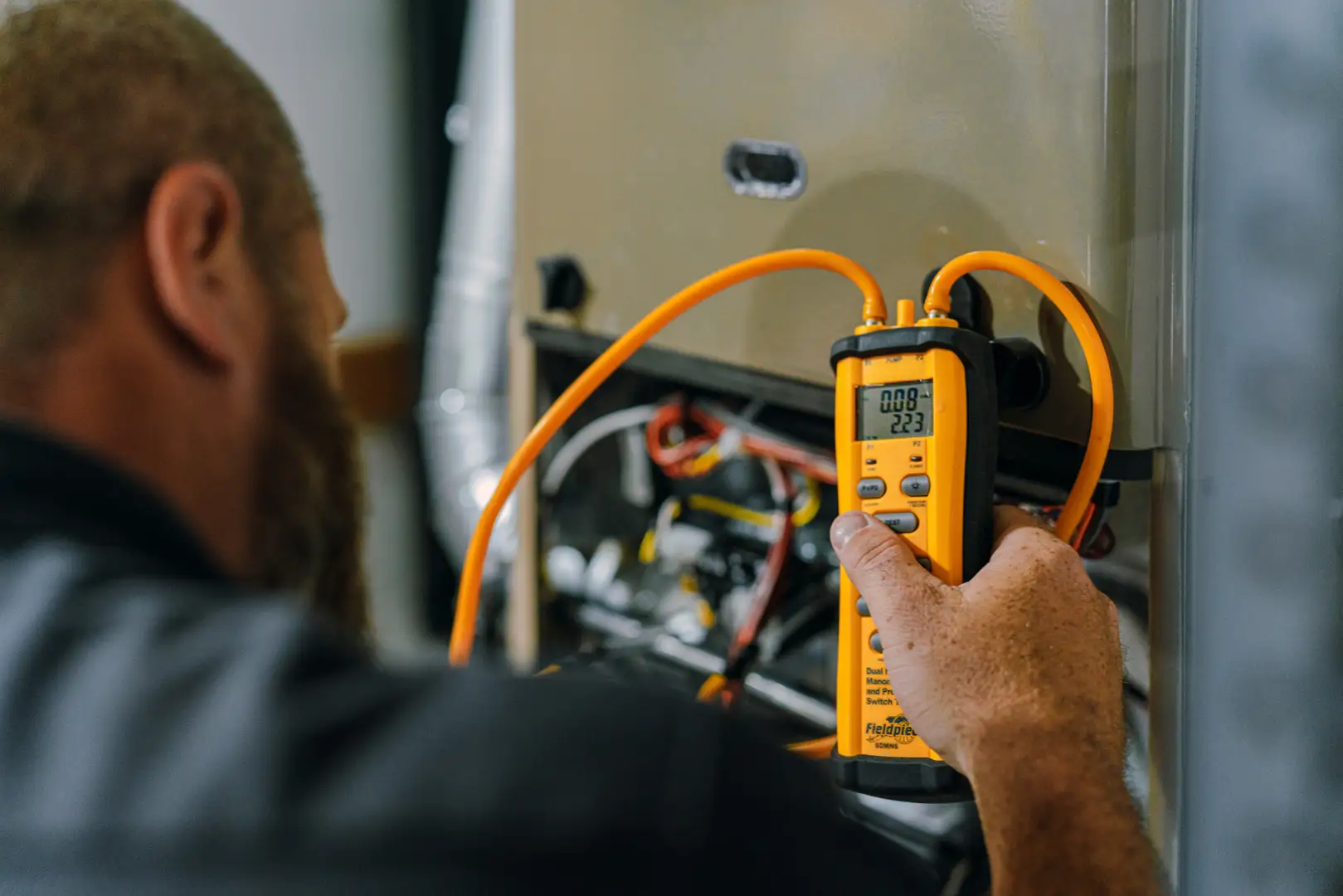
Choosing the right system is only half the battle. If the system is sized incorrectly, it won't matter how efficient the SEER rating is. This is why we never "eyeball" a job.
The Importance of Manual J Load Calculations
A common mistake in our industry is sizing a unit based solely on square footage. However, two 1,500-square-foot homes in Tacoma can have vastly different cooling needs. One might have brand-new double-pane windows and thick insulation, while the other is a 1920s bungalow with original single-pane glass and drafty plaster walls.
A Manual J calculation takes everything into account:
- Wall orientation and sun exposure
- Type and amount of insulation
- Window efficiency and air leakage
- Ceiling heights and local climate data
An oversized system will "short-cycle," turning on and off rapidly. This prevents the system from properly dehumidifying the air, leaving you feeling cold but clammy. An undersized system will simply run forever without ever reaching your target temperature. For a flawless setup, check out our Mini Split Installation & Replacement services.
Preparing Your Home: Step Zero
Before we install a single bracket, we often recommend homeowners look at their "building envelope." Improving your attic insulation and sealing air leaks can reduce your cooling load by 15% to 30%. Not only does this save you money on your monthly bills, but it might also allow us to install a smaller, less expensive unit.
Electrical Upgrades
Older homes in areas like Steilacoom or Orting often have 60-amp or 100-amp electrical panels. Modern HVAC systems, even efficient ones, require dedicated circuits. During your consultation, we’ll evaluate if your panel needs an upgrade to 200-amp service to safely handle the new equipment.
Aesthetic Solutions and Indoor Air Quality Benefits
"But I don't want a white box on my wall!" We hear you. While the standard wall-mounted unit is the most common, it's far from your only choice.
Beyond the Wall-Mount
If aesthetics are a top priority, we have several "hidden" or low-profile options:
- Ceiling Cassettes: These sit flush with your ceiling, showing only a decorative grille. They distribute air in four directions, making them perfect for large, open-concept living areas.
- Floor-Mounted Units: These look similar to a modern radiator and sit low on the wall. They are a great choice for attic rooms with slanted ceilings or for replacing old baseboard heaters.
- Concealed Slim-Duct Units: These are hidden entirely behind a wall or in a crawlspace, with only a small, standard-looking vent visible.
Breathe Easier with Multi-Stage Filtration
Indoor air quality (IAQ) is a major concern in the Northwest, especially during wildfire season or high-pollen springs in the Puyallup valley. Traditional ductwork is a magnet for dust, pet dander, and mold. In fact, ductwork can recirculate these allergens for years.
Ductless systems provide superior IAQ because there are no ducts to collect debris. Each indoor unit features its own multi-stage filtration system. Many models include silver-ion or enzyme filters that trap microscopic particles and neutralize odors. To keep these filters doing their job, regular Mini Split Service is essential.
Whisper-Quiet Operation
If you're used to the roar of a window unit, a mini-split will be a revelation. The noisy part of the system (the compressor) stays outside. The indoor units operate at sound levels between 19 and 32 decibels. For context, a quiet library is about 30 decibels. Our customers often tell us they have to look at the lights on the unit just to see if it’s actually running!
2026 Tax Credits and Essential System Maintenance
As of April 2026, there has never been a better time to upgrade your home’s comfort. Thanks to the Inflation Reduction Act and local utility programs, the financial hurdles for adding cooling without ductwork options compared are significantly lower.
Federal Tax Credits and Rebates
Homeowners can currently claim a federal tax credit (Section 25C) of 30% of the project cost, up to $2,000 annually, for high-efficiency heat pump installations. Because mini-splits are heat pumps, they qualify. This credit resets every year, so if you do your upstairs this year and your downstairs next year, you can potentially claim the credit twice!
In addition to federal help, many local utilities in Pierce and Thurston counties offer rebates ranging from $500 to $2,000 for switching from inefficient electric baseboards or portables to a high-efficiency ductless system.
Keeping Your Investment Running
A high-quality system is an investment, and like any investment, it needs protection.
- Filter Cleaning: You should wash your indoor unit's mesh filters every 4 to 6 weeks. It takes five minutes and keeps your air clean and your efficiency high.
- Outdoor Clearing: Keep the area around your outdoor condenser clear of leaves, grass clippings, and "Washington snow" (cottonwood seeds).
- Professional Tune-Ups: We recommend an annual professional check-up. We’ll check refrigerant levels, clear the condensate drain lines, and ensure all electrical connections are tight. If you ever run into trouble, our Mini-Split Repair team is available 24/7.
Frequently Asked Questions about Ductless AC
Can a ductless system cool my entire home effectively?
Absolutely. While many people start with a single unit for a "hot room," multi-zone systems are designed for whole-home comfort. A single outdoor condenser can power up to eight indoor air handlers. This allows you to have a customized cooling network across every floor and every room, each with its own independent thermostat.
How do these systems handle heating in cold climates?
This is a common concern in Northwest Washington. Modern "cold climate" mini-splits are incredible pieces of technology. Many can maintain 100% of their heating capacity even when outdoor temperatures drop to 5°F, and some continue to provide heat down to -15°F. For our typical winters in Auburn or Lakewood, they are more than capable of keeping you toasty while using up to 60% less energy than standard electric heat.
What is the typical installation timeline for a mini-split?
One of the best parts about adding cooling without ductwork options compared is the speed of installation. Because we only need to drill a small, 3-inch hole in the wall to connect the indoor and outdoor units, there is no major construction mess. A typical single-zone installation takes about half a day, while a complex multi-zone system for an entire home usually takes 1 to 2 days. You won’t need to move out or cover your furniture in plastic.
Conclusion: Crafting Endless Comfort in Northwest Washington
Adding cooling without ductwork options compared shows that you don't have to compromise on the character of your home to enjoy modern comfort. Whether you are looking to cool a single bedroom in Sumner or provide whole-home climate control for a historic estate in Tacoma, there is a ductless solution that fits your needs and your budget.
At Infinity Heating & Air, we are proud to be the local experts for our neighbors in Puyallup, Spanaway, Graham, and throughout the region. We don't just "install boxes"—we design systems that provide endless comfort and reliability. From our 24/7 emergency service to our expert load calculations, we are here to ensure your home stays a sanctuary all year long.
Ready to reclaim your home from the summer heat? Schedule your Mini Split Installation & Replacement today and discover why so many of your neighbors are making the switch to ductless.
Written & reviewed by the Infinity Heating & Air team — licensed WA HVAC contractor (INFINHA841B8). Family-owned in Graham, answering 24/7 across the South Sound.
Choose Infinity & enjoy endless comfort.
Your perfect home environment awaits — call (253) 740-5135 or schedule service online and our team will take it from there.
Open 24/7 · 100% Satisfaction Guaranteed · Graham, WA