Signs You Need Emergency HVAC Service
Recognize signs you need emergency hvac service before Puyallup heat or cold becomes dangerous—call Infinity Heating & Air 24/7.
How to Know When Your HVAC Problem Can't Wait
The signs you need emergency HVAC service are not always obvious — but acting fast can mean the difference between a quick fix and a full system failure, or worse, a real safety crisis in your home.
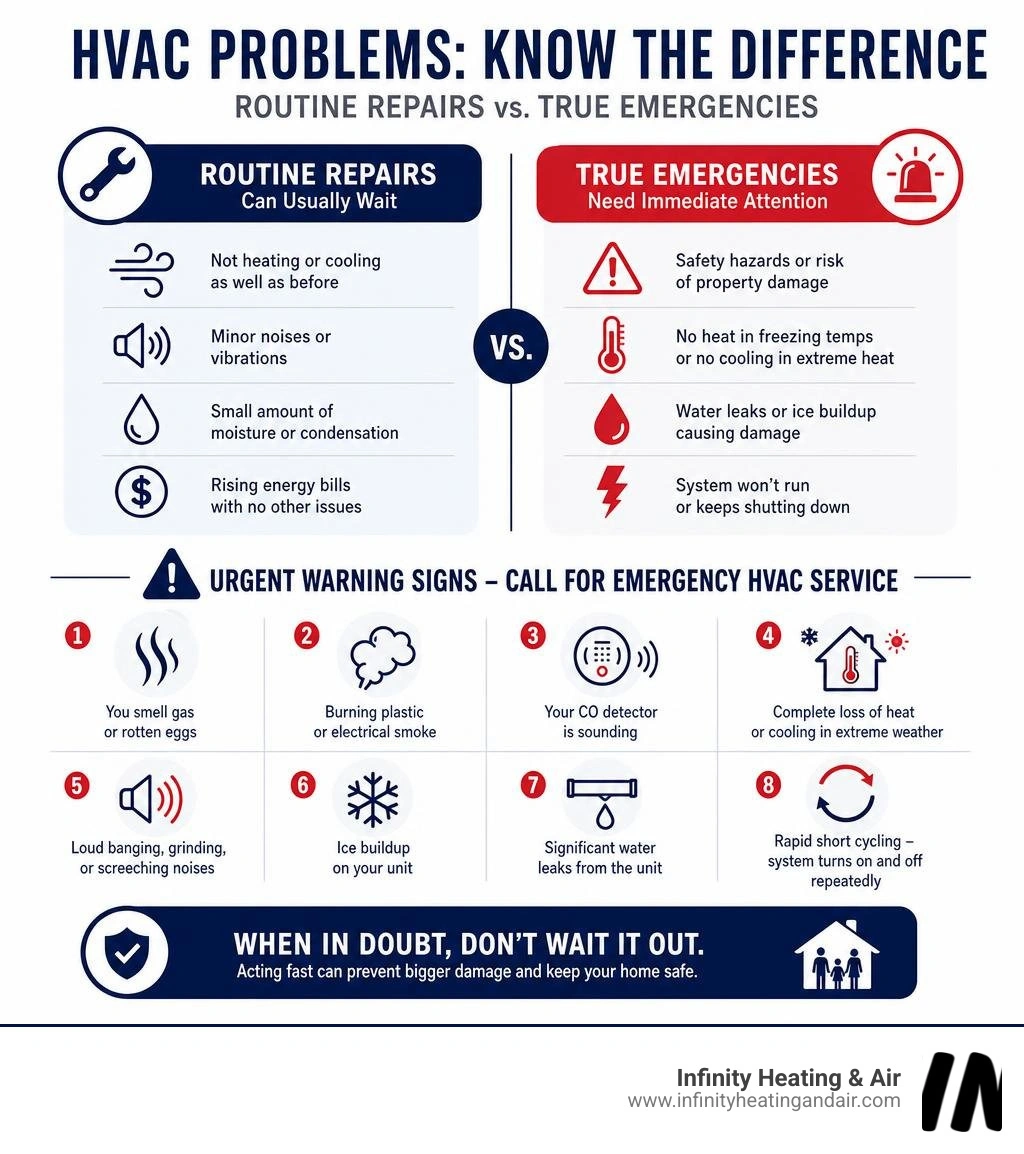
Here are the most urgent warning signs that require immediate attention:
- You smell gas or rotten eggs — evacuate immediately and call your gas utility
- Burning plastic or electrical smoke — shut the system off at the breaker right away
- Your CO detector is sounding — get everyone out and call 911
- Complete loss of heat or cooling during extreme weather — especially dangerous for infants, elderly, or anyone with health conditions
- Loud banging, grinding, or screeching noises — these point to serious mechanical failure
- Ice buildup on your unit — often signals a refrigerant leak or blocked airflow
- Significant water leaks from the unit — can cause structural damage fast
- Rapid short cycling — system turns on and off repeatedly, stressing the compressor
Over 70% of homeowners experience an HVAC breakdown during peak seasons — often on the hottest day of summer or the coldest night of winter. In Northwest Washington, where winters can freeze pipes and summer heat waves push systems to their limits, knowing when to call for emergency help isn't just about comfort. It's about safety.
Not every HVAC hiccup is a crisis. But some problems simply cannot wait until Monday morning.
Discover more about signs you need emergency hvac service:
- emergency hvac repair tips for the south puget sound area homeowners
- emergency hvac repair what to expect
- how to prevent hvac emergencies with maintenance
What Qualifies as an HVAC Emergency vs. Routine Repair?
When your heating or cooling system acts up, your first instinct might be to panic. However, understanding the difference between a routine repair and a true emergency is crucial. A routine repair is an issue that causes minor discomfort or reduced efficiency but does not threaten your safety, health, or the structural integrity of your home. An emergency, on the other hand, involves active safety hazards, potential property damage, or complete system failure during extreme weather.
To help you make the right call, we use the 40/90 rule as a baseline for temperature-related emergencies:
- Heating Emergency: If the outdoor temperature drops below 40°F and your heating system fails completely.
- Cooling Emergency: If the outdoor temperature rises above 90°F and your air conditioner stops working, especially if vulnerable family members live in the home.
To make the distinction even clearer, let's look at how routine issues compare to true emergencies:
| Issue Category | Routine Repair (Can Wait for Business Hours) | True Emergency (Call 24/7 Immediately) |
|---|---|---|
| Temperatures | Mild outdoor weather (60°F–75°F); minor temperature unevenness between rooms. | Extreme outdoor cold (below 40°F) or heat (above 90°F) with total system failure. |
| Odors | A brief dusty smell when turning the furnace on for the first time in autumn. | Rotten egg/gas odors, sharp metallic smells, or burning plastic/electrical smoke. |
| Noises | A mild rattle, soft hum, or occasional clicking sound when the system cycles. | Loud screeching, metal-on-metal grinding, or heavy banging/clanking. |
| Leaks | A slow, minor drip from a condensate line into a drain pan. | Active flooding, major water pooling, or a loud hissing sound indicating a refrigerant leak. |
| Safety Alarms | No alarms active; thermostat shows a standard low-battery warning. | Carbon monoxide (CO) detector sounding or sparks flying from the HVAC unit. |
If you are experiencing minor issues like slightly reduced airflow or a miscalibrated thermostat, you can easily schedule a standard visit. To learn more about identifying these less-urgent issues, read our guide on When to Call a Professional for AC Problems.
How Regular Maintenance Prevents Sudden HVAC Failures
The absolute best way to handle an HVAC emergency is to prevent it from happening in the first place. Statistics show that 42% of AC failures are caused by a lack of basic maintenance. When you skip annual tune-ups, small problems like a fraying belt, a weakening capacitor, or a tiny refrigerant leak slowly worsen until they trigger a system-wide shutdown in the middle of a winter storm or summer heat wave.
Consider these powerful maintenance facts:
- Homeowners who schedule regular HVAC maintenance are 50% less likely to experience an emergency breakdown.
- A dirty, clogged air filter can restrict airflow so severely that it increases your system's energy usage by 15%.
- HVAC systems experiencing airflow problems must work much harder to circulate air, using up to 25% more energy and putting massive mechanical strain on the blower motor and compressor.
By investing in proactive care, you keep your system running smoothly, preserve your indoor air quality, and prevent the stress of emergency middle-of-the-night calls. For a complete look at how to protect your system year-round, check out our article on How to Prevent HVAC Emergencies with Maintenance.
Top Signs You Need Emergency HVAC Service

Recognizing the early warning signs of a failing system can save you from a catastrophic breakdown. Many homeowners don't realize that their system is in crisis until it completely stops running. However, your HVAC unit will almost always drop clues before it quits.
Nationwide data highlights several major culprits behind unexpected system failures:
- Refrigerant leaks account for nearly 30% of unexpected cooling failures.
- Electrical issues (such as failed capacitors, burnt wiring, or overloaded control boards) make up nearly 18% of emergency HVAC calls.
- Frozen evaporator coils are responsible for nearly 20% of emergency cooling failures.
- Carbon monoxide risks are a major threat, with unintentional carbon monoxide poisoning sending over 100,000 Americans to emergency departments every single year.
Another critical performance red flag is rapid short cycling. This occurs when your heater or air conditioner turns on and off every few minutes without completing a full cycle. Short cycling places immense electrical and physical stress on the compressor—the most expensive component of your system. If left unaddressed, short cycling can cause the compressor to burn out entirely within a matter of days.
If you suspect your system is struggling, it is wise to familiarize yourself with the early warning signs. Explore our detailed guides on Signs Your AC Needs Repair and Signs Your Ductwork Needs Repair or Replacement to catch problems before they escalate.
Sensory Red Flags: Smells and Sounds You Can't Ignore
Your senses are highly reliable tools for detecting HVAC emergencies. If you smell or hear something highly unusual, do not ignore it.
- Rotten Egg Smell (Gas Leak): Natural gas is naturally odorless, so utility companies add a chemical called mercaptan to give it a distinct, highly noticeable rotten egg smell. If you smell this near your furnace, evacuate your home immediately. Do not touch any light switches, use your phone, or strike a match inside, as a single spark could ignite the gas. Call your gas provider or 911 from a safe distance outside.
- Burning Plastic or Electrical Smoke: A sharp, metallic, or burning plastic odor coming from your vents indicates that wire insulation is melting, a motor has seized and is overheating, or an electrical capacitor has failed. Shut down the system at the circuit breaker immediately to prevent an electrical fire inside your ductwork.
- Screeching or Metal Grinding: A high-pitched screeching sound usually points to a failed bearing in the blower motor or a badly slipped belt. A metal-on-metal grinding sound means moving parts are loose and actively destroying themselves. Shut the system down immediately to avoid total motor destruction.
- Loud Banging or Clanking: In a gas furnace, a loud bang when the heating cycle starts can indicate delayed ignition. Small amounts of gas build up before finally igniting, creating mini-explosions that can easily crack your heat exchanger (which allows deadly carbon monoxide to leak into your home). In an air conditioner or heat pump, banging suggests a loose, heavy component is thrashing around inside the cabinet.
Performance Failures in Extreme South Puget Sound Weather
In Northwest Washington, our seasonal weather can put incredible stress on HVAC equipment. More than 50% of system breakdowns during heat waves happen because the system is forced to run continuously without proper airflow. When the outdoor temperature climbs, a system with a dirty filter or slightly low refrigerant will rapidly overheat and shut down.
Similarly, during a hard winter freeze in areas like Tacoma, Puyallup, or Lacey, a complete heating failure is a major emergency. Without heat, indoor temperatures can plummet quickly, exposing vulnerable family members to hypothermia and putting your plumbing at risk of freezing and bursting. For local, season-specific troubleshooting, refer to our Emergency Heating Repair Tacoma Guide.
Visible Signs of System Crisis and Property Risk
Not all emergencies are invisible or auditory. Sometimes, the physical evidence of a crisis is right in front of you.
- Water Pooling and Condensate Clogs: Air conditioners and heat pumps pull moisture out of the air as they cool. This water normally drains away safely through a condensate line. If this line becomes clogged with algae or debris, water will back up and overflow. This can lead to flooded mechanical closets, ruined drywall, mold growth, and thousands of dollars in structural water damage.
- Ice Buildup on Evaporator Coils: Finding ice on your indoor or outdoor unit during a summer heatwave is a major warning sign. Ice forms when restricted airflow (from a severely dirty filter or blocked vents) or low refrigerant levels cause the evaporator coil's temperature to drop below freezing. The ice acts as an insulator, forcing the system to work twice as hard and eventually causing the compressor to fail.
Immediate Steps to Take During a Heating or Cooling Crisis
If your system fails or begins showing dangerous symptoms, acting quickly can protect your household and prevent further equipment damage. Here is your immediate emergency action plan:
- Prioritize Safety First: If you smell gas, suspect a carbon monoxide leak (or if your CO alarm is sounding), or notice smoke, evacuate everyone—including pets—from the home immediately. Call 911 or your gas utility from outside.
- Shut Down the System: For electrical smells, loud mechanical noises, water leaks, or ice buildup, turn the system to "OFF" at your thermostat. For suspected electrical issues, go to your main electrical panel and shut off the dedicated circuit breaker for your HVAC system.
- Perform Basic Troubleshooting: Before calling for an emergency dispatch, check these simple items to ensure it isn't an easy fix:
- The Thermostat: Are the batteries dead? Is it set to the correct mode (Heat/Cool)?
- The Circuit Breaker: Check if the HVAC breaker has tripped. If it has, reset it once. If it immediately trips again, do not attempt to reset it a second time—this indicates a dangerous electrical short.
- The Air Filter: A completely clogged filter can cause the system to overheat and shut down. Replace it with a fresh one and allow the system to cool down for 20 minutes before trying to restart it.
- Outdoor Unit Clearance: Ensure the outdoor condenser unit has at least two feet of clear space around it, free of weeds, leaves, and debris.
For more helpful local advice, take a look at our Emergency HVAC Repair Tips for the South Puget Sound Area Homeowners.
What to Do While Waiting for the Technician
Once you have called for professional assistance, you may have to wait a brief period for the technician to arrive. During this time, you can take temporary measures to keep your home comfortable and safe:
- In Summer Heat: Close all blinds, drapes, and window coverings to block out solar heat. Turn off heat-producing appliances, electronics, and incandescent lights. Use ceiling fans to keep air moving, and stay well-hydrated.
- In Winter Cold: Close all curtains and seal drafty doors or windows with towels. Gather your family and pets in a central, well-insulated room. If you use portable space heaters, ensure they are kept at least three feet away from flammable materials and are never left unattended.
- Prevent Frozen Pipes: If outdoor temperatures are below freezing and your heat is completely out, open cabinet doors under sinks to allow warmer indoor air to circulate around your plumbing. Let your faucets drip slowly to keep water moving, which helps prevent pipes from freezing and bursting.
To learn more about what our professional team does when we arrive at your home, read our guide on Emergency HVAC Repair: What to Expect.
Frequently Asked Questions About HVAC Emergencies
What temperature is considered a heating or cooling emergency?
As a general rule, we define a temperature emergency using the 40/90 rule. If the outdoor temperature is below 40°F and your heating fails, or above 90°F and your cooling fails, it is a true emergency.
Without climate control, indoor temperatures can quickly reach dangerous levels. In extreme heat, households risk heat exhaustion or heat stroke. In extreme cold, the risk of hypothermia rises, and your home's plumbing is placed at high risk for frozen, burst pipes once the indoor temperature drops significantly. This risk is amplified for vulnerable occupants, including infants, the elderly, pets, and individuals with chronic medical conditions.
What are the signs you need emergency hvac service for a heat pump?
Heat pumps work year-round to keep South Puget Sound homes comfortable. Signs that your heat pump needs emergency attention include:
- Constantly Running on Auxiliary Heat: If your "AUX Heat" or "EM Heat" light stays on constantly during mild winter days, your heat pump's compressor or outdoor fan may have failed, forcing the system to rely entirely on energy-intensive backup heating coils.
- Rapid Short Cycling: Turning on and off every few minutes, which can quickly burn out the compressor.
- Loud Hissing or Gurgling: This often indicates a high-pressure refrigerant leak, which requires immediate repair by an EPA-certified technician.
- Blowing Lukewarm or Cold Air in Winter: If your home is rapidly losing warmth and the system refuses to heat, it requires immediate professional diagnostics.
For a deeper dive into heat pump troubleshooting in our area, refer to our Emergency Heat Pump Repair Tacoma Guide.
What are the signs you need emergency hvac service during a Lakewood winter?
During a cold Lakewood or Puyallup winter, your furnace is your home's lifeline. You should call for emergency service immediately if you experience:
- A Complete Furnace Failure: The system will not turn on, and indoor temperatures are dropping fast.
- Delayed Ignition Noises: Loud bangs or booms when the furnace starts up, which can crack the heat exchanger and leak carbon monoxide.
- The Smell of Fuel or Gas: A strong sulfur or rotten egg smell near your heating system.
- A Yellow Burner Flame: On gas furnaces, the burner flame should always be a crisp, steady blue. A flickering yellow or orange flame indicates incomplete combustion, which is a major carbon monoxide hazard.
For immediate assistance in these areas, explore our detailed guides: Emergency Heater Not Working Help Lakewood and Emergency Heating Repair Guide Puyallup WA.
Conclusion
Recognizing the signs you need emergency HVAC service is the key to protecting your home, your family, and your peace of mind. Whether you are dealing with a dangerous gas odor, a frozen evaporator coil during a summer heatwave, or a complete furnace failure during a freezing South Puget Sound winter, ignoring the problem will only lead to more extensive damage.
At Infinity Heating & Air, we are your Northwest Washington HVAC and home air quality experts. We proudly serve homeowners across the South Puget Sound, including Auburn, Bonney Lake, Lakewood, Puyallup, Spanaway, Tacoma, Tumwater, and the surrounding areas. Our mission is to craft endless comfort for your family with reliable, expert service.
We offer 24/7 emergency service to ensure you are never left stranded in the cold or heat. If your system is showing any of the warning signs discussed today, don't wait for a minor issue to become a major disaster.
Schedule Emergency HVAC Service with Infinity Heating & Air today, and let us restore safety and comfort to your home!
Written & reviewed by the Infinity Heating & Air team — licensed WA HVAC contractor (INFINHA841B8). Family-owned in Graham, answering 24/7 across the South Sound.
Choose Infinity & enjoy endless comfort.
Your perfect home environment awaits — call (253) 740-5135 or schedule service online and our team will take it from there.
Open 24/7 · 100% Satisfaction Guaranteed · Graham, WA