Everything You Need to Know About How HVAC Condition Affects Home Appraisals
Learn how HVAC condition affects home appraisals, value, and financing in Northwest Washington with this complete guide.
I'm preparing for a home appraisal in Northwest Washington. How will my HVAC system's condition affect my valuation?
How HVAC condition affects home appraisals is straightforward: appraisers evaluate your heating and cooling system's age, visible condition, basic operation, and remaining useful life — and what they find can either protect your home's value or quietly impact your home's final valuation.
Here's a quick summary of what you need to know:
| HVAC Factor | Appraisal Impact |
|---|---|
| System under 10 years old, well-maintained | Positive or neutral — treated as an asset |
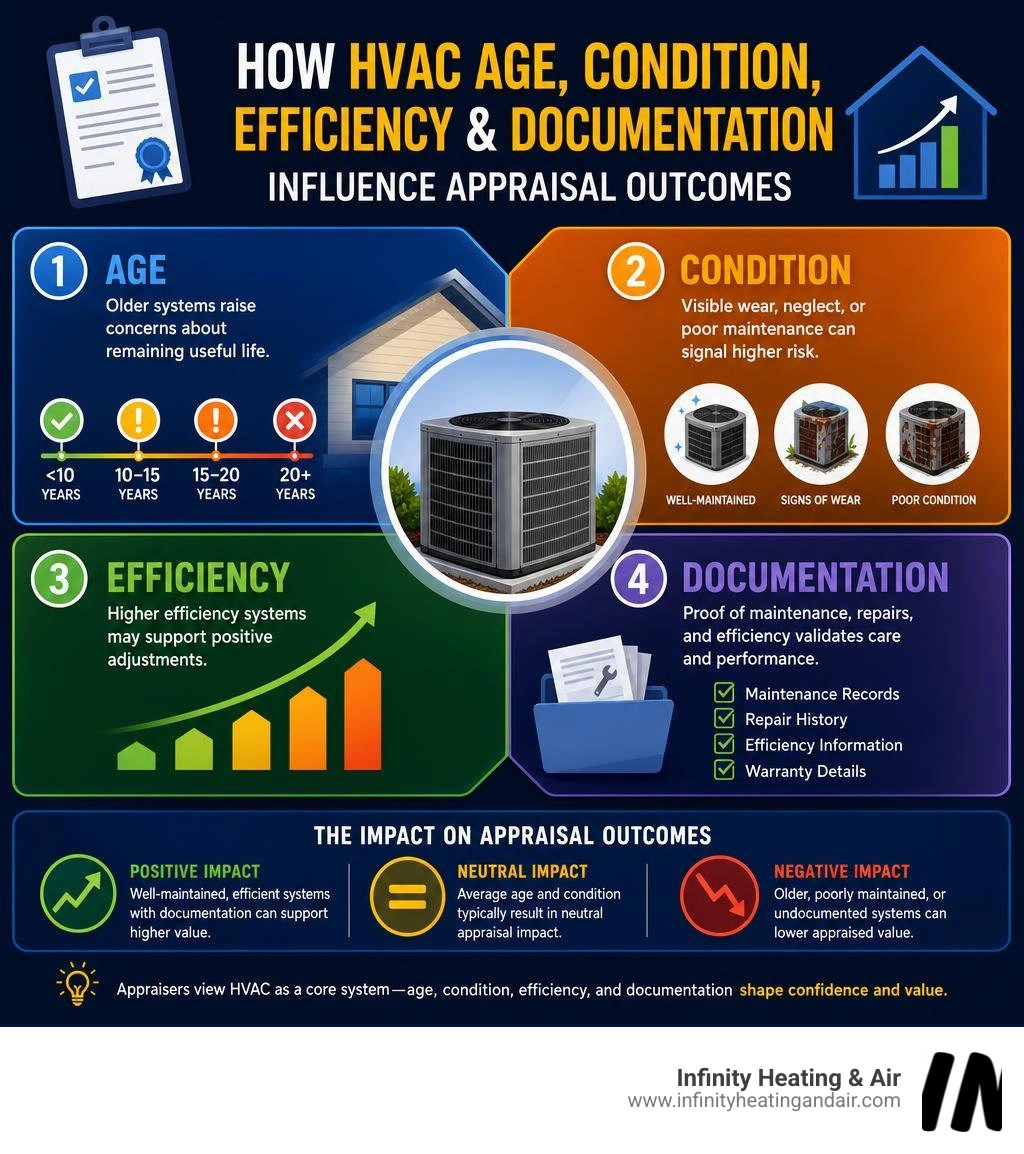
| System 10–15 years old | Starts receiving more scrutiny |
| System 15–20 years old | Often flagged as nearing end of life |
| System over 20 years old | Commonly treated as deferred maintenance |
| Failing or non-operational system | Can significantly reduce appraised value and flag lender concerns |
| Missing central air (where expected) | Can trigger a functional obsolescence penalty |
| High-efficiency system with documentation | May support a positive adjustment above standard |
Most homeowners focus on kitchens, bathrooms, and curb appeal when preparing for an appraisal. But your HVAC system sits in a different category entirely. Appraisers treat it the same way they treat your roof, plumbing, and electrical — as a core functional system that directly affects habitability, lender confidence, and overall condition rating.
In Northwest Washington, where wet winters, summer heat events, and coastal humidity put real stress on heating and cooling equipment, the condition of your HVAC system matters even more. A struggling or aging system doesn't just affect your comfort — it can affect your ability to sell, refinance, or borrow against your equity through a HELOC.
And here's the part that surprises most homeowners: a well-maintained 12-year-old system is often valued higher than a neglected 8-year-old one. Age matters, but it's not the whole story.
How HVAC Condition Affects Home Appraisals: What Appraisers Actually Evaluate
An appraiser is not performing a full HVAC diagnostic visit. They usually will not measure refrigerant charge, test static pressure, inspect every duct run, or disassemble equipment. That is the job of an HVAC professional or home inspector.
What appraisers do evaluate is whether the system appears:
- Present and appropriate for the home
- Functional during a basic check
- Properly installed and accessible
- Reasonably maintained
- Nearing the end of its useful life
- Comparable to HVAC systems in similar nearby homes
They may look at the thermostat, indoor equipment, outdoor condenser or heat pump, visible ductwork, vents, equipment labels, and any obvious signs of wear. They are forming an opinion about physical condition, marketability, and lender risk.
In plain English: they are asking, "Will this system keep the home comfortable, or is the next owner about to inherit a major problem?"
How HVAC Condition Affects Home Appraisals During the Walkthrough
During the walkthrough, the appraiser may check whether the thermostat responds, whether conditioned air is coming from the vents, and whether the indoor temperature feels consistent. They may also look for visible warning signs such as rust, dirt buildup, blocked access, damaged lines, unusual noise, or signs that the equipment has not been serviced in a long time.
Common walkthrough observations include:
- Does the thermostat turn the system on?
- Is there airflow at the registers?
- Is the outdoor unit clear of debris?
- Are filters visibly dirty?
- Are panels, labels, and access areas intact?
- Does the system sound normal?
- Is the home reaching a comfortable temperature?
- Are there signs of water, corrosion, or unsafe conditions?
A clean, accessible, quiet system gives the appraiser confidence. A rattling system surrounded by weeds and mystery puddles gives a very different impression. HVAC equipment does not need to look brand new, but it should look cared for.
Age, Condition, and Functionality Matter More Than Age Alone
Appraisers consider both chronological age and effective age.
Chronological age is simple: the system was installed a certain number of years ago.
Effective age is more practical: based on condition, maintenance, repairs, and performance, how old does the system act?
That is why a regularly serviced 12-year-old furnace or heat pump can make a better impression than a neglected 8-year-old system with dirty coils, weak airflow, and no service records. Appraisers care about remaining useful life, not just the date on the label.
As a general rule:
- Under 10 years old: usually positive or neutral if working well
- 10 to 15 years old: more scrutiny, especially without records
- 15 to 20 years old: often viewed as nearing end of life
- Over 20 years old: commonly considered a deferred maintenance concern
If you are unsure whether your system is aging into appraisal-risk territory, our guide on how old is too old for an HVAC system explains the key warning signs.
Why Appraisers Treat HVAC as a Core Home System
HVAC is not like fresh paint or trendy cabinet hardware. It is part of the home's core mechanical infrastructure, alongside the roof, plumbing, electrical, and foundation.
A working HVAC system supports:
- Habitability
- Comfort
- Indoor air quality
- Moisture control
- Energy performance
- Buyer confidence
- Lender confidence
If the system appears unreliable or near failure, the appraiser may view it as deferred maintenance. That can affect the overall condition rating of the home and may influence how the property compares to similar homes with newer or better-maintained systems.
The Biggest HVAC Red Flags That Can Lower Appraised Value

Some HVAC issues are small. Others tell an appraiser, buyer, or lender, "This home may need major attention soon."
The biggest red flags include:
- Non-operational heating or cooling
- Equipment beyond typical useful life
- R-22 refrigerant systems
- Rust or corrosion
- Dirty coils or clogged filters
- Weak airflow
- Leaky or damaged ductwork
- Uneven room temperatures
- Short cycling
- Burning, musty, or unusual odors
- Grinding, screeching, or banging noises
- Unpermitted installations
- Missing or unreadable equipment labels
- Blocked or unsafe access to equipment
One red flag may not sink an appraisal. Several together can make the system look like a liability.
Outdated or Failing Equipment
A system that struggles to heat or cool the home, breaks down repeatedly, or cannot reach the thermostat set point is more than an inconvenience. It can reduce confidence in the property.
Appraisers are especially cautious when equipment appears near the end of its useful life and the next owner will likely need replacement soon. That is where HVAC condition can shift from "normal aging" to "deferred maintenance."
Signs your system may be hurting appraisal confidence include:
- Frequent repairs
- Rising energy consumption
- Hot and cold spots
- Loud operation
- Poor airflow
- Old refrigerant
- Repeated breaker trips
- The system running constantly but not catching up
If you are weighing timing before a sale or refinance, start with when to replace your HVAC system. For a deeper decision framework, see our HVAC repair vs replace complete guide.
Missing Central Air Where It Is Expected
In some markets and price points, central air or reliable whole-home cooling is not considered a bonus. It is expected.
When nearby comparable homes have central air, heat pumps, or properly designed ductless systems and your home does not, the appraiser may treat that as functional obsolescence. That means the home is missing a feature that buyers in that market commonly expect.
In Northwest Washington, expectations vary by home age, location, and layout. Older homes may not have traditional ductwork, but buyers still increasingly value dependable cooling because summer heat events are becoming harder to ignore. In these cases, ductless mini-splits or heat pumps can sometimes help older homes compete more comfortably.
Poor Maintenance Signals Deferred Maintenance
Poor maintenance is one of the easiest ways for a decent HVAC system to make a bad impression.
Dirty filters, clogged coils, condensate problems, duct leaks, and blocked equipment access can all suggest the system has not been cared for. And fair or not, visible HVAC neglect can make an appraiser wonder what else has been neglected.
Regular maintenance helps prevent that impression. It also helps catch small problems before they become bigger ones. For more on the financial and comfort risks of skipping service, read the true cost of neglecting HVAC maintenance.
Efficiency Ratings, System Type, and Regional Climate Factors Appraisers Notice
Efficiency does not always create a dollar-for-dollar boost in appraised value, but it can support a stronger valuation when it is documented clearly and compared against similar homes.
Appraisers may consider efficiency when the system is newer, clearly labeled, and supported by invoices or specification sheets. Without documentation, even a great system can be overlooked.
| HVAC Factor | Why It Matters | What to Document |
|---|---|---|
| SEER2 | Cooling efficiency | Model number, spec sheet, ENERGY STAR label |
| AFUE | Furnace heating efficiency | Furnace label, invoice, manufacturer data |
| HSPF2 | Heat pump heating efficiency | Outdoor unit data, spec sheet |
| ENERGY STAR | Verified efficiency standard | Certification details |
| Heat pump or ductless system | Efficient heating and cooling | Installation records, zones served |
| Smart thermostat | Modern control and energy awareness | Receipt, model, setup details |
| Zoning | Better comfort control | Design notes, equipment details |
How HVAC Condition Affects Home Appraisals Through Efficiency Ratings
Efficiency ratings help appraisers understand whether your system is basic, outdated, or above standard.
Important ratings include:
- SEER2: Cooling efficiency for air conditioners and heat pumps
- AFUE: Heating efficiency for furnaces
- HSPF2: Heating efficiency for heat pumps
- ENERGY STAR: Certification for qualifying efficient equipment
High-efficiency systems, such as equipment with strong SEER2 ratings or furnaces with AFUE ratings around 95% or higher, may support positive appraisal adjustments when properly documented. The key phrase is "properly documented." Appraisers are busy, and they should not have to play detective with faded labels and missing paperwork.
Provide model numbers, spec sheets, installation invoices, and warranty information so the system's efficiency is easy to verify.
System Types That Can Support Stronger Appraisal Impressions
The right HVAC system depends on the home, layout, ductwork, climate, and comfort goals. In our Northwest Washington service areas, systems that can support a strong appraisal impression include:
- Modern heat pumps
- High-efficiency furnaces
- Central air systems
- Ductless mini-splits for homes without ducts
- Zoned comfort systems
- Smart thermostats
- Properly sized custom comfort systems
A new or upgraded system often helps most by reducing buyer concern and protecting value. To learn more, read how a new HVAC system increases home value.
Proper design matters too. A system that is too large can short cycle, while one that is too small can run constantly and still fail to keep up. Our guide to the advantages of a custom designed comfort system explains why sizing and layout are so important.
Northwest Washington Climate Considerations
Northwest Washington homes face a unique mix of HVAC demands: mild but wet winters, humidity, coastal air in some communities, occasional cold snaps, wildfire smoke concerns, and hotter summer stretches than many older homes were originally designed for.
Appraisers and buyers may look more closely at whether the system can handle:
- Moisture and humidity control
- Corrosion from damp or coastal conditions
- Efficient heating during cold snaps
- Reliable cooling during summer heat events
- Indoor air quality needs
- Proper ventilation
- Even comfort in multi-level homes
Heat pumps are a strong fit for many local homes because they provide both heating and cooling efficiently. However, performance depends on proper sizing, installation, and maintenance.
For local maintenance guidance, see our article on regular HVAC maintenance in the Pacific Northwest mild wet climate. If cold-weather performance is a concern, read our guide to the best HVAC systems for cold climates.
How HVAC Condition Impacts Appraised Value, HELOC Limits, and Refinancing
HVAC condition can affect more than a sale price. It can also influence refinancing and home equity borrowing because those depend on appraised value.
Lenders look at loan-to-value ratios. If the appraisal comes in lower than expected because of deferred maintenance, that can reduce your available equity cushion. And since about 8.6% of home appraisals come in below the contract sales price, homeowners have good reason to prepare carefully.
Financial Impact of Failing, Outdated, or Missing HVAC
A failing or outdated HVAC system can reduce a home's appraised value, depending on condition, market expectations, and comparable sales. Missing central air where it is standard can trigger a functional obsolescence penalty because the home may be viewed as less functional than nearby comparable properties.
The impact is usually tied to:
- Deferred maintenance
- Reduced marketability
- Buyer concern
- Expected replacement need
- Functional obsolescence
- Lower confidence in overall property condition
A non-operational system is especially risky. If heating or cooling is required for the home to be considered habitable or financeable, lender review can become more complicated.
HVAC Upgrades Usually Protect Value More Than They Create Dollar-for-Dollar Value
HVAC upgrades are valuable, but expectations should be realistic. Replacement often recovers a portion of its installation value in added home equity, with higher-efficiency or market-critical upgrades sometimes performing better.
A new system can noticeably increase appraised value in some situations, especially when replacing a failing system or adding expected comfort features. But HVAC is different from a cosmetic remodel. It often protects value by removing a major objection.
Think of it this way: a buyer may not throw a parade because the home has a working furnace. But they may absolutely hesitate if it does not. HVAC is not always the hero of the appraisal story, but it can definitely be the villain if ignored.
For help deciding whether replacement makes sense, review our HVAC repair vs replacement ultimate guide.
HELOC and Refinance Appraisals Depend on Equity Cushion
For a HELOC or refinance, the HVAC system may not single-handedly determine approval. However, it can affect the appraised value that supports the loan.
If an old or failing system lowers the appraisal, it may reduce the amount of equity available to borrow against. A newer, maintained, well-documented system can help protect the appraisal from avoidable condition deductions.
Before a refinance or HELOC appraisal, homeowners should:
- Confirm the system operates normally
- Gather documentation
- Schedule maintenance if service is overdue
- Address obvious red flags
- Make sure equipment is accessible
- Keep invoices, permits, and warranty records ready
How Homeowners Can Prepare HVAC Documentation Before an Appraisal
Documentation can turn your HVAC system from a question mark into a verified asset.
Do not assume the appraiser will know your system is high-efficiency, recently installed, under warranty, or professionally maintained. Make it easy.
Build an HVAC Portfolio the Appraiser Can Review Quickly
Create a simple HVAC portfolio and keep it near the kitchen counter or wherever you plan to leave appraisal documents.
Include:
- Installation invoices
- Permit paperwork, if applicable
- Warranty details
- Transferable warranty information
- Service history
- Maintenance receipts
- Model and serial numbers
- SEER2, AFUE, and HSPF2 ratings
- ENERGY STAR documentation
- Before-and-after photos of major work
- Notes on comfort issues the upgrade solved
- Inspection or tune-up reports
- Filter replacement records
Keep it short and organized. Appraisers appreciate useful documentation, not a shoebox full of cryptic receipts from 2009. Nobody wants an HVAC escape room.
Service, Clean, and Test the System Before Appraisal Day
Before the appraisal, take a few simple steps:
- Replace dirty filters
- Clear leaves, weeds, and debris around outdoor equipment
- Make sure vents are open and not blocked by furniture
- Test the thermostat
- Listen for unusual noises
- Check for visible leaks or moisture
- Confirm the system heats or cools properly
- Make equipment access easy
- Schedule professional maintenance if service is overdue
A fresh service record can help show the system is being cared for. For many homeowners, annual maintenance is the easiest way to keep equipment reliable and appraisal-ready. If you are wondering whether it pays off, read annual HVAC maintenance: is it worth it?.
When to Repair, Replace, or Wait
The right move depends on system age, condition, timing, and your goals.
Consider service if:
- The system is working but overdue for maintenance
- Filters, coils, or airflow need attention
- You want fresh documentation before an appraisal
Consider repair if:
- The system has useful life remaining
- The issue is specific and fixable
- Comfort and operation can be restored reliably
Consider replacement if:
- The system is 15 to 20+ years old and struggling
- Breakdowns are frequent
- Energy consumption is rising because of poor performance
- The system cannot maintain comfort
- Refrigerant or parts are obsolete
- You are preparing to list, refinance, or apply for a HELOC and the system is a clear red flag
Sometimes waiting is reasonable, especially if the system is functioning well and you have strong maintenance records. When in doubt, we recommend an honest professional evaluation before making a major decision. Infinity Heating & Air also offers financing options for qualifying homeowners who decide replacement is the right path.
Frequently Asked Questions About How HVAC Condition Affects Home Appraisals
Can an old HVAC system hurt my home appraisal?
Yes. An older HVAC system can hurt an appraisal if it appears near the end of its useful life, has visible wear, lacks maintenance records, or does not operate properly.
Age alone is not always the problem. The bigger issue is appraiser confidence. A clean, maintained older system may be viewed more favorably than a newer system with obvious neglect. But once equipment reaches the 15 to 20-year range, it often receives more scrutiny.
Is a smart thermostat worth installing before an appraisal?
Usually, yes, as long as expectations are realistic.
A smart thermostat probably will not transform your appraised value by itself. However, it can improve marketability, show energy awareness, and support the impression that the home is modern and well cared for.
It works best as part of a bigger story: efficient equipment, proper maintenance, good documentation, and reliable comfort.
How can I prove my HVAC upgrade adds value to an appraiser?
Provide clear documentation. Do not rely on a quick verbal explanation during the walkthrough.
Give the appraiser:
- Installation receipts
- Permit records
- Model and serial numbers
- Efficiency ratings
- ENERGY STAR documents
- Warranty details
- Maintenance logs
- Service reports
- Photos of completed work
The easier it is to verify the upgrade, the more likely it is to be properly considered.
Conclusion
Understanding how HVAC condition affects home appraisals can help you protect your equity, improve buyer confidence, and avoid last-minute surprises during a sale, refinance, or HELOC appraisal.
Your HVAC system does not need to be perfect. But it should be functional, clean, well-documented, and appropriate for your home and local market expectations.
At Infinity Heating & Air, we help Northwest Washington homeowners craft endless comfort with reliable, expert HVAC service. Whether you need maintenance, repair guidance, indoor air quality support, or replacement planning, we can help you understand your system before an appraisal puts it under the microscope.
If your system is aging, underperforming, or missing the documentation you need, now is a smart time to schedule a professional evaluation. Learn more about our HVAC installation and replacement support.
Written & reviewed by the Infinity Heating & Air team — licensed WA HVAC contractor (INFINHA841B8). Family-owned in Graham, answering 24/7 across the South Sound.
Choose Infinity & enjoy endless comfort.
Your perfect home environment awaits — call (253) 740-5135 or schedule service online and our team will take it from there.
Open 24/7 · 100% Satisfaction Guaranteed · Graham, WA